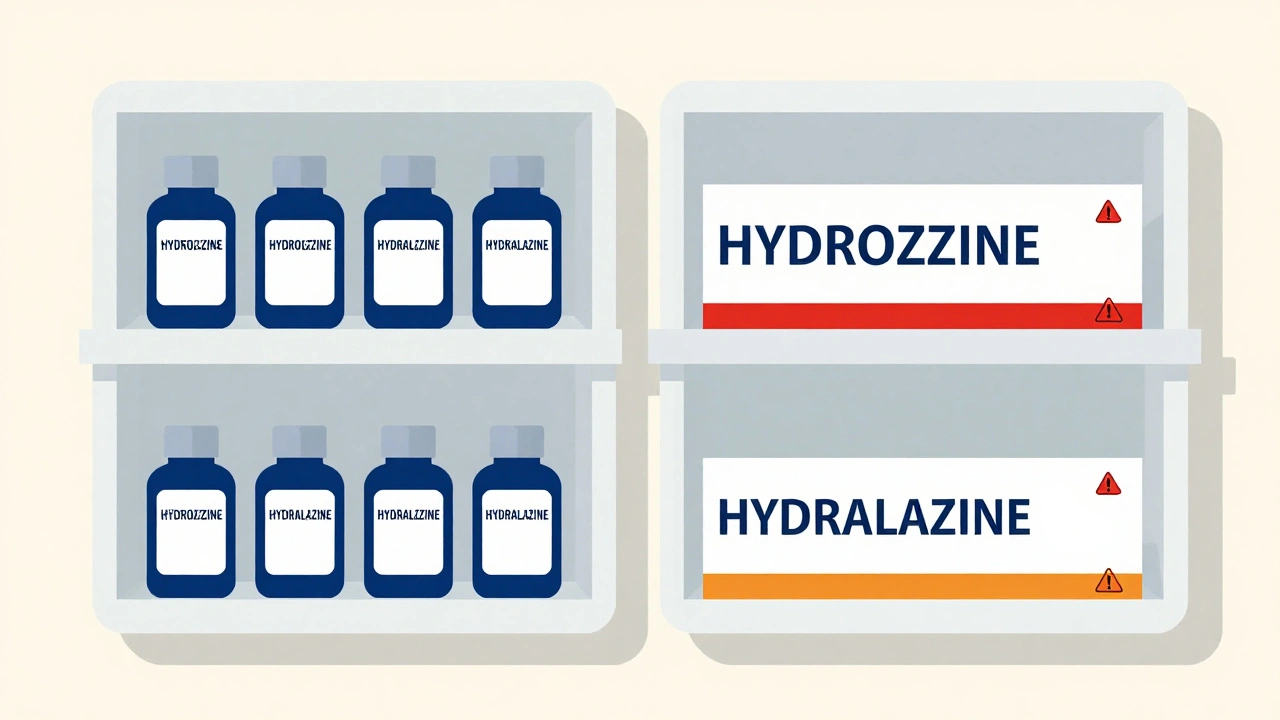
Tall Man Lettering: How Drug Names Are Designed to Prevent Deadly Mistakes
When two drug names look almost identical—like hydroxyzine, a sedative used for anxiety and allergies and hydralazine, a blood pressure medication—it’s not a typo. It’s a risk. That’s where Tall Man Lettering, a labeling system that uses uppercase letters to highlight differences in similar drug names comes in. You’ll see it in pharmacies, hospital charts, and on drug labels: HYDROXYZINE vs. HYDRALAZINE. The capital letters aren’t for shouting—they’re for saving lives.
Tall Man Lettering isn’t just a design choice. It’s a safety tool backed by the FDA and adopted globally because mistakes happen. A nurse grabs the wrong vial. A pharmacist fills the wrong script. A patient takes the wrong pill. These aren’t rare events. In fact, look-alike, sound-alike drug names cause thousands of errors every year. Tall Man Lettering reduces those errors by making the differences impossible to miss. It’s used on hundreds of high-risk pairs: insulin glargine vs. insulin glulisine, clonidine vs. clonazepam, doxepin vs. doxorubicin. Each one could be deadly if confused. The system doesn’t fix everything—human error still happens—but it forces the brain to pause and check.
It’s not just about capital letters. Tall Man Lettering works because it’s consistent. The FDA publishes official lists of which drug pairs need it, and manufacturers follow the rules. Pharmacies use it in their software. Electronic health records highlight the differences. Even the way prescriptions are typed now includes these caps. This isn’t a suggestion—it’s a standard. And it’s one of the few patient safety tools that actually works without requiring extra training or new equipment. You don’t need to be a doctor to notice the difference. If you’ve ever seen a drug name with random capital letters in the middle, now you know why.
Behind every Tall Man Lettering example is a real story of a near-miss or a tragedy that led to change. The system keeps evolving. New pairs are added as more drugs enter the market. And while it doesn’t stop every error, it’s one of the clearest, simplest defenses we have against a problem that’s easy to overlook but deadly when it happens. Below, you’ll find real-world examples of how medication mix-ups occur, what’s being done to fix them, and how you can protect yourself or your loved ones when taking multiple drugs.