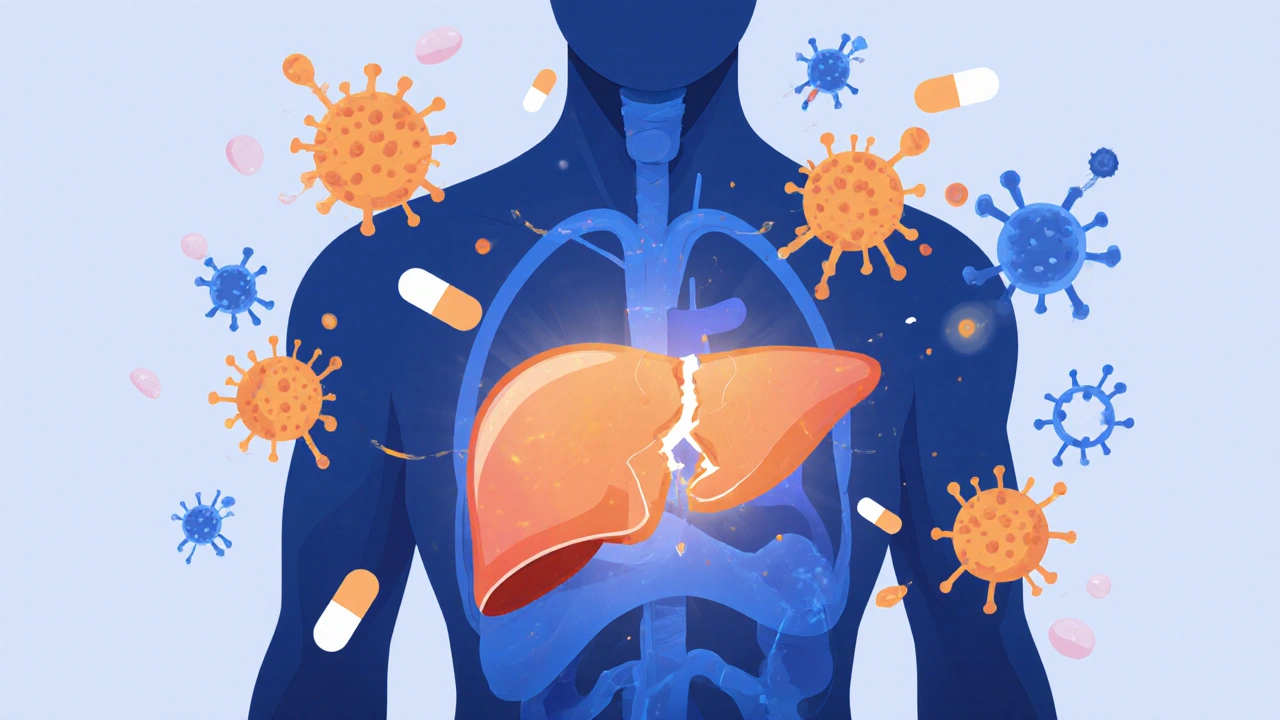
Idiosyncratic Drug Reactions: What They Are and Why They Matter
When your body reacts to a medicine in a way no one else does — not because of dosage, not because of allergies you knew about, but because your system just... doesn't handle it — that's an idiosyncratic drug reaction, an unpredictable, non-dose-dependent adverse response to a medication that isn't explained by its known pharmacology. Also known as type B adverse drug reactions, these events are rare but can be deadly, and they happen without warning. Unlike allergic reactions, which involve the immune system and can be tested for, idiosyncratic reactions strike out of nowhere. One person takes a common painkiller and gets liver failure. Another takes an antibiotic and develops a severe skin rash. Neither had any history of problems. That’s the terrifying thing about them: they’re not predictable.
These reactions often involve the liver, skin, or blood cells. They’re linked to how your genes break down drugs — especially variations in enzymes like CYP450. Someone with a slow-metabolizer version of CYP2D6 might build up dangerous levels of a drug, even at normal doses. Or your immune system might suddenly start attacking your own cells after a drug triggers a false alarm. This is why drug hypersensitivity, a subset of idiosyncratic reactions where the immune system misfires after drug exposure can lead to conditions like Stevens-Johnson syndrome or toxic epidermal necrolysis. It’s not the drug being bad — it’s your body’s unique response to it.
Some drugs are more likely to cause these reactions. Antibiotics like sulfonamides, anticonvulsants like carbamazepine, and even common NSAIDs have been tied to unpredictable severe reactions. But it’s not about the drug alone. It’s about your genetics, your age, your other medications, and even your liver health. That’s why adverse drug reactions, a broader category that includes both predictable and unpredictable side effects are so hard to track. A reaction that kills one person might do nothing to the next. And because these events are rare, they often slip through clinical trials — only showing up after thousands of people start using the drug.
There’s no screening test for most idiosyncratic reactions. No blood test. No skin patch. The only way to know is to pay attention to your body. If you start feeling unusually tired, develop a rash, have dark urine, or feel like you’re coming down with the flu after starting a new med — don’t ignore it. These aren’t just "side effects." They could be early signs of something serious. Many patients are told it’s "just a virus" or "all in your head." But if you’re on a medication and something feels off, it’s worth getting checked — fast.
What you’ll find below isn’t a list of every possible reaction. It’s a collection of real-world cases where medications triggered unexpected, dangerous outcomes. From garlic supplements causing bleeding in people on blood thinners, to kava damaging the liver when mixed with sedatives, these stories show how easily something harmless can turn deadly in the wrong body. These aren’t theoretical risks. They’re documented, preventable tragedies. And if you’re taking multiple meds, supplements, or just started something new — you need to know what to watch for.