Why Generics Cost 80-85% Less Than Brand Name Drugs
 Apr, 15 2026
Ever looked at your pharmacy receipt and wondered why a name-brand pill costs a fortune while the generic version is practically pocket change? It seems suspicious, right? You might assume that the cheaper pill is somehow "watered down" or made with inferior ingredients. But the truth is far less mysterious: the price gap isn't about the quality of the pill, but about who paid for the research to find it in the first place.
When you switch to a generic drug, you aren't paying for a lower-quality medicine; you're simply stopping the payment for a decade of scientific gambling. To understand why the price drops so drastically, we have to look at the massive financial bridge between inventing a molecule and simply copying it.
The Billion-Dollar Gamble of Brand-Name Drugs
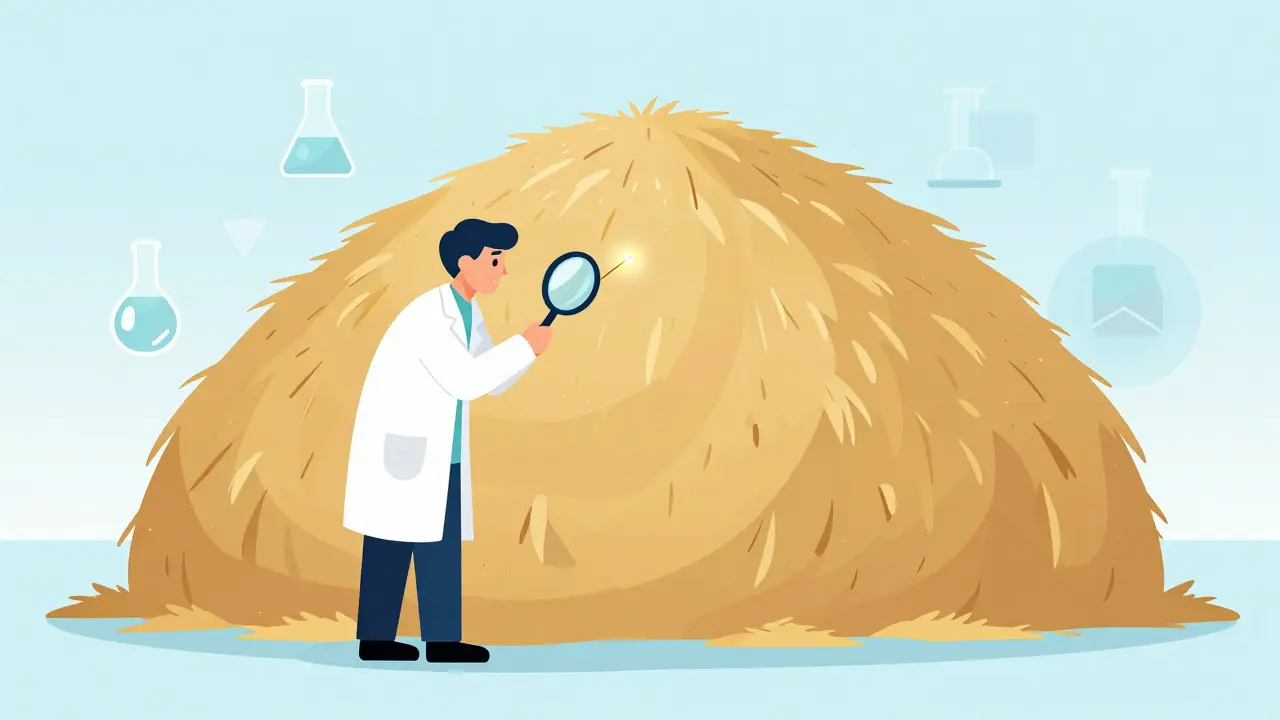
Imagine trying to find a needle in a haystack the size of a city. That is essentially what Brand-Name Drugs are. Before a new medication hits the shelf, pharmaceutical companies spend years in a high-stakes game of trial and error. They have to discover a new chemical compound, test it in labs, move to animal testing, and then conduct massive human clinical trials to prove the drug is actually safe and works as intended.
This process typically takes 8 to 12 years. According to data from the Tufts Center for the Study of Drug Development, the average cost to get a single drug approved is roughly $2.6 billion. That number includes the cost of all the failed attempts-the thousands of molecules that didn't work and had to be scrapped. When a company finally succeeds, they don't just charge for the materials; they charge to recoup that multi-billion dollar investment.
To protect this investment, the government grants these companies a patent. This gives them exclusive rights to sell the drug for about 20 years. During this window, they can set a premium price because they have no competition. It's a legal monopoly designed to incentivize companies to keep inventing new cures.
How Generics Skip the Expensive Part
Once that patent expires, the door swings open. Generic Drugs are essentially "chemical copies" of the original. The reason they are so much cheaper is that the generic manufacturer doesn't have to redo the billion-dollar research phase.
They already know the molecule works. They know the dosage that is effective. They know the side effects. Instead of spending 10 years and billions of dollars on clinical trials, they simply prove that their version is "bioequivalent" to the original. This means they show that their pill delivers the same amount of active ingredient into your bloodstream in the same amount of time as the brand-name version.
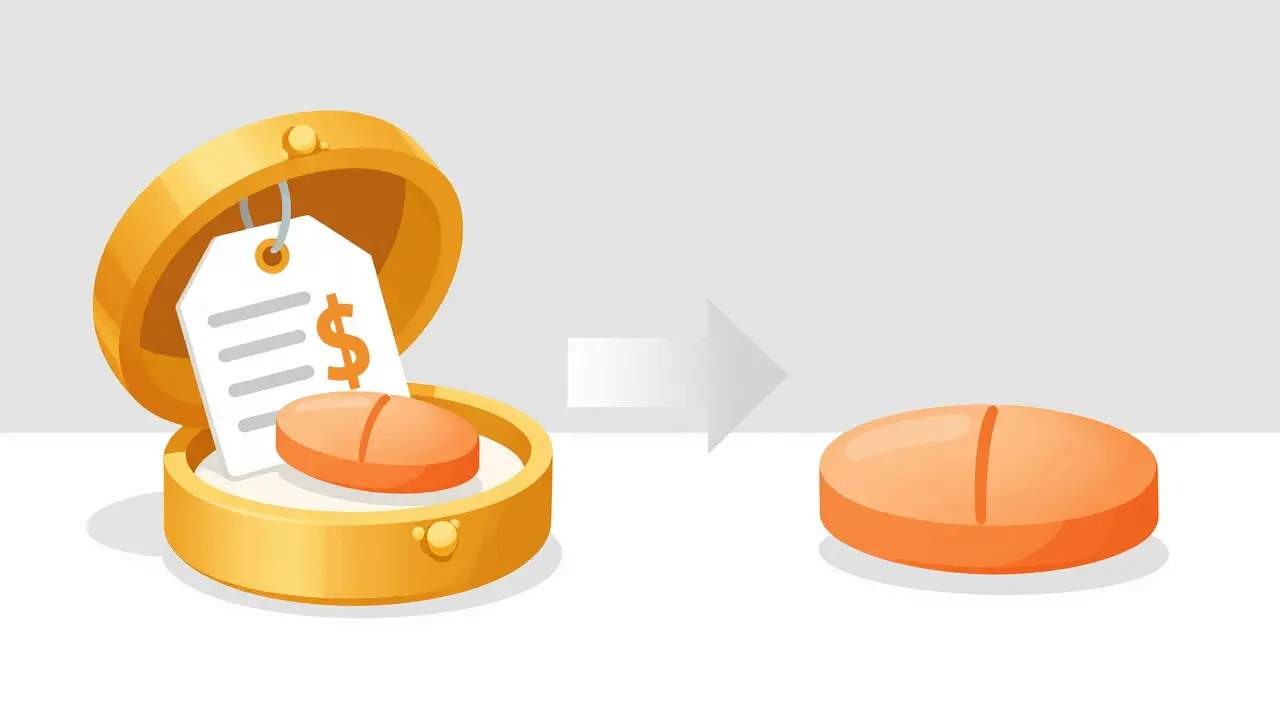
While a brand-name drug costs billions to develop, a generic company might only spend $1 to $5 million to get their version approved. When you remove $2.5 billion from the equation, the price of the pill can drop by 80% or more almost overnight.
The "Bioequivalence" Standard: Is It Really the Same?
A common worry is that generics are a "lite" version of the medicine. In reality, the FDA (U.S. Food and Drug Administration) enforces strict rules. To be approved, a generic must have the same active ingredient, strength, dosage form, and route of administration as the brand.
The only things that can change are the inactive ingredients-like the dyes, fillers, or flavorings. This is why your generic pill might be a different color or shape than the brand name, but the "engine" inside the pill is identical. The FDA requires a strict confidence interval (80-125%) for blood concentration levels to ensure the drug performs exactly like the original.
| Feature | Brand-Name Drug | Generic Drug |
|---|---|---|
| Active Ingredient | Original Molecule | Identical Molecule |
| R&D Cost | Billions of Dollars | Millions of Dollars |
| Development Time | 8-12 Years | 1-3 Years |
| Clinical Trials | Full Human/Animal Trials | Bioequivalence Testing |
| Price Point | Premium / High | Low / Competitive |
The Power of Competition
Beyond the research costs, market dynamics play a huge role. When a brand-name drug has a patent, there is only one seller. When the patent expires, dozens of companies might start making the same generic version. This creates a classic "race to the bottom" in pricing.
For example, take a common statin like Atorvastatin (the generic for Lipitor). While the brand version can cost hundreds of dollars, the generic version might cost as little as $4 a month. The Congressional Budget Office has noted that prices often plummet by 80-90% within the first year after a patent expires simply because companies are fighting for your business by lowering their prices.
This competition is so effective that generics now account for about 90% of all prescriptions filled in the U.S., yet they only make up about 25% of the total spend on drugs. Essentially, the competition keeps the healthcare system from collapsing under the weight of brand-name pricing.
When the Difference Actually Matters
While 99% of the time a generic is a perfect swap, there is a small category of medications called "narrow therapeutic index" drugs. These are meds where a tiny change in the blood concentration can lead to a big change in how the drug works or cause toxicity. Examples include Warfarin (a blood thinner) or Levothyroxine (for thyroid issues).
For these specific drugs, some doctors prefer you stay with one specific manufacturer-whether it's brand or generic-rather than switching between different generic versions. This isn't because the generics are "bad," but because the tiny variations in inactive ingredients between different generic brands can slightly nudge the absorption rate, which matters when the margin for error is razor-thin.
Navigating the Pharmacy Counter
If you're looking to save money, the first step is checking your insurance formulary. Most plans use a "tier" system. Generics are usually Tier 1, meaning the lowest copay (often $0 to $15). Brand-name drugs are usually Tier 2 or 3, where you might pay $50 or even a percentage of the total cost.
If your doctor writes "Dispense as Written" (DAW) on your prescription, the pharmacist cannot give you a generic unless they call the doctor for permission. If you want to save money, ask your doctor if a generic substitution is appropriate for your specific medication. In most cases, the answer is a resounding yes.
Are generic drugs less potent than brand-name drugs?
No. The FDA requires generic drugs to have the same active ingredient, strength, and dosage form as the brand-name version. They must also prove bioequivalence, meaning the drug enters the bloodstream at the same rate and to the same extent as the original.
Why does my generic pill look different from my brand-name pill?
Trademark laws prevent generic manufacturers from making their pills look exactly like the brand-name version. They use different colors, shapes, and inactive fillers (like cornstarch or lactose), but the active medicine remains the same.
Why are some generics still expensive?
This usually happens if there are very few companies making that specific generic, or if the manufacturing process for that specific drug is incredibly complex (like some biologics or inhalers). Without heavy competition, prices stay higher.
Can I switch from a brand to a generic at any time?
For most medications, yes. However, for "narrow therapeutic index" drugs, you should consult your doctor first to ensure that a change in manufacturer won't affect your stability.
What is an ANDA?
An Abbreviated New Drug Application (ANDA) is the process a generic company uses to get approval. It is "abbreviated" because they don't have to provide the full clinical trial data that the original brand-name company provided; they only need to prove the drug is bioequivalent.