Why Generic Drugs Are Cheaper: A Manufacturing Cost Analysis
 Apr, 4 2026
Key Takeaways
- Generics are typically 30-85% cheaper because they skip the multi-billion dollar R&D phase.
- Regulatory shortcuts, like proving bioequivalence instead of running full clinical trials, slash entry costs.
- Massive economies of scale mean unit costs drop by 18% every time production volume doubles.
- Generic prices plummet even further when six or more competitors enter the same market.
The R&D Gap: Skipping the Billion-Dollar Gamble
The biggest reason generics are cheaper is that the hard work has already been done. When a company creates a new drug, they aren't just paying for the chemicals; they are paying for a decade of failures. According to the Tufts Center for the Study of Drug Development, developing a novel drug costs an average of $2.6 billion. This includes early-stage discovery, years of animal testing, and massive Phase I, II, and III clinical trials to prove the drug is safe and effective.
By the time a drug becomes "generic," the original patent has expired. Generic Manufacturers are pharmaceutical companies that produce non-branded versions of medications after the original patent expires. They don't need to rediscover the molecule or prove it works from scratch. Instead, they use a streamlined regulatory path. In the U.S., the 1984 Hatch-Waxman Act changed the game by allowing generics to use an Abbreviated New Drug Application (ANDA). Instead of a $2.6 billion investment, a generic firm might only spend between $2 million and $5 million to get a product approved.
The requirement shifts from "does this drug work?" to "is this version identical to the one that already works?" This is called Bioequivalence, which is the property of two pharmaceuticals to produce the same systemic exposure and pharmacological effect. If a manufacturer can prove the generic drug reaches the bloodstream at the same rate and extent as the brand name, they get the green light. This eliminates nearly all the financial risk associated with pharmaceutical innovation.
Breaking Down the Actual Factory Costs
Once the regulatory hurdle is cleared, the focus shifts to the factory floor. Generic production is a game of margins. For many firms, the cost of making the drug consumes about half of their total revenue. To survive, they optimize four primary cost domains:
- Active Pharmaceutical Ingredients (API): This is the "magic" chemical that treats the disease. It is the most expensive part of the pill and can see price swings of 20-30% a year depending on where the raw materials come from.
- Excipients: These are the inactive ingredients-the fillers, binders, and coatings-that give a pill its shape and stability.
- Quality Assurance (QA): Since they can't afford a mistake that triggers a recall, generic firms invest heavily in automated testing to ensure every batch is identical.
- Packaging: Generic packaging is utilitarian. No glossy brochures or expensive branding-just the essential labels and blister packs.
A study by the Boston Consulting Group found that generic companies typically spend about 30% of their Cost of Goods Sold (COGS) on internal manufacturing and only 4% on supply chain operations. They aren't building luxury brands; they are running high-efficiency utilities.
| Cost Component | Brand-Name Drug | Generic Drug |
|---|---|---|
| R&D / Clinical Trials | Extremely High (Billions) | Low (Millions) |
| Regulatory Path | Full NDA (10-15 years) | ANDA / Bioequivalence (~3 years) |
| Marketing & Branding | Heavy (Direct-to-consumer ads) | Minimal (B2B sales) |
| Manufacturing Focus | Innovation and Quality | Scale and Process Efficiency |
The Power of Scale and the 'Learning Curve'
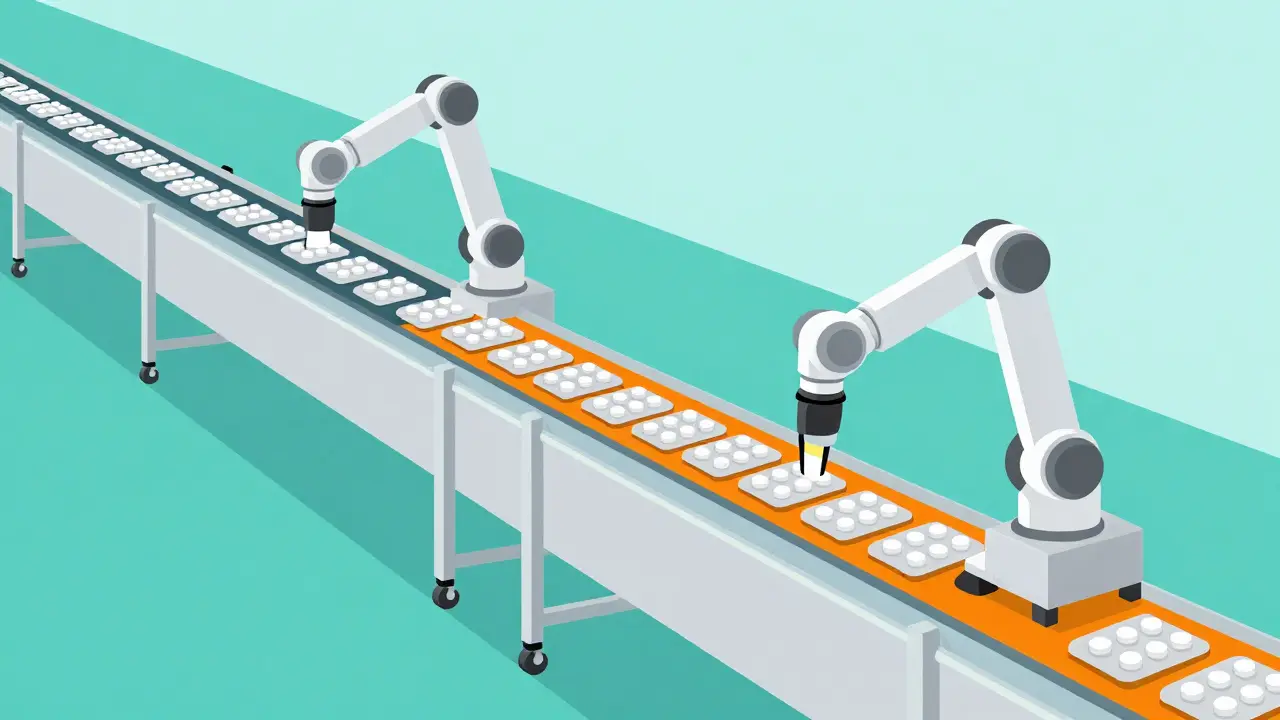
In the world of generics, volume is everything. There is a mathematical phenomenon called the "learning curve" that drives prices down as production goes up. For every time a manufacturer doubles their total production volume, the per-unit cost typically drops by 18%. If they double the volume for a specific Stock Keeping Unit (SKU), the unit cost can plummet by as much as 45%.
This is why you see a few massive players like Teva or Sandoz dominating the market. They have the capacity to produce billions of units, pushing their costs so low that smaller competitors simply can't keep up. When a company produces 30 to 40 billion oral solid dosage units, they hit an optimal scale where the machinery is running 24/7 with almost zero waste. Beyond that point, costs actually start to rise again due to the complexity of managing such a massive operation.
This scale doesn't just happen in the factory; it happens in the marketplace. The FDA has noted that when only two generic competitors exist for a drug, the price is usually about 54% lower than the brand name. But when six or more competitors enter the fray, the price often crashes to 95% below the brand-name price. It becomes a race to the bottom where the most efficient producer wins.
Hidden Risks of the 'Race to the Bottom'
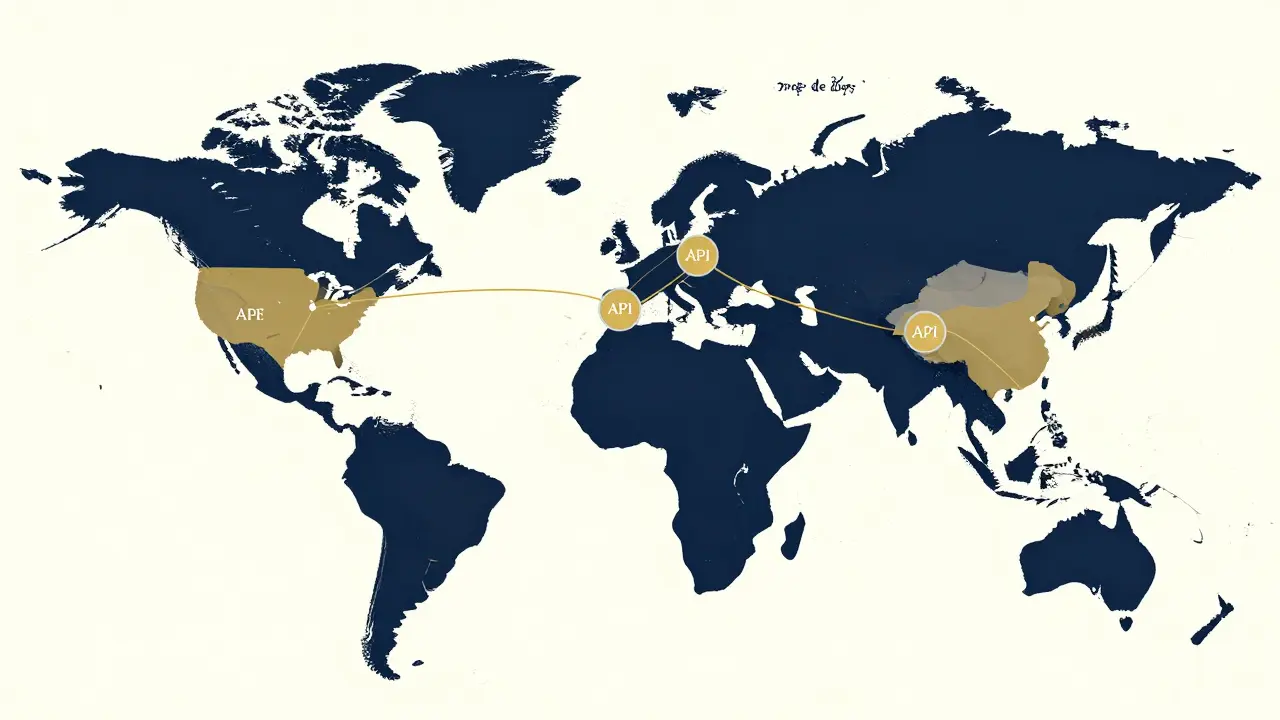
While low prices are great for patients, this hyper-competitive environment has a dark side. When a 1% improvement in efficiency is the difference between survival and bankruptcy, some companies are forced to cut corners. This has led to a fragile supply chain. Harvard Medical School researchers have pointed out that extreme cost pressures contribute to drug shortages. If a single API plant in India or China shuts down, there is no "buffer" in the system because generic firms operate with zero excess inventory to keep costs low.
We also see strange incentives in the pharmacy chain. Retailers often make much higher margins on "branded generics" (generics that are marketed under a new brand name by the same manufacturer) than on true generics. This creates a push-and-pull where the manufacturer wants volume, the pharmacist wants margin, and the patient just wants the cheapest effective option.
The Future: Automation and Biosimilars
The next frontier of cost reduction is continuous manufacturing. Instead of making drugs in batches-where you make a giant vat, test it, and then move to the next step-new technology allows for a constant stream of production. This is expected to shave another 20-25% off production costs by 2027.
We are also seeing this pattern repeat with Biosimilars, which are almost identical copies of biological medicines made from living cells. Because biologics are much more complex than simple chemicals (like aspirin), their "learning curve" is slightly slower-around 15% cost reduction per production doubling compared to 18% for generics. However, the result is the same: as the patents expire on these massive blockbuster biologics, the cost for patients will inevitably drop as manufacturing efficiency takes over.
Are generic drugs less effective because they are cheaper?
No. The cost difference comes from the lack of R&D and marketing expenses, not from using inferior ingredients. Generic drugs must prove bioequivalence, meaning they deliver the same amount of active ingredient to the bloodstream at the same speed as the brand-name version.
Why do some generics cost more than others?
This usually depends on the number of competitors. If only one or two companies have the license to make a generic, they can keep prices higher. Once six or more competitors enter the market, prices typically drop by over 95% compared to the original brand.
What is an API and why does it affect the price?
API stands for Active Pharmaceutical Ingredient. It is the actual chemical that treats the condition. Because most APIs are manufactured in a few global hubs (like India and China), any trade dispute or raw material shortage can cause API prices to swing by 20-30%, which may lead to temporary price increases or drug shortages.
How long does it take for a generic to hit the market?
While a brand-name drug takes 10-15 years, a generic typically takes about 36 months to get through the ANDA approval process, provided the manufacturer can prove the drug is bioequivalent.
Will the Inflation Reduction Act affect generic prices?
Yes, current analysis suggests that Medicare drug price negotiations introduced by the Act could further compress generic pricing by an additional 10-15% as the government gains more leverage in pricing.
Hudson Nascimento Santos
April 5, 2026 AT 03:58The concept of a "race to the bottom" in pharmaceutical pricing is a fascinating study in economic contradictions. While we celebrate the democratization of healthcare through lower costs, we are essentially trading long-term systemic stability for short-term affordability. It makes one wonder if the efficiency we crave is actually a form of fragility in disguise.
Rob Newton
April 7, 2026 AT 00:20Bioequivalence is just a checkbox. Not all generics are created equal despite what the FDA says.
Aysha Hind
April 7, 2026 AT 23:12Oh please, the "bioequivalence" fairy tale is just a cover for the big labs to dump their industrial waste into our pills. They're probably cutting costs by using ingredients that would make a lab rat scream in terror. This whole system is a rigged game played by shadow corporations who want us docile and dependent on their colorful little chemicals. It's absolutely sinister how they pretend it's about "efficiency" when it's clearly about total control over the supply chain.
Lawrence Rimmer
April 8, 2026 AT 19:16The irony is that we call it progress but we're just optimizing the art of the cheap copy. It's a hollow victory.
HARSH GUSANI
April 9, 2026 AT 10:22India is the pharmacy of the world for a reason! 🇮🇳 Our plants are the most efficient and we save millions of lives globally. If the West didn't have such bloated costs, they wouldn't be so scared of our API hubs. 🚀💪 Stop complaining about the "fragility" and start thanking the hard work done in India!
Sakshi Mahant
April 10, 2026 AT 13:03It is truly wonderful to see how international cooperation in manufacturing helps people get their medications. We should all be grateful for the diverse global efforts that keep these prices accessible for everyone, regardless of where they live.
The Charlotte Moms Blog
April 10, 2026 AT 17:06Absolutely pathetic!!! The fact that we have to rely on a "fragile" supply chain for basic meds is a failure of leadership... Total incompetence!!! My kids deserve better than "zero excess inventory" risks!!!
Branden Prunica
April 11, 2026 AT 14:13I am literally shaking right now thinking about the fact that one plant shutting down in another country could just... stop my meds from existing. This is an absolute nightmare! How is this even legal?! We are living in a dystopian horror movie where a 1% efficiency gain is more important than whether or not we can actually find our prescriptions at the pharmacy! It's complete and utter madness!
Joseph Rutakangwa
April 13, 2026 AT 13:14just stick to the generic if the doc says its fine. helps the wallet
sophia alex
April 13, 2026 AT 13:40Only the most elite institutions even understand the nuances of this. The average person is just happy to save a buck, but those of us with actual standards know that the US should be leading the world in high-end manufacturing, not just fighting for the lowest bid 🙄💅🇺🇸
Hope Azzaratta-Rubyhawk
April 14, 2026 AT 22:04The move toward continuous manufacturing is the only acceptable way forward. We must demand a total overhaul of these batch processes immediately to ensure that the cost reductions are realized and distributed to the patients without further delay. Anything less than a full industrial transition is a failure of the system!
Dipankar Das
April 15, 2026 AT 19:19It is imperative that we recognize the sheer brilliance of these scale efficiencies. This is a masterclass in industrial optimization that every developing nation should study with utmost rigor. I strongly urge all stakeholders to push for even more aggressive automation to eliminate the waste completely. We shall achieve a future where no patient is denied medicine due to cost barriers. The path is clear and the technology is ready. Let us move forward with unwavering determination to perfect the manufacturing process. The pursuit of excellence in pharmaceutical production is not merely a goal but a moral obligation to humanity. We must excel or we fail the people. The time for hesitation is over. Efficiency is the only metric that truly matters when lives are on the line. We will dominate this space through sheer willpower and technical precision.