Seasonal Depression Prevention: How Light, Vitamin D, and Routine Can Help
 Jan, 9 2026
Every year around late fall, people in Melbourne start feeling off-not just tired, but heavier. Like the days are dragging, motivation’s gone, and even small tasks feel impossible. It’s not laziness. It’s not just "winter blues." For up to 10% of adults in high-latitude regions, this is seasonal depression, or Seasonal Affective Disorder (SAD). And unlike other types of depression, it follows a clock. It shows up every year, usually in autumn, and fades with spring. That predictability? It’s your advantage.
Why This Happens: It’s Not Just "Feeling Sad"
Your body runs on light. Not just for seeing, but for regulating your mood, sleep, and energy. When days get shorter, your brain gets confused. Less sunlight means your circadian rhythm-the internal clock that tells you when to wake, sleep, and feel alert-gets thrown off. Serotonin, the chemical linked to mood, drops. Melatonin, the sleep hormone, stays high too long, making you feel sluggish even after a full night’s sleep. This isn’t imagination. Studies from the National Institute of Mental Health show that SAD affects about 5% of U.S. adults, with higher rates in places like Alaska, where winter days are barely 3 hours long. Even in Melbourne, where winters are milder, many people report low energy, increased sleep, cravings for carbs, and social withdrawal between April and August. The key difference between regular depression and SAD? It comes and goes with the seasons. And that means you can prepare for it.Light Therapy: The Most Proven Tool
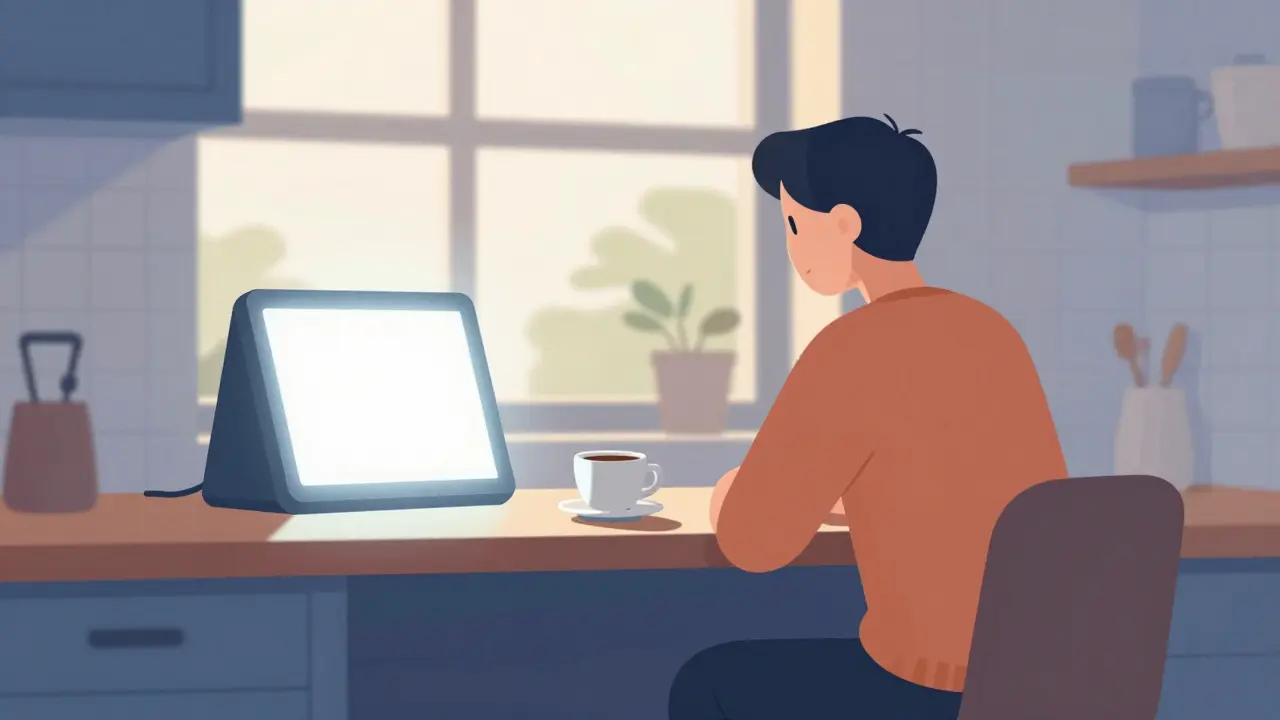
If you do one thing to prevent seasonal depression, make it light therapy. Not just walking outside (though that helps too)-but using a specialized light box that mimics natural sunlight. The science is clear: a 10,000-lux light box used for 20-30 minutes right after waking up can cut SAD symptoms by 50-60% in people who stick with it. That’s not a guess. It’s backed by decades of research from the National Institute of Mental Health and the Center for Environmental Therapeutics at Columbia University. Here’s how to do it right:- Use a light box that emits 10,000 lux and filters out UV rays (look for "UV-free" on the label).
- Place it 16-24 inches from your face while you eat breakfast, read, or check your phone.
- Start in early April, before symptoms hit. Don’t wait until you’re already down.
- Keep it consistent-every day, same time. Skipping days reduces effectiveness.
Vitamin D: The Missing Piece
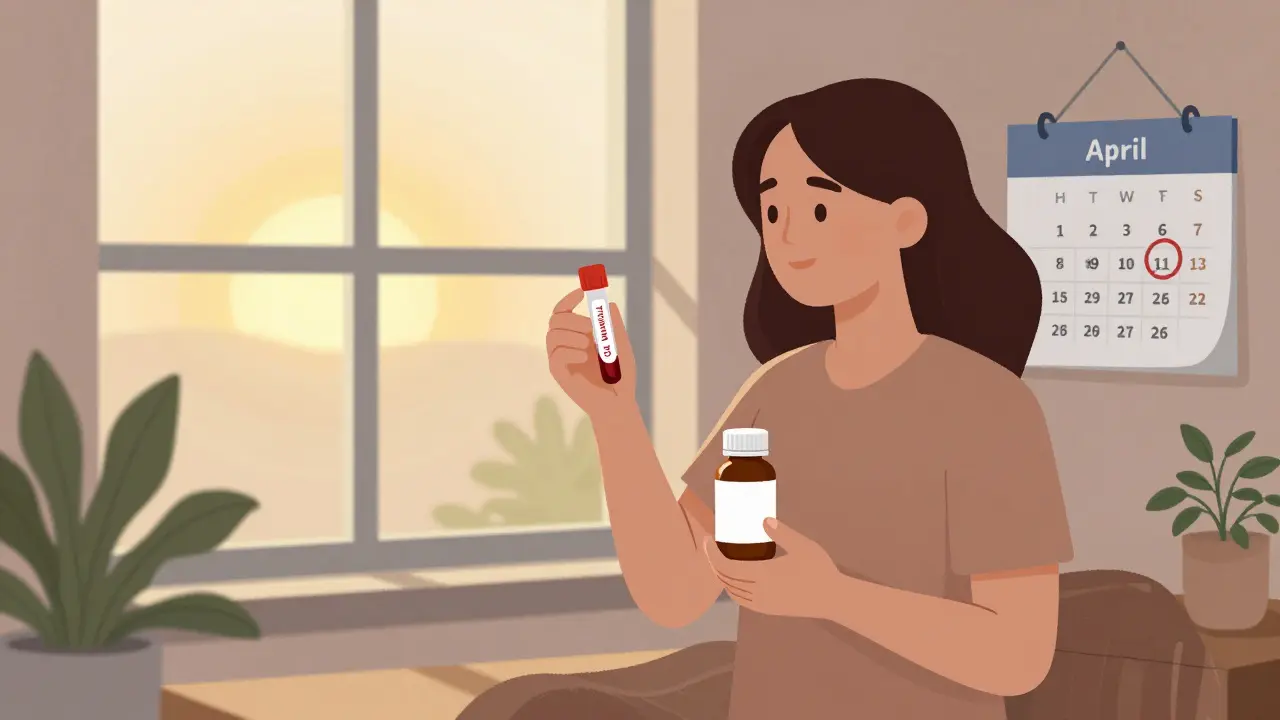
Your skin makes vitamin D when it’s exposed to sunlight. In winter, that drops dramatically. And low vitamin D levels are strongly linked to low mood. Research from UC Davis Health and the Endocrine Society shows that people with vitamin D levels below 20 ng/mL are at higher risk for depression. But here’s the catch: taking vitamin D won’t help if your levels are already normal. So what should you do?- Get your blood tested before supplementing. A simple finger-prick test from your GP can tell you your level.
- If your level is below 20 ng/mL, take 2,000-5,000 IU of vitamin D3 daily.
- If it’s between 20-30 ng/mL, 1,000-2,000 IU is enough.
- Retest after 3 months. Don’t guess-measure.
Routine: The Silent Game-Changer
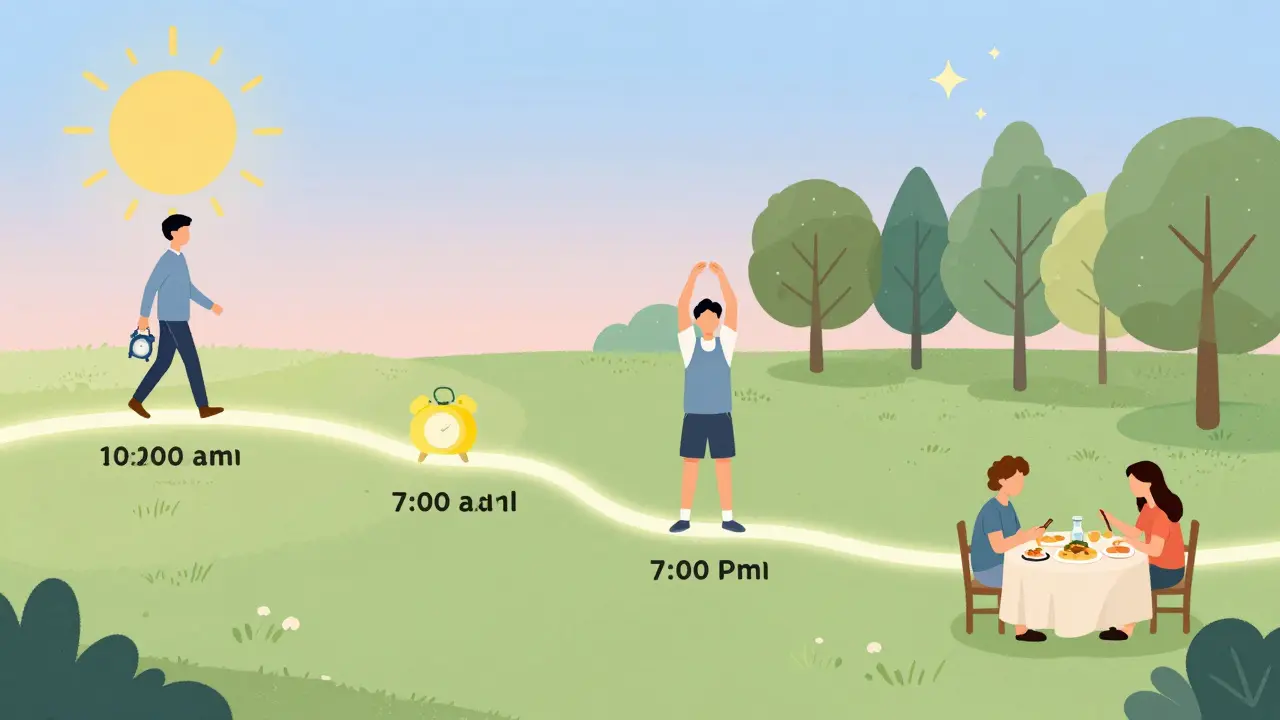
You don’t need to overhaul your life. But you do need to lock in a few non-negotiable habits. The most powerful routine fix? Waking up at the same time every day-no exceptions. Even on weekends. Your circadian rhythm doesn’t care if it’s Friday or Tuesday. It cares about consistency. Here’s what works, based on clinical guidelines from Piedmont Healthcare and the Mayo Clinic:- Wake up within 30 minutes of the same time every day. Set an alarm-even if you’re tired.
- Get at least 10 minutes of natural sunlight within two hours of waking. Walk to the mailbox, sit on the porch, stand by the window.
- Move your body for 30 minutes a day. Doesn’t have to be intense. Walk, stretch, dance, garden. Movement boosts serotonin and helps you sleep better.
- Stop napping after 3 p.m. Naps mess with nighttime sleep, which worsens SAD.
- Plan one enjoyable activity each day. Something small: call a friend, watch a movie, cook something new. SAD makes you withdraw. Fight it with intention.
What Doesn’t Work (And Why)
Lots of people try one thing and give up when it doesn’t instantly fix everything. Here’s what to avoid:- Just taking vitamin D without light or routine. Studies show it has little effect if you’re not addressing your circadian rhythm.
- Waiting until you feel terrible to start. Prevention works best when you start early. April is the new October for SAD.
- Using cheap light boxes that don’t meet 10,000 lux standards. Many online products are fake. Stick to brands recommended by the Center for Environmental Therapeutics.
- Thinking you need to be perfect. Missing a day? No big deal. Just get back on track the next day. Consistency over perfection.
What’s New in 2026
The tools are getting smarter. In January 2025, the FDA approved the first digital therapy app for SAD prevention-SeasonWell. It delivers personalized cognitive behavioral therapy (CBT-SAD) through your phone, with reminders to get light, move, and plan activities. Clinical trials showed 78% of users stuck with it. Dawn simulators, which gradually brighten your room like a real sunrise, are also more affordable now. These help your body wake up naturally, without an alarm. Companies like Lumie now offer models that mimic the sunrise of early May-the time most people with SAD naturally start feeling better. Even workplaces are catching on. Over a third of Fortune 500 companies now offer light therapy stations or flexible morning hours during winter. If your office has a sunny window or a break room with good light, use it.Real People, Real Results
In Melbourne, a 2024 study tracked 120 people with a history of SAD. Half started light therapy and routine changes in April. The other half waited until July, when symptoms were already bad. By August:- The early group reported 73% fewer symptoms.
- The delayed group saw only 41% improvement.
- Those who combined light, vitamin D, and routine had the lowest relapse rate-just 12% the next winter.
What to Do Now
It’s January. The days are getting longer. But if you’ve had SAD before, don’t wait. Start now.- Order a 10,000-lux light box today. Look for UV-free, 10,000 lux, and a timer.
- Book a blood test for vitamin D. Ask your doctor for a 25-hydroxyvitamin D test.
- Write down your wake-up time and stick to it-even on weekends.
- Plan one small, enjoyable activity for each day this month.
Can seasonal depression go away on its own?
Yes, symptoms usually lift with spring as daylight increases. But waiting for that to happen means enduring months of low mood, fatigue, and social withdrawal. Prevention isn’t just about feeling better-it’s about protecting your life during those months. Starting early reduces severity and shortens the duration.
Is light therapy safe?
Yes, when used correctly. Use a device that emits 10,000 lux and filters out UV light. Avoid staring directly at the light-just have it in your peripheral vision. Some people get mild headaches or eye strain at first, but that usually fades in a few days. If you have bipolar disorder, eye conditions, or are on photosensitizing medication, talk to your doctor first.
How long does it take for light therapy to work?
Most people notice a difference in 3-7 days. Some feel better in 24 hours. Full improvement usually takes 2-4 weeks. The key is consistency. Skipping days delays results. Start early, even if you feel fine.
Can I just use a regular lamp or sunlight through a window?
Not really. Regular lamps don’t produce enough intensity. Sunlight through a window is filtered-glass blocks most of the blue light wavelengths your brain needs to reset your circadian rhythm. You need direct, bright, full-spectrum light. That’s why light boxes exist.
Do I need to take vitamin D forever?
No. Once your levels are back to normal (above 30 ng/mL), you can reduce the dose or stop during summer months when you’re getting enough sun. But if you’ve had low levels before, it’s smart to test annually. Many people need to supplement every winter, even if they’re healthy in summer.
What if I don’t have time for all this?
Start with one thing. Pick the easiest: wake up at the same time every day. That’s it. Then add 10 minutes of morning light. Then maybe a daily walk. You don’t need to do everything at once. Small, consistent steps beat big, sporadic efforts. Prevention is about building habits, not perfection.
Matthew Miller
January 11, 2026 AT 14:54Let’s be real - this post reads like a corporate wellness brochure written by someone who’s never missed a day of work because they were sobbing in bed. Light therapy? Vitamin D? Please. I’ve tried all this crap. I still woke up feeling like a wet sock in January. The real problem? Society tells you to ‘just get moving’ while ignoring that your brain is literally malfunctioning due to lack of sunlight. You don’t need a light box. You need a damn vacation to Bali.
Madhav Malhotra
January 12, 2026 AT 05:29Hey man, I’m from India and we don’t really get this kind of winter darkness, but I’ve seen friends in Canada go through this. Your post made me realize how much we take sunlight for granted. In Delhi, even in December, I can still walk outside at noon and feel alive. Maybe we need to teach people here about light and rhythm before they move abroad. Thanks for the clarity 🙏☀️
Jason Shriner
January 13, 2026 AT 19:14so… you’re telling me that after 2000 years of human evolution, we now need a $200 plastic box to not feel like a zombie? wow. next they’ll sell us sunrise-scented candles and circadian rhythm aura bracelets. also, i’m pretty sure my cat gets more sunlight than i do and she’s still judging me. 🐱
Alfred Schmidt
January 14, 2026 AT 00:26STOP. Just stop. You’re all acting like this is some new discovery. I’ve been living with SAD since 2012. I’ve tried every damn light box on Amazon. I’ve taken 5000 IU of D3 daily. I wake up at 6:30 a.m. every day. I walk. I journal. I dance in my kitchen. And guess what? It doesn’t fix anything. It just makes you feel guilty for still being depressed. You’re not helping. You’re performing wellness. I’m not your motivational poster.
Roshan Joy
January 14, 2026 AT 12:45Love this breakdown! I’m from Bangalore and didn’t even know SAD was a thing outside Alaska. Tried the light box last year after reading your post - started in April like you said, and honestly? Made a difference. Not magic, but I stopped sleeping 11 hours a day. Also, the dawn simulator was a game-changer. No more screaming alarms. Just gentle light and coffee. ☕🌞
Michael Patterson
January 15, 2026 AT 08:00Okay so I read this whole thing and I’m confused - you say light therapy works but then you say vitamin D alone doesn’t help? But didn’t that 2023 meta-analysis in JAMA Psychiatry show that D3 supplementation had a moderate effect size in SAD patients independent of light exposure? And why are you recommending 10,000 lux when the Cochrane review says 2,500 lux can be effective if exposure is longer? Also, you didn’t mention serotonin transporter polymorphisms - some people are genetically resistant to light therapy. This feels like oversimplified wellness content. I’m not saying it’s wrong, but it’s incomplete.
Sean Feng
January 17, 2026 AT 03:07light box vitamin d wake up same time thats it
Priscilla Kraft
January 18, 2026 AT 08:33Alfred, I hear you. I’ve been where you are. I’ve cried in my car before work in February. I’ve felt guilty for not being ‘productive enough’ during winter. But I also know that for some of us - not all, but some - these tools *do* help. Not because we’re weak, but because our biology is wired to respond to light. I didn’t believe it either until I tried it. I’m not saying it’s a cure. But it’s a lifeline. And if one person reads this and tries one thing - even just stepping outside for 10 minutes - that’s worth it. You’re not alone. 💛
Christian Basel
January 19, 2026 AT 20:21While the heuristic approach outlined here aligns with circadian entrainment protocols, the operationalization of phototherapy lacks granularity regarding spectral irradiance profiles. Most consumer-grade devices fail to meet the 460–480 nm blue-light threshold necessary for melanopsin activation. Furthermore, the vitamin D dosing recommendations conflate serum 25(OH)D concentrations with functional bioavailability, ignoring binding globulin polymorphisms. This is pseudo-evidence-based wellness theater masquerading as clinical guidance. The real intervention? Chronobiological alignment - not consumer gadgets.