Retail vs Hospital Pharmacy: Key Differences in Medication Substitution Practices
 Dec, 18 2025
When you pick up a prescription at your local pharmacy, you might not think twice when the pharmacist hands you a different-looking pill bottle labeled as the same medicine. That’s generic substitution - and it’s happening everywhere. But if you’ve ever been hospitalized and noticed your meds changed while you were there, that’s something else entirely: therapeutic interchange. These aren’t just different names for the same thing. They’re completely different systems with different rules, different goals, and different risks.
How Substitution Works in Retail Pharmacies
In retail pharmacies - think CVS, Walgreens, or your neighborhood drugstore - substitution is mostly about cost. Pharmacists are legally allowed to swap a brand-name drug for a generic version unless the doctor says "do not substitute" or the patient refuses. It’s a simple transaction: insurance wants the cheaper option, the pharmacist checks the state laws, and if everything lines up, they swap it. According to the 2023 IQVIA National Prescription Audit, retail pharmacies substitute generics in over 90% of eligible prescriptions. That’s not just common - it’s the norm. The system is built to save money. In 2023 alone, this practice saved the U.S. healthcare system $317 billion. But it’s not automatic. Every state has its own rules. In 32 states, pharmacists must tell you verbally that a substitution happened. In 18, they need your written consent the first time. And if you’re on a specialty drug - like one for rheumatoid arthritis or multiple sclerosis - substitution is rare. Only about 12.7% of those drugs are even eligible for generic swaps, per 2023 Express Scripts data. The pharmacist’s job here is to be a translator. They have to explain why the pill looks different, why it’s cheaper, and why it’s just as safe. About 78% of patients say they appreciate the cost savings. But 14% admit they’re confused or worried - especially if they’ve been on the brand-name version for years.How Substitution Works in Hospitals
Inside a hospital, substitution doesn’t happen at the counter. It doesn’t happen between a pharmacist and a patient. It happens in a conference room. Hospital pharmacies don’t just swap generics. They swap entire drug classes - like switching from one antibiotic to another because clinical data shows it’s just as effective, maybe even better. This is called therapeutic interchange. It’s not about price alone. It’s about safety, outcomes, and clinical pathways. Every hospital has a Pharmacy and Therapeutics (P&T) committee - a group of doctors, pharmacists, and nurses who review evidence and decide which drugs go on the formulary. If they decide to switch from vancomycin to linezolid for MRSA infections, that change applies to every patient in the hospital. The pharmacist doesn’t make that call alone. They implement it. A 2022 ASHP survey found that 89.7% of acute care hospitals have formal therapeutic interchange protocols covering 15 to 200 drug classes. These aren’t just lists - they’re clinical rules tied to the electronic health record. If a doctor orders a drug that’s been replaced, the system flags it. The pharmacist gets notified. The doctor gets a prompt to justify the choice. And it’s not just pills. Hospitals substitute IV antibiotics, biologics, and even compounded medications. About 68% of hospital substitutions involve non-oral forms - something retail pharmacies almost never touch.Who Decides? The Big Difference
This is the core divide: who makes the call? In retail, the pharmacist decides - within state law and insurance rules. The patient is involved. They’re notified. They can say no. It’s a direct interaction. In hospital, the decision is made by a team. The pharmacist is part of that team, but they don’t act alone. The patient doesn’t get a say at the moment of substitution. The doctor doesn’t always know until after the fact - but they’re notified within 24 hours per Joint Commission standards. Dr. Lucinda Maine of ASHP put it simply: "Hospital therapeutic interchange operates within a closed-loop system where substitutions are clinically vetted through P&T committees and integrated into care pathways, unlike retail substitution which often occurs as a transactional event driven by third-party payer requirements." That’s why hospital pharmacists need deep clinical knowledge. They need to understand drug interactions, renal dosing, and antimicrobial stewardship. Retail pharmacists need to understand insurance forms, state laws, and how to calm a confused patient.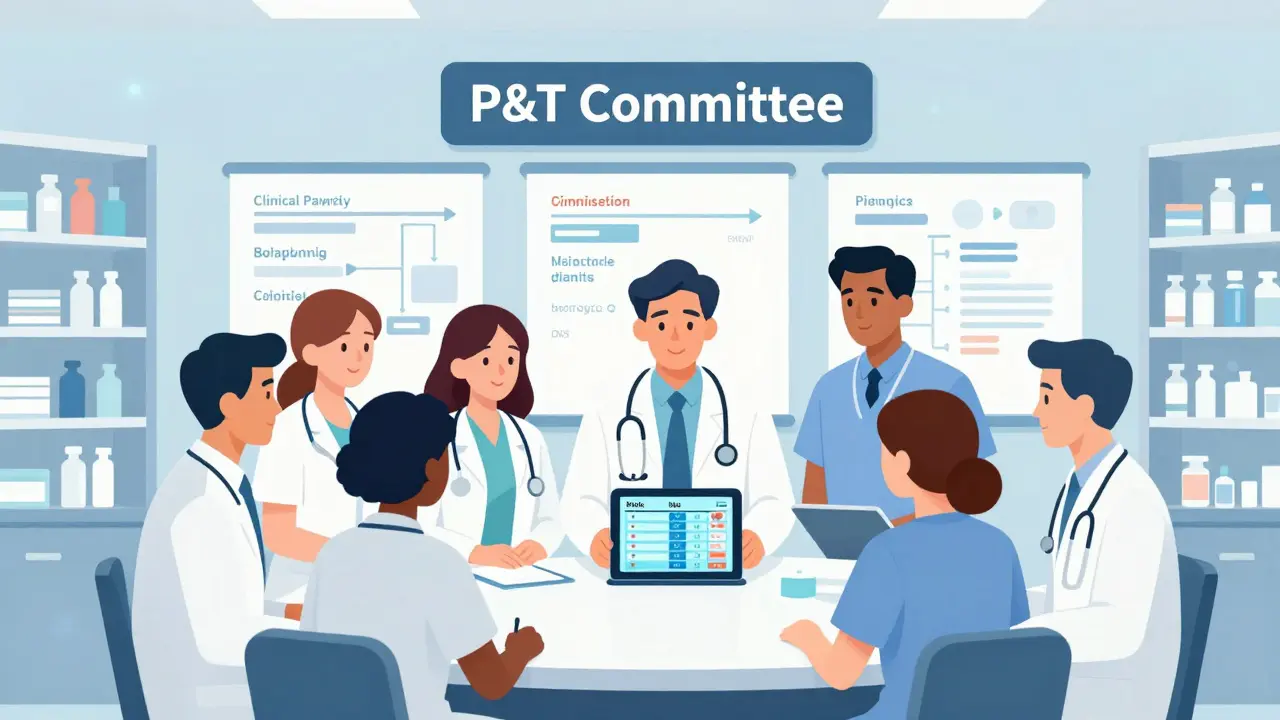
What Drugs Can Be Substituted?
Retail substitution is mostly limited to oral solid doses - pills and capsules. Over 97% of retail substitutions are for these types of medications. Why? Because generics for liquids, inhalers, creams, or injectables are harder to make, harder to prove equivalent, and harder to regulate. Hospitals? They substitute all of it. IV antibiotics, insulin pens, anticoagulants, even biologics. About 22% of hospital therapeutic interchanges involve biologics - drugs that cost tens of thousands of dollars a year. Switching one biologic for another can save a hospital millions. But here’s the catch: hospitals can’t substitute drugs used in clinical trials. Around 87% of trial protocols prohibit any substitution. Retail pharmacies don’t have that restriction - but they rarely see those drugs anyway.Documentation: Paper Trail vs. Digital Thread
Retail pharmacies keep substitution records for two years - usually in a paper log or basic digital system. It’s for compliance. Not for care. Hospitals? Every substitution is recorded in the electronic health record. It’s tied to the patient’s chart, flagged for future reference, and linked to clinical decision support tools. If a patient is discharged and their new retail pharmacist doesn’t know they were switched from amoxicillin to cephalexin in the hospital, that’s a gap. And it’s dangerous. The Institute for Safe Medication Practices found that 23.8% of medication errors during hospital-to-home transitions are linked to substitution mismatches. That’s not a small number. It’s a system failure.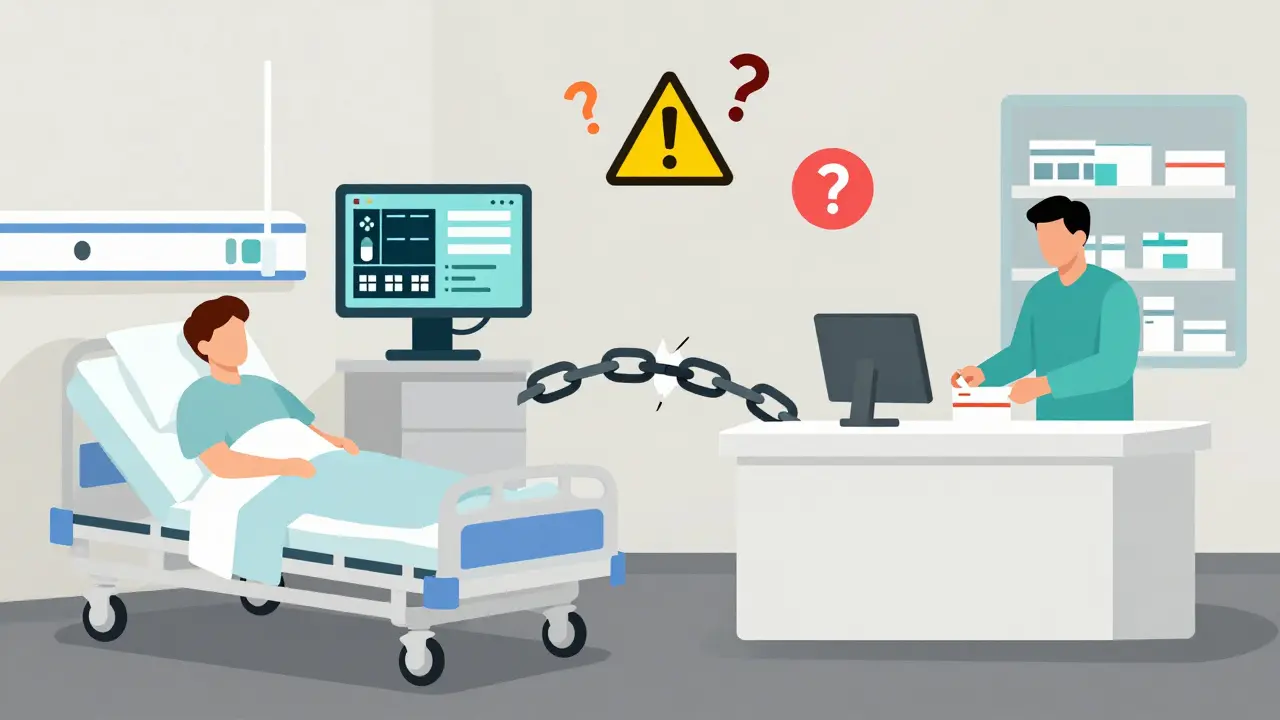
Alana Koerts
December 19, 2025 AT 13:16Generic substitution is just insurance companies outsourcing their cost-cutting to pharmacists who have zero clinical authority
Dominic Suyo
December 19, 2025 AT 14:45Therapeutic interchange in hospitals is basically clinical authoritarianism wrapped in evidence-based jargon
Dikshita Mehta
December 20, 2025 AT 08:58Both systems have their place. Retail keeps meds affordable. Hospital swaps prevent complications. The real issue is the lack of communication between them
Nicole Rutherford
December 21, 2025 AT 19:38Of course patients get confused-pharmacists are just glorified bill collectors with a white coat
Mark Able
December 22, 2025 AT 19:06Wait so if I get switched from Lipitor to atorvastatin in the ER and then my retail pharmacy fills the old script-whose fault is that? The hospital? The pharmacy? The doctor? The system? I just want my heart to keep beating
Nina Stacey
December 24, 2025 AT 17:21you know what i think the real problem is nobody ever explains why the pill looks different and i just take it because i dont want to argue with the pharmacist and then i forget what i was supposed to be taking and sometimes i take two because i think i missed one and then i get dizzy and its not the meds its me im just bad at this
Marsha Jentzsch
December 25, 2025 AT 19:39They’re hiding something. Why do hospitals switch biologics? Who owns the patents? Who profits? Why do retail pharmacies never tell you the generic is made in China? This is all a pharmaceutical cartel
Danielle Stewart
December 27, 2025 AT 11:38It’s not about who decides-it’s about who’s listening. Patients need someone to explain the change, not just log it. A simple conversation can prevent a trip to the ER
mary lizardo
December 28, 2025 AT 15:39The entire framework of therapeutic interchange is a violation of the Hippocratic Oath. Substituting drugs without patient consent is not clinical innovation-it is medical paternalism dressed in algorithmic clothing
Kelly Mulder
December 29, 2025 AT 06:03Why do you think the FDA allows generics? Because they’re not the same. The bioequivalence threshold is 80-125%. That’s a 45% window. Your ‘same drug’ is literally a crapshoot. And hospitals? They’re just swapping one gamble for another
Tim Goodfellow
December 29, 2025 AT 19:46Imagine if your Netflix algorithm swapped your favorite show for another one because it was cheaper. You’d rage-quit. But we accept this with our lives? We’re all just lab rats in a pharmacy-driven dystopia
Elaine Douglass
December 31, 2025 AT 19:03i just want to say thank you to the pharmacists who take the time to explain things even when theyre busy i know its hard and you dont get thanked enough
Takeysha Turnquest
December 31, 2025 AT 19:23Substitution is the modern placebo. We don’t need the real thing anymore-we need the illusion of choice wrapped in cost savings and bureaucratic efficiency
anthony funes gomez
December 31, 2025 AT 22:36Therapeutic interchange is the only rational response to the commodification of medicine. In retail, substitution is a transactional artifact of third-party payer hegemony. In hospital, therapeutic interchange is a clinical dialectic-where the P&T committee functions as a hermeneutic circle, interpreting evidence through the lens of institutional praxis. The pharmacist is not a gatekeeper but a mediator between pharmacokinetic reality and systemic constraint. The patient, meanwhile, is reduced to a data point in a cost-benefit matrix that privileges efficiency over epistemic autonomy. This isn’t healthcare-it’s pharmaceutical governance masquerading as clinical care. The real question isn’t whether substitution occurs-it’s whether we still believe medicine is a healing art or merely an actuarial calculation
anthony funes gomez
January 1, 2026 AT 01:52You’re right about the communication gap. But it’s not just about logs or EHRs. It’s about epistemic silence. When a hospital switches a patient from vancomycin to linezolid, the discharge summary rarely explains why-because the clinical decision was never meant for the patient’s understanding, only for the system’s compliance. The retail pharmacist, armed with a paper script and no context, becomes the unwitting scapegoat for a system that refuses to speak in plain language. We’ve outsourced continuity of care to the most overworked, underpaid professionals in healthcare-and then blamed them when the patient gets confused. The problem isn’t substitution. It’s that we treat human beings like inventory