Pseudotumor Cerebri from Medications: Severe Headache and Vision Changes
 Jan, 26 2026
Medication-Induced Pseudotumor Cerebri Risk Assessment
Medication Risk Assessment
This tool helps you assess your risk of medication-induced pseudotumor cerebri (IIH). Based on your medications and symptoms, it will provide a risk assessment and guidance on next steps.
Risk Assessment Result
Pseudotumor cerebri isn't a tumor. It’s not even rare - but most people have never heard of it until they’re staring at a doctor’s face, terrified, after losing vision for a few seconds while brushing their teeth. This condition, officially called idiopathic intracranial hypertension (IIH), happens when pressure builds up inside your skull. No tumor. No stroke. Just too much fluid squeezing your brain and optic nerves. And in 10-15% of cases, it’s not random. It’s your medication.
What Does Medication-Induced Pseudotumor Cerebri Actually Feel Like?
Imagine a constant, dull ache behind your eyes that gets worse when you lie down or bend over. Now add flashes of darkness - like a TV turning off for 5 seconds - happening multiple times a day. That’s what 92% of patients report. These aren’t migraines. They don’t respond to ibuprofen. They don’t go away with sleep. And if you ignore them, you risk permanent blind spots in your vision. The most common triggers? A few drugs you might be taking right now. Minocycline, a common acne and rosacea antibiotic, causes IIH in 1 out of every 7,500 prescriptions. Isotretinoin (Accutane), used for severe acne, triggers it in 15-20% of medication-related cases. Even growth hormone therapy in kids and corticosteroid withdrawal can do it. The scary part? Symptoms don’t show up right away. You could be on minocycline for six months before your head starts pounding.Why Do These Medications Cause This?
Your brain floats in cerebrospinal fluid (CSF). Normally, that fluid is made, circulated, and drained like a well-tuned plumbing system. Medications like isotretinoin and minocycline mess with that balance. They either flood your system with too much fluid or clog the veins that drain it. In some cases, vitamin A overload (which isotretinoin mimics) directly inflames the membranes around the brain. Corticosteroid withdrawal? That one’s tricky - your body gets used to extra steroids, then when you stop, your CSF production goes haywire. The result? Pressure climbs above 250 mm H₂O. Normal is 70-180. At that point, your optic nerve gets crushed. That’s not just blurry vision - it’s your brain’s signal line getting severed. Studies show 68-72% of patients experience transient visual obscurations: moments where everything goes gray, like a flickering light. If you’ve had that, and you’re on one of these meds, don’t wait.Who’s at Risk - And Why It’s Often Missed
You might think this only happens to overweight women in their 30s. That’s true for the idiopathic kind. But medication-induced IIH doesn’t care. Men. Teens. Kids on growth hormone. It hits across genders and ages. Minocycline-induced cases? Mostly young women, 15-25. Corticosteroid withdrawal? Hits both men and women, peaks at 20-30 and 50-60. Here’s the real problem: primary care doctors misdiagnose this 65-70% of the time. They hear “headache” and think migraine. They hear “vision trouble” and think eye strain. One patient on Reddit described going to five doctors over three months before someone finally did a lumbar puncture. Another, on HealthUnlocked, lost peripheral vision because her ophthalmologist missed the swollen optic nerve - papilledema - for three months. The delay isn’t just frustrating. It’s dangerous. In medication-induced cases, 40% of patients develop major visual field loss within four weeks. That’s faster than idiopathic IIH. And once the nerve is damaged, it doesn’t heal.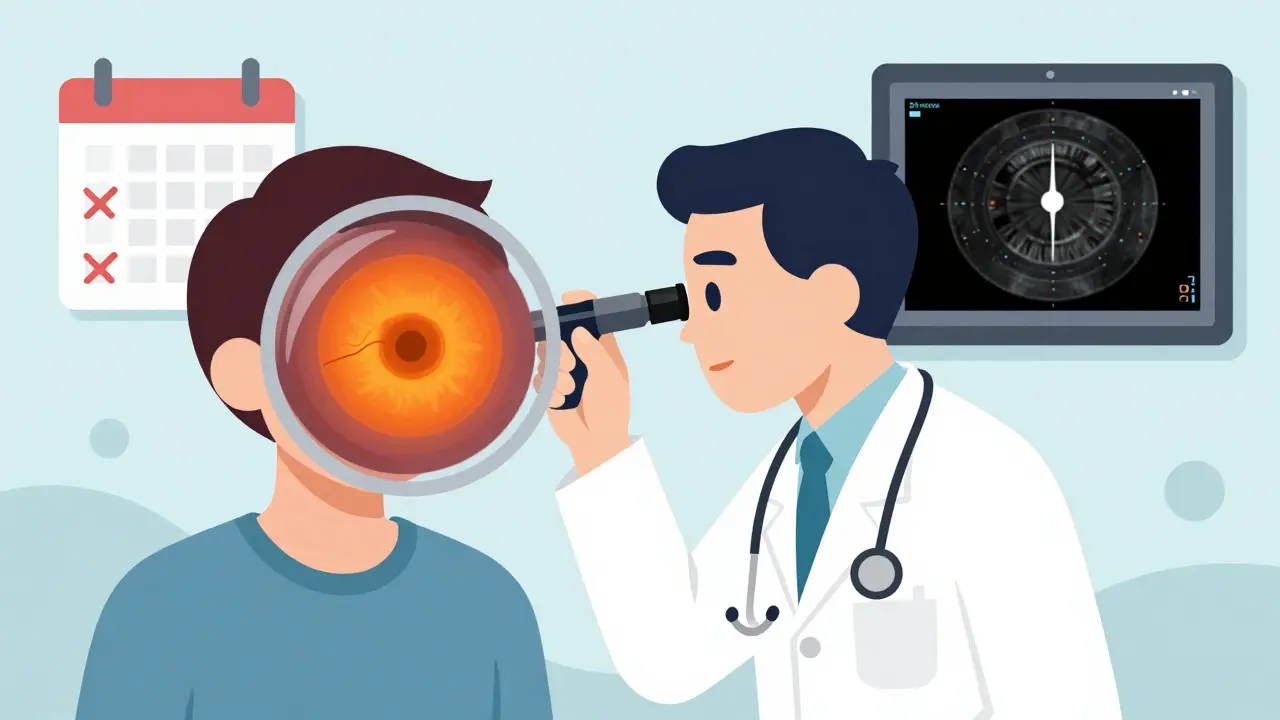
The Top 5 Medications That Trigger It
- Minocycline - The #1 culprit in young adults. Used for acne, rosacea, even some autoimmune conditions. Onset: 1-6 months after starting.
- Isotretinoin (Accutane) - The most aggressive trigger. Vision changes can hit within weeks. FDA requires monthly eye checks for this reason.
- Corticosteroid withdrawal - Stopping prednisone or similar drugs after long-term use. Symptoms show up 1-3 weeks later. Highest risk of permanent vision loss: 18.3%.
- Growth hormone therapy - Especially in children. In 22% of pediatric cases, vision loss happens before headaches even start.
- Excess vitamin A supplements - Not just prescription. High-dose vitamin A pills (over 10,000 IU/day) can trigger it too.
And here’s the worst combo: taking minocycline and isotretinoin together. A 2022 UVA Health study found this doubles your risk - no, septuples it. 7.3 times higher chance of IIH. That’s not a coincidence. That’s a red flag.
How It’s Diagnosed - And Why You Need to Act Fast
There’s no blood test. No MRI that confirms it. The only way to know for sure is a lumbar puncture - a spinal tap - to measure CSF pressure. If it’s above 250 mm H₂O, and your brain looks normal on imaging, you’ve got IIH. But you don’t have to wait for that. Doctors now use optical coherence tomography (OCT) to measure the thickness of your retinal nerve fiber layer. In the first week of IIH, it swells by 15-20 microns - an early warning sign before you even lose vision. Visual field tests using Humphrey perimetry catch blind spots in your upper nasal vision - the first place damage shows up. If you’re on any of these meds and have new headaches that get worse lying down, or you’re having those “graying out” episodes - get tested within 72 hours. Don’t wait for your next appointment. Call your doctor. Say: “I think I might have medication-induced pseudotumor cerebri.”What Happens After Diagnosis?
Stop the drug. That’s step one. For isotretinoin or minocycline, stopping often leads to full recovery in 4-12 weeks. But not always. If pressure stays high, you’ll need medication. Acetazolamide (Diamox) is the standard - it reduces CSF production. A new drug, venglustat, just got FDA approval in 2023 and works 37% better than acetazolamide in trials. In severe cases, you might need surgery - a shunt to drain fluid or a procedure to relieve pressure on the optic nerve. But surgery is rare. Most people recover fully if caught early. The catch? Recovery isn’t instant. Headaches can linger for months. One patient on Reddit said his headaches took four months to fade after stopping minocycline - even though his vision was back to normal.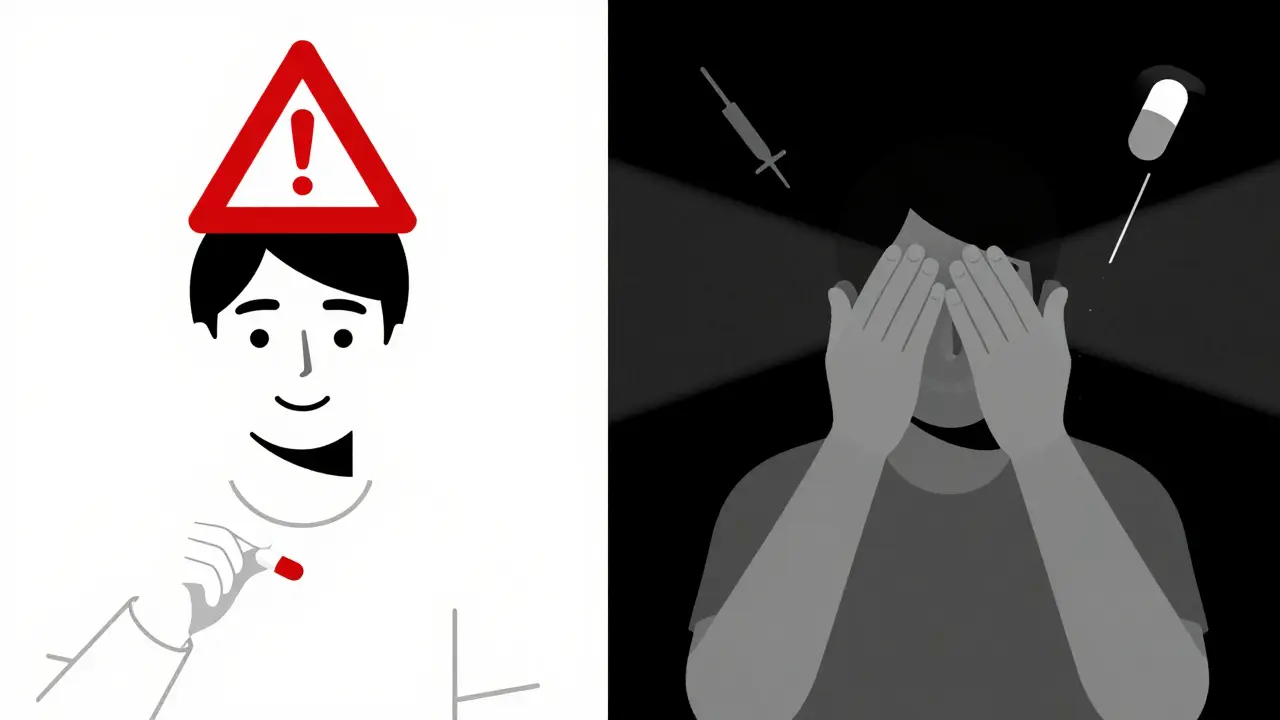
How to Protect Yourself
If you’re on isotretinoin, minocycline, or any of these drugs:- Know the symptoms: headaches worse when lying down, transient vision loss, double vision, ringing in the ears.
- Don’t ignore “just a headache.” If it’s new, persistent, and doesn’t respond to painkillers, get it checked.
- Ask for a fundoscopic exam - your doctor should look at your optic nerve at least once during treatment.
- If you’re on two trigger meds (like minocycline + isotretinoin), ask your doctor if the combo is necessary.
- Keep a symptom journal. Note when headaches start, how long they last, and if vision changes happen with them.
And if you’re a parent? If your child is on growth hormone, make sure they get an eye check every three months - even if they feel fine. Vision loss can sneak up without pain.
Why This Matters More Than Ever
Minocycline use for rosacea has jumped 217% since 2015. Isotretinoin prescriptions are still high. And more people are combining them - thinking, “I’ll just take this for my skin and this for my acne.” Regulatory agencies are catching up. The FDA requires black box warnings. The EMA mandates monthly eye exams for isotretinoin users. And since those rules started, permanent vision loss in EU patients dropped from 12% to 4.7%. But rules only help if you know them. And doctors aren’t always trained to connect the dots. That’s on you.Final Warning
This isn’t a “maybe.” It’s a “now or never.” If you’re on one of these meds and you’ve had three days of strange headaches or fleeting vision loss - go to an eye specialist or neurologist. Don’t wait. Don’t assume it’s stress. Don’t let someone tell you it’s just a migraine. Pseudotumor cerebri from medication is treatable. But only if you catch it before your vision is gone for good.Can pseudotumor cerebri go away on its own?
Yes - but only if the triggering medication is stopped. In medication-induced cases, symptoms often improve within 4 to 12 weeks after discontinuing the drug. However, if pressure stays high or vision loss has already occurred, it won’t resolve without treatment. Waiting too long can lead to permanent damage.
Is pseudotumor cerebri the same as a brain tumor?
No. It’s called "pseudotumor cerebri" because it mimics the symptoms of a brain tumor - like headaches, vision changes, and nausea - but no tumor is present. The issue is increased pressure from excess cerebrospinal fluid, not a mass. Imaging scans like MRI will show a normal brain structure.
Can birth control pills cause pseudotumor cerebri?
Some older studies suggested a link, but current evidence doesn’t support birth control pills as a direct cause. The main medication triggers are minocycline, isotretinoin, corticosteroid withdrawal, growth hormone, and excess vitamin A. If you’re concerned, talk to your doctor - but don’t assume hormonal contraceptives are the culprit.
How long does it take for vision to recover after stopping the medication?
Vision recovery depends on how long pressure was elevated. If caught early - within weeks - most patients regain full vision. If papilledema (swelling of the optic nerve) was severe or lasted more than two months, some vision loss may be permanent. Optical coherence tomography (OCT) helps track nerve healing over time.
Are there any natural remedies for pseudotumor cerebri?
No. There are no proven natural remedies that reduce intracranial pressure. Weight loss helps in idiopathic cases, but it won’t fix medication-induced IIH. The only proven treatments are stopping the trigger drug, medications like acetazolamide or venglustat, and in rare cases, surgery. Relying on supplements or diets can delay critical care and lead to irreversible vision loss.
Can I get pseudotumor cerebri from taking too many vitamin A supplements?
Yes. High-dose vitamin A supplements (over 10,000 IU per day) can trigger IIH because isotretinoin is a synthetic form of vitamin A. Even if you’re not on Accutane, taking megadoses of vitamin A pills, fish liver oil, or certain acne supplements can raise your risk. Stick to the recommended daily allowance unless your doctor advises otherwise.
Why do headaches get worse when lying down?
When you lie flat, gravity no longer helps drain fluid from your head. This causes cerebrospinal fluid to pool, increasing pressure on your brain and optic nerves. That’s why patients often report their worst headaches in the morning or after lying down for long periods. Sitting up or standing helps relieve the pressure temporarily.
TONY ADAMS
January 26, 2026 AT 10:49Bro I was on minocycline for 4 months and started getting these weird head rushes like my brain was gonna pop. Thought it was just stress. Then one day I blinked and the whole left side of my vision went black for 3 seconds. Went to the doc, they laughed. Said I was overthinking. Turned out I had IIH. Stopped the antibiotic and my vision came back. Don't ignore shit like this.
Ashley Karanja
January 26, 2026 AT 18:44As someone who’s spent the last 18 months navigating the neuro-ophthalmological labyrinth after being misdiagnosed with chronic migraines for nine months, I can say with clinical certainty that the pathophysiology of medication-induced IIH is a perfect storm of CSF dynamics disruption, venous outflow obstruction, and retinal nerve fiber layer edema - all amplified by the pharmacokinetic synergy between isotretinoin and minocycline. The fact that OCT can detect microstructural changes in the RNFL before visual field defects manifest is a game-changer. We need mandatory baseline and monthly OCT screenings for anyone on these meds, not just ‘if you feel weird.’ This isn’t anecdotal - it’s neurobiology.
Napoleon Huere
January 28, 2026 AT 05:20Think about it - we’re literally poisoning ourselves with pills meant to fix acne, then acting shocked when our brains start screaming. We treat our skin like it’s a separate entity from our nervous system. But your skin’s not isolated. Your brain’s not isolated. Everything’s connected. And when you flood your body with synthetic vitamin A analogs and tetracyclines, you’re not just changing your pores - you’re changing your cerebrospinal fluid pressure. It’s not magic. It’s chemistry. And we ignore it until it’s too late.
Neil Thorogood
January 29, 2026 AT 14:58So let me get this straight - you take a pill to clear your face… and end up risking your vision? 😅 And doctors still act like it’s ‘just a headache’? Bro, if your face is clearer but your eyes are going dark? That’s not a win. That’s a trade you didn’t sign up for. 🚨 Stop the meds. Get the lumbar puncture. Don’t wait for your ‘next appointment.’ Your eyes don’t have a ‘next appointment.’
Joanna Domżalska
January 30, 2026 AT 04:33Everyone’s panicking about minocycline and Accutane… but what about all the people who took them for years and never had issues? This feels like fearmongering. Maybe it’s just bad genetics? Or maybe you’re just anxious and your brain’s making up symptoms? I’ve had headaches since I was 12. Should I quit every medication I’ve ever taken?
Faisal Mohamed
January 31, 2026 AT 05:52Interesting how the pathophysiology of IIH intersects with the glymphatic system’s circadian modulation - particularly in the supine position, where CSF clearance is attenuated, leading to preferential perivascular fluid accumulation around the optic nerve sheath. The fact that symptom onset correlates with nocturnal recumbency isn’t coincidental; it’s biomechanical. We’re seeing a neurovascular dysregulation cascade triggered by xenobiotic interference with retinoid metabolism. Also 🤯
Curtis Younker
January 31, 2026 AT 11:59Hey everyone - if you’re on any of these meds, I get it. You’re trying to feel better about your skin, your confidence, your life. But listen - your vision is worth more than clear skin. I know because I almost lost mine. I was on minocycline for acne. Thought the headaches were just from staring at screens. Then I had that moment where everything went gray - twice in one day. I called my dermatologist and said, ‘I’m not waiting.’ They didn’t believe me. So I went to an ER neurologist. Got the LP. Turned out I had IIH. Stopped the med. Took Diamox. Vision came back. I’m 100% now. Don’t be like me - don’t wait until you’re scared. Go now. Get checked. Your future self will thank you. 💪👁️
Shawn Raja
February 2, 2026 AT 00:54So we’ve got a system where a 17-year-old girl gets prescribed Accutane and minocycline together because ‘it’ll clear her skin faster’ - and nobody bats an eye. Meanwhile, the FDA has black box warnings, but no one’s training med students on this. We’re treating acne like it’s a fashion problem, not a neurological risk. And then we wonder why people end up blind. This isn’t just medical negligence - it’s cultural. We normalize risk because we’re obsessed with ‘perfect skin.’ But your eyes don’t care how Instagram-ready your face is. They just want to work. 🇺🇸