Parkinson’s DBS: Deep Brain Stimulation and Candidate Selection
 Feb, 14 2026
When medication stops working the way it used to, and shaking, stiffness, or freezing won’t quit no matter how many pills you take - that’s when many people with Parkinson’s start asking about Deep Brain Stimulation. It’s not a cure. It doesn’t stop the disease. But for the right person, it can turn a life of constant struggle into one where movement feels more like yours again.
What Deep Brain Stimulation Actually Does
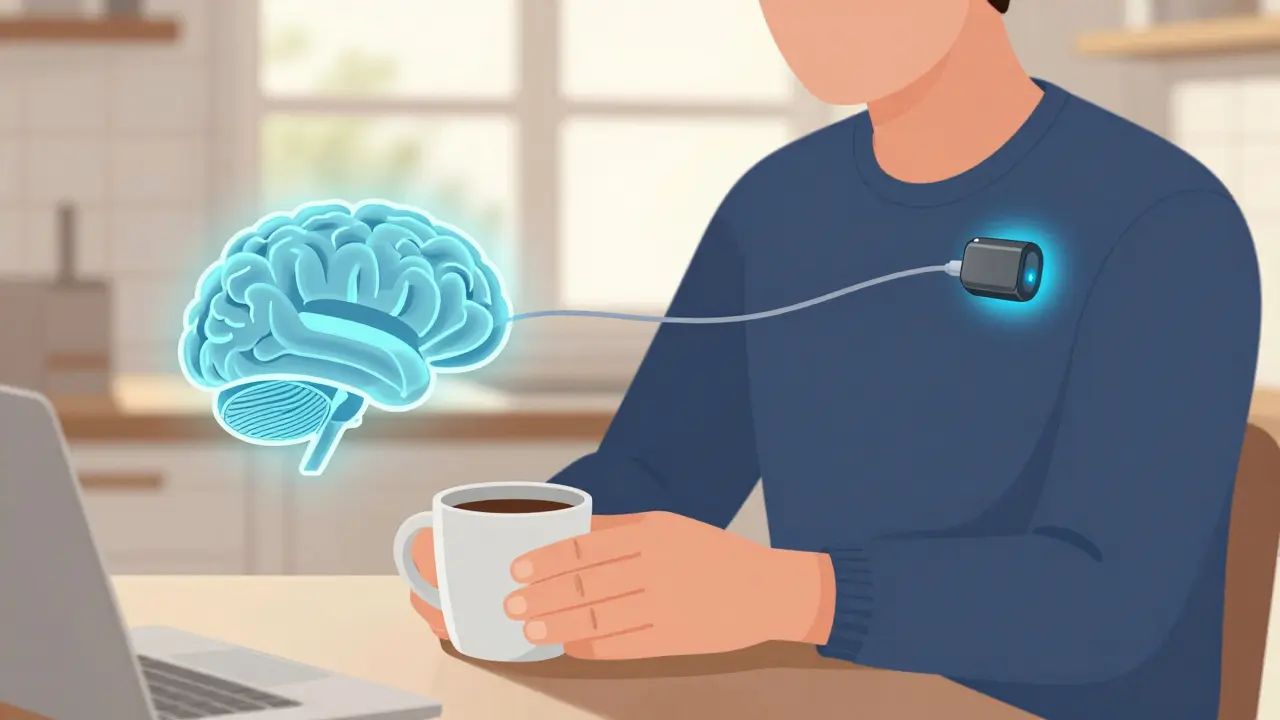
Deep Brain Stimulation, or DBS, is a surgery where thin wires are placed deep inside the brain. These wires connect to a small battery pack, usually implanted under the skin near the collarbone. The device sends tiny electrical pulses to specific brain areas that control movement. It doesn’t zap or destroy tissue. It just tweaks the signals. Think of it like a pacemaker for your brain - but instead of regulating heartbeat, it smooths out the chaotic signals causing tremors, rigidity, and slowness.
The two most common targets are the subthalamic nucleus (STN) and the globus pallidus interna (GPi). STN tends to let people cut their medication doses by 30-50%. GPi often does a better job at reducing those painful, involuntary movements called dyskinesias. Both can slash motor fluctuations by 60-80%. The EARLYSTIM trial, published in The New England Journal of Medicine in 2013, showed patients who got DBS early in their disease course had a 23-point improvement in quality of life scores - more than double the gain from just optimizing meds.
Who Is a Good Candidate?
Not everyone with Parkinson’s is a fit for DBS. The biggest mistake people make is thinking it works for all symptoms. It doesn’t. DBS helps the motor symptoms that respond to levodopa. If your tremors or stiffness get better after taking Sinemet, that’s a good sign. If your balance issues, freezing, or speech problems don’t improve with medication, DBS likely won’t fix them either.
The standard criteria, laid out in the 1999 CAPSIT-PD guidelines and still used today, are simple:
- You’ve had Parkinson’s for at least five years.
- You have clear, consistent improvement (at least 30%) on your motor score after taking levodopa.
- Your cognitive test scores are normal - MMSE above 24 or MoCA above 21.
- You don’t have significant depression, anxiety, or hallucinations that aren’t controlled.
- You don’t have atypical parkinsonism - like progressive supranuclear palsy or multiple system atrophy. Those don’t respond to DBS.
But here’s the catch: many people who meet these criteria never even get referred. The Parkinson’s Foundation says only 1-5% of eligible patients ever get screened. Why? Because doctors don’t always know when to bring it up. Or patients think it’s too risky. Or they’re told, “Wait until it’s worse.” That delay can cost years of better mobility.
What Happens During Surgery?
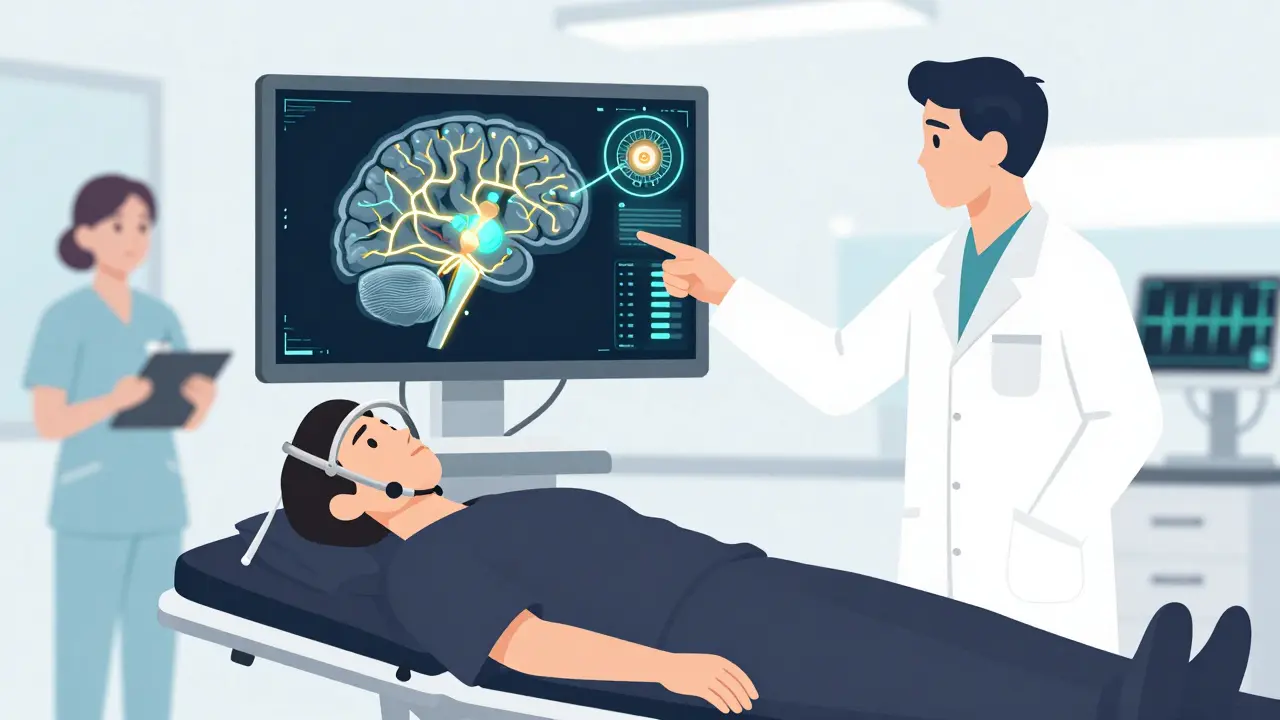
The surgery isn’t done under full general anesthesia. You’re awake - mostly. Sedation keeps you calm, but you need to be alert enough to answer questions. Why? Because the surgeons use your responses to map the brain. They’ll ask you to move your hand, count backward, or say a word while testing different spots. If you feel a twitch or your voice changes, they know they’re close to the right spot.
Using a 3T MRI and a metal frame on your head, they guide electrodes to within a millimeter of the target. Microelectrode recording listens to individual brain cells firing. It’s like tuning a radio - you’re searching for the exact frequency that controls movement. The whole process can take 3 to 6 hours. Most people go home the next day.
Modern systems like Medtronic’s Percept™ PC or Boston Scientific’s Vercise™ Genus™ can actually sense brain activity. They detect abnormal beta wave patterns (13-35 Hz) that spike during freezing or stiffness. Some newer devices even adjust stimulation automatically, based on what the brain is doing in real time. That’s called closed-loop DBS, and early data shows 27% better symptom control than older models.
The Trade-Offs: Benefits vs. Risks
Let’s be honest - this isn’t a simple yes or no. The benefits are real, but so are the downsides.
On the plus side: people report regaining independence. They can button shirts again. Walk without shuffling. Sleep better because they’re not tossing and turning from stiffness. Medication side effects like nausea, hallucinations, and sudden “on-off” swings fade. One Reddit user said, “My OFF time dropped from six hours a day to one. I started cooking dinner again.”
But complications happen. About 1-3% get a brain bleed. 5-15% face hardware issues - infection, broken wires, or a device that stops working. Battery replacements are needed every 3-5 years for non-rechargeable models. Even rechargeable ones last 9-15 years, but the surgery to swap them isn’t fun.
And then there’s the brain. Some people notice subtle changes. Word-finding trouble. Slower thinking. Trouble planning meals. One person on the Parkinson’s Foundation Forum said, “I can’t remember what I was going to say mid-sentence.” That’s not rare. It’s not always permanent, but it’s real. That’s why neuropsychological testing is non-negotiable. If your memory or judgment is already slipping, DBS might make it worse.
DBS vs. Other Options
What about focused ultrasound? It’s non-invasive, no cuts, no implants. Approved for tremor-dominant Parkinson’s since 2019. But it only treats one side of the body. And it’s irreversible - you can’t turn it off. If the side effects are bad, you’re stuck.
What about lesioning? Thalamotomy or pallidotomy? These destroy brain tissue. They work - but only once. And if something goes wrong, you can’t undo it. DBS is adjustable. Reversible. Re-programmable. That’s why it’s become the gold standard.
Compared to just taking more pills? DBS wins. The EARLYSTIM trial showed patients who got DBS early had far better quality of life than those who waited and kept adjusting meds. And it’s not just about movement. People sleep better, feel less anxious, and report less caregiver burden.

The Hidden Challenge: Programming and Patience
Getting the device implanted is only half the battle. The real work starts after surgery. It takes 6 to 12 months to fine-tune the settings. You’ll need monthly visits. You’ll need to keep a symptom diary. You’ll need to track how your meds and stimulation interact. One person described it as “trying to find the right radio station while the signal keeps changing.”
And not all centers are equal. Big academic hospitals with high volumes - over 50 procedures a year - have far fewer complications. They have dedicated DBS coordinators, neurologists who specialize in programming, and teams that talk to each other. Smaller clinics? You might get a quick check-in and be sent off with a remote control and no real guidance.
Insurance can be a nightmare too. Medicare covers DBS for Parkinson’s since 2003, but getting approval can take 3-6 months. You’ll need documentation showing you’ve tried and failed with multiple medication regimens. That’s not just paperwork - it’s a marathon.
What No One Tells You
DBS doesn’t stop Parkinson’s. It doesn’t cure dementia. It doesn’t fix your balance. It doesn’t help with constipation or low blood pressure. If you think it’s going to make you “normal” again, you’ll be disappointed.
But if you’re someone who used to hike, play with grandkids, or drive without fear of freezing - and now you can’t - then DBS might give you back the parts of your life that matter most. The data is clear: 70-80% of well-selected patients see major motor improvement. And 85% still benefit 10 years later.
The biggest regret people have? Waiting too long. The second biggest? Not talking to a DBS team early enough. You don’t need to be desperate. You just need to be ready.
Is Deep Brain Stimulation right for everyone with Parkinson’s?
No. DBS is only effective for motor symptoms that improve with levodopa. It doesn’t help with balance problems, freezing, speech issues, or non-motor symptoms like depression or dementia. People with atypical parkinsonism - such as progressive supranuclear palsy or multiple system atrophy - typically don’t benefit. Cognitive decline, uncontrolled psychiatric conditions, or poor response to levodopa are also disqualifiers.
How long does it take to see results after DBS surgery?
Motor improvements often show up within days or weeks after the device is turned on. But full optimization takes time. It usually requires 6 to 12 months of regular programming visits to fine-tune stimulation settings and medication timing. Many patients report their best results after the first year.
Can DBS eliminate the need for Parkinson’s medication?
Not completely, but it can reduce medication doses significantly. On average, patients reduce their levodopa equivalent daily dose by 30-50%. STN targets allow for greater reduction than GPi. However, most people still need some medication to manage symptoms not controlled by stimulation, like balance or speech issues.
What are the risks of DBS surgery?
The most serious risk is brain bleeding, which occurs in 1-3% of cases and can cause stroke-like symptoms. Infection happens in about 3-5% of patients. Hardware problems - like broken wires or device malfunction - affect 5-15%. Some people experience temporary side effects like tingling, muscle tightness, or speech changes during stimulation, which can often be fixed by adjusting settings.
How does DBS compare to focused ultrasound?
Focused ultrasound is non-invasive and approved for tremor-dominant Parkinson’s. But it only treats one side of the body and can’t be adjusted after treatment. DBS works on both sides, is fully adjustable, and can be turned off or reprogrammed. DBS also helps with a broader range of motor symptoms beyond just tremor, including rigidity and slowness. Focused ultrasound is an option for those who can’t have surgery, but DBS offers more flexibility and long-term control.
Are there new developments in DBS technology?
Yes. New systems like Medtronic’s Percept™ PC can sense brain activity in real time and adjust stimulation automatically - called closed-loop DBS. Early trials show 27% better symptom control. Research is also exploring earlier intervention (as early as 3 years after diagnosis) and using genetic markers like LRRK2 mutations to predict who responds best. Integration with wearable devices, like Apple Watch tremor tracking, is also being tested to personalize therapy further.
Why is DBS underused in Parkinson’s patients?
Many patients are never referred because doctors assume they’re too early or too late in their disease. Others fear surgery or believe DBS is a cure. Insurance delays, lack of access to specialized centers, and misinformation about outcomes also play a role. Only 1-5% of eligible patients receive DBS, despite strong evidence showing it improves quality of life and reduces long-term medication side effects.
Can DBS help with non-motor symptoms like depression or sleep problems?
DBS is not designed to treat non-motor symptoms. Some patients report secondary improvements in sleep or mood because their movement improved and they became more active. But in some cases, stimulation can worsen mood or cognition. That’s why neuropsychological screening is required before surgery. If depression or anxiety is a major issue, it should be treated separately before considering DBS.
What Comes Next?
If you’re considering DBS, start by asking your neurologist for a referral to a movement disorders clinic with a DBS team. Don’t wait until you’re stuck in bed. Don’t assume you’re too young or too old. The best time to consider it isn’t when you’re desperate - it’s when you still have hope, and your body still responds to medication. That’s when DBS can truly change your life.
Daniel Dover
February 14, 2026 AT 12:02Kaye Alcaraz
February 14, 2026 AT 23:43Josiah Demara
February 16, 2026 AT 04:46Joe Grushkin
February 16, 2026 AT 20:16Betty Kirby
February 17, 2026 AT 02:10Esha Pathak
February 17, 2026 AT 23:47Mike Hammer
February 18, 2026 AT 05:33Virginia Kimball
February 19, 2026 AT 09:37Kapil Verma
February 21, 2026 AT 07:16Michael Page
February 22, 2026 AT 21:25Mandeep Singh
February 24, 2026 AT 08:42Sarah Barrett
February 26, 2026 AT 00:05Erica Banatao Darilag
February 26, 2026 AT 15:45Josiah Demara
February 27, 2026 AT 18:39