OTC Sunscreens: How SPF, Broad Spectrum, and Reapplication Actually Work
 Dec, 9 2025
Most people think sunscreen is just a summer thing - slap it on before the beach, rinse off when you get home. But here’s the truth: OTC sunscreen isn’t optional. It’s medical-grade skin protection, and if you’re not using it right, you’re wasting your money and risking your skin.
In Australia, where I live in Melbourne, UV levels hit extreme even on cloudy days. The Cancer Council says one in two Australians will develop skin cancer by age 70. That’s not a scare tactic - it’s data. And the number one preventable cause? Sun exposure. Not just sunburns. Daily UV exposure - even through windows or during a 10-minute walk - adds up. That’s why dermatologists don’t just recommend sunscreen. They require it.
What SPF Actually Means (And Why Higher Isn’t Always Better)
SPF stands for Sun Protection Factor. It’s not a measure of how long you can stay in the sun. It’s a ratio. SPF 30 means your skin takes 30 times longer to burn than if you had no protection. That’s it.
Here’s the math: SPF 15 blocks 93% of UVB rays. SPF 30 blocks 97%. SPF 50 blocks 98%. SPF 100? 99%. The jump from 30 to 50 is only 1% more protection. But the price? Often doubles. That’s not science - that’s marketing.
What most people don’t realize is that SPF only measures UVB protection - the kind that causes sunburn. It says nothing about UVA, the invisible rays that penetrate deeper, age your skin, and trigger melanoma. That’s where broad spectrum comes in.
Broad Spectrum Isn’t Just a Label - It’s a Requirement
If a bottle says “broad spectrum,” it means it’s been tested to protect against both UVA and UVB. In the U.S., the FDA requires this testing to meet a minimum critical wavelength of 370 nanometers. That’s the point where UVA rays start becoming dangerous. Anything below that? Not broad spectrum. Just a fancy bottle.
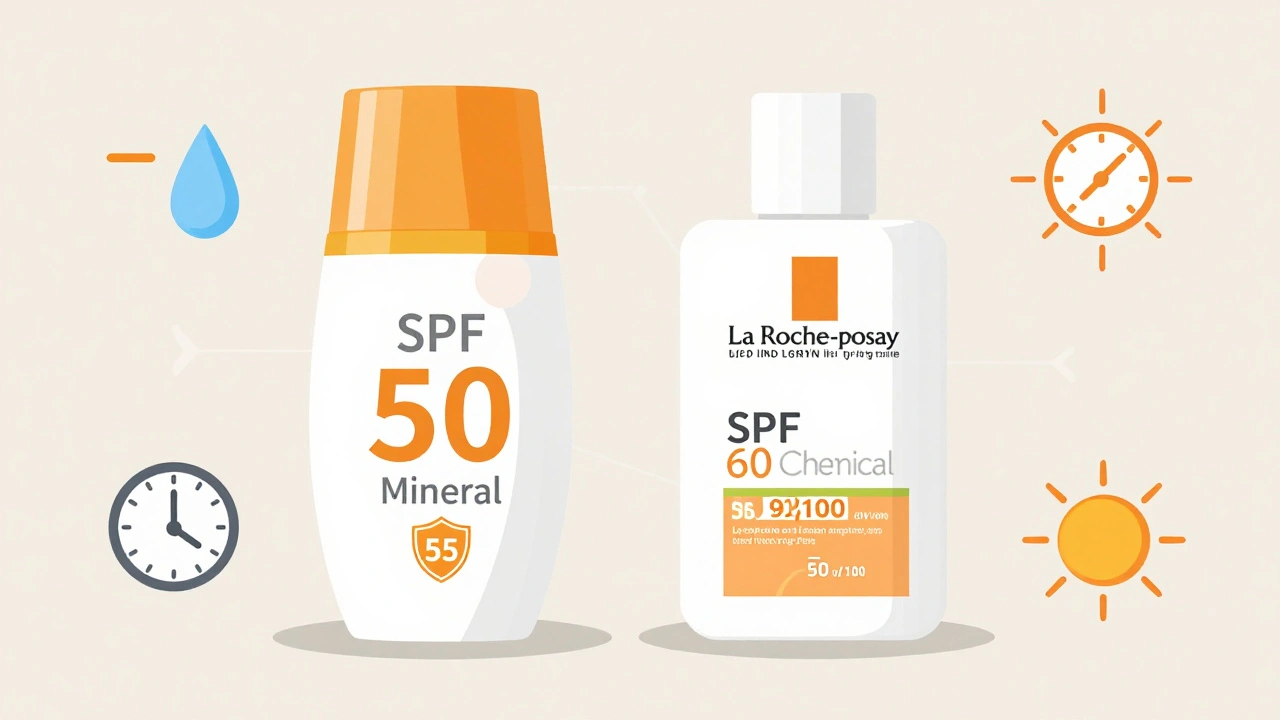
Here’s the kicker: many mineral sunscreens - the ones with zinc oxide or titanium dioxide - claim broad spectrum but fail the test. Consumer Reports tested 107 sunscreens in 2025. The top mineral sunscreen, Blue Lizard Sensitive SPF 50, scored only 55 out of 100 for UVA protection. Meanwhile, La Roche-Posay Anthelios Melt-in Milk SPF 60, a chemical sunscreen, scored 92. Why? Because mineral filters often don’t spread evenly or cover enough of the UVA spectrum unless they’re at high concentrations (20%+ zinc oxide). Most drugstore mineral sunscreens are under 10%.
And if you’re using a mineral sunscreen because you’re worried about chemicals? You’re not wrong to be cautious. But don’t trade protection for peace of mind. Oxybenzone, one of the most common chemical filters, is banned in Hawaii and Palau because it harms coral reefs. But if you’re not swimming in the ocean, it’s still one of the most effective UVA blockers available. The real issue? Most people don’t apply enough.
The 2 mg/cm² Rule - Most People Apply Half as Much as They Should
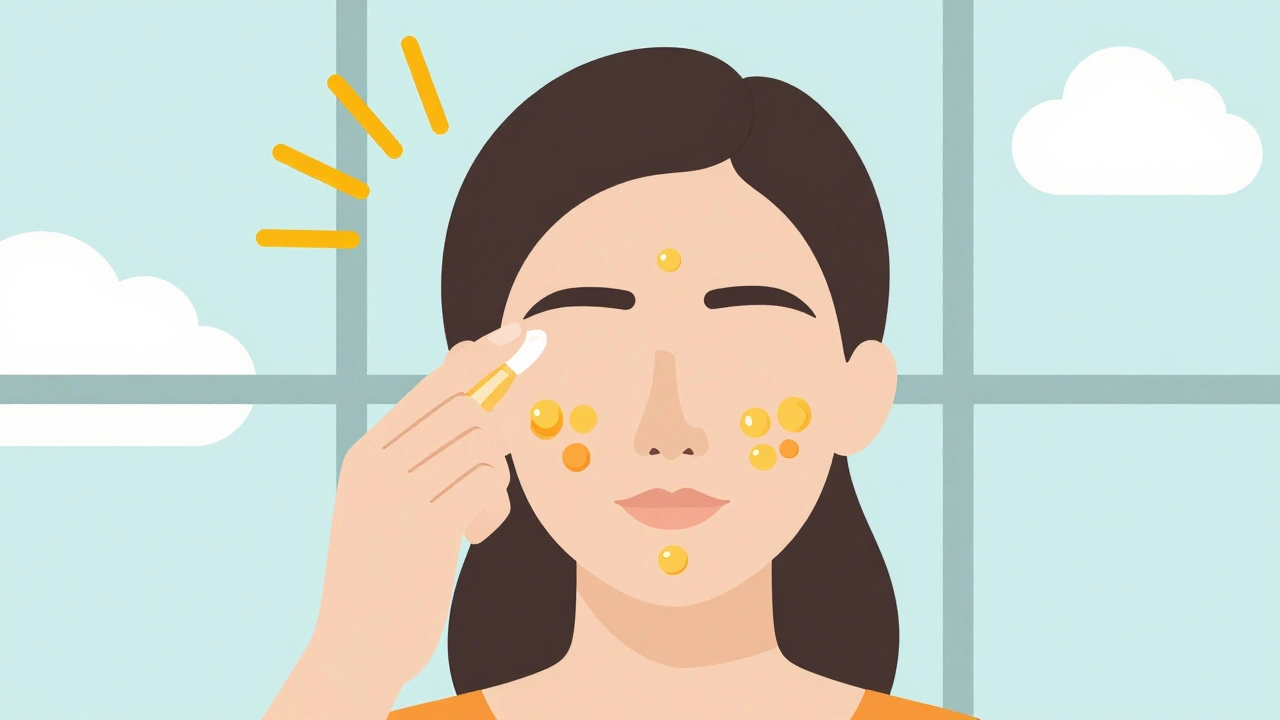
Every sunscreen label lists SPF based on applying 2 milligrams of product per square centimeter of skin. That’s about a shot glass full for your whole body. For your face? A quarter teaspoon. That’s five pea-sized dots - one for each cheek, forehead, nose, and chin.
Studies show 90% of people apply less than half that. That means an SPF 50 becomes an SPF 15. An SPF 30 becomes an SPF 10. You’re not protected. You’re just tan.
And here’s the problem: most people think sunscreen is a one-time thing. They put it on in the morning. Go to work. Walk the dog. Lunch outside. By 2 p.m., it’s worn off. Sweat, oil, rubbing your face on your shirt - all of it removes sunscreen. Even if it’s labeled “water-resistant.”
Reapplication Isn’t Optional - It’s Non-Negotiable
The FDA says reapply every two hours. The American Academy of Dermatology says the same. But a 2024 study in the Journal of the American Academy of Dermatology found only 14.3% of people on the beach actually reapply. Most think “I applied this morning, I’m good.”
Here’s what you need to know: water resistance doesn’t mean waterproof. It means 40 or 80 minutes of protection while swimming or sweating. After that? You’re exposed. And if you towel off? You’re wiping off 80% of what’s left. Reapply immediately.
And yes - you need to reapply even if you’re not swimming. Even if you’re sitting under an umbrella. UV rays bounce off sand, water, concrete. They get through clouds. They penetrate glass. Daily exposure is cumulative. That’s why dermatologists in Melbourne tell patients: sunscreen every day. Rain or shine. Winter or summer.
Mineral vs. Chemical: Which One Should You Use?
Mineral sunscreens (zinc oxide, titanium dioxide) sit on top of your skin and reflect UV rays. They work immediately. They’re less likely to irritate sensitive skin. But they often leave a white cast - especially on darker skin tones. And as we saw, many don’t deliver real UVA protection.
Chemical sunscreens (avobenzone, octinoxate, oxybenzone) absorb UV rays and convert them into heat. They blend in better. They’re more effective at blocking UVA. But they can sting eyes, cause breakouts, or trigger allergies. And yes, some ingredients like oxybenzone are linked to environmental damage.
So which one? It’s not about being “natural” or “chemical.” It’s about what works for your skin and lifestyle.
If you have melasma, rosacea, or sensitive skin - go mineral. Look for EltaMD UV Clear SPF 46 with 9% zinc oxide and niacinamide. It’s clinically proven to calm inflammation.
If you want maximum protection, don’t sweat the white cast - go chemical. La Roche-Posay Anthelios, Supergoop! Unseen Sunscreen, and Neutrogena Ultra Sheer are all top performers in independent testing. They’re invisible, non-greasy, and actually block what they claim.
And if you’re using a drugstore brand with no name recognition? Check Consumer Reports’ latest results. In January 2025, they found one mineral sunscreen labeled SPF 30 that only blocked UV like SPF 4. Another claimed SPF 50 but delivered SPF 13. You’re not guessing. You’re buying protection.

What to Look for on the Label
Here’s your cheat sheet:
- SPF 30 or higher - no exceptions
- Broad Spectrum - mandatory for UVA protection
- Water-resistant for 40 or 80 minutes - if you sweat or swim
- Active ingredients: zinc oxide (5-25%), titanium dioxide (2-15%), avobenzone (up to 3%), octinoxate (up to 7.5%)
- Don’t trust “SPF 100” - it’s a trap
- Check the expiration date - sunscreen loses potency after two years
And if you’re buying online? Stick to major brands sold in pharmacies or dermatologist offices. Avoid Amazon third-party sellers. Counterfeit sunscreens are a growing problem. Some have no active ingredients at all.
Real-World Mistakes (And How to Fix Them)
Here are the top three mistakes people make - and how to fix them:
- “I use makeup with SPF.” - That’s not enough. Most makeup SPF is SPF 15 at best, and you’re not applying enough. Use sunscreen underneath.
- “I don’t need it on cloudy days.” - Up to 80% of UV rays penetrate clouds. Melbourne has some of the highest UV levels in the world. Daily use isn’t optional.
- “I reapply once a day.” - No. Every two hours. After swimming, sweating, or towel drying. Set a phone alarm if you have to.
And if your sunscreen pills under makeup? Wait 15 minutes after applying before you put on foundation. Use a light layer. Let it sink in. Don’t rub it in like lotion.
Try UV camera apps like Sunscreenr. They show you exactly where you missed. Most people are shocked.
The Bottom Line
OTC sunscreen isn’t a luxury. It’s not a beauty product. It’s medicine. And like any medicine, it only works if you use it correctly.
Use SPF 30 or higher. Make sure it’s broad spectrum. Apply a quarter teaspoon to your face. Reapply every two hours. Don’t skip it because it’s winter. Don’t skip it because you’re in the car. Don’t skip it because you’re “not going to the beach.”
Every day you skip, you’re adding to your lifetime UV damage. That’s how skin cancer happens. Not from one bad sunburn. From a thousand tiny exposures you didn’t protect against.
Don’t gamble with your skin. Use the right product. Apply enough. Reapply like clockwork. That’s the only way to cut your melanoma risk in half - and keep your skin looking like yours for decades to come.
Doris Lee
December 9, 2025 AT 17:36Just started using sunscreen daily after my dermatologist called me out for premature wrinkles. I was skeptical, but now I don’t leave the house without it. Even on rainy days. My skin has never looked better.
Ben Greening
December 10, 2025 AT 10:44The data on daily UV exposure is undeniable. I work indoors, but my commute involves a 15-minute walk. I used to think that was negligible. Now I apply SPF 30 every morning like brushing my teeth. Simple habit. Huge impact.
David Palmer
December 11, 2025 AT 11:00SPF 100 is a scam. I get it. But why do they even make it? Marketing. Pure and simple. I just use the cheap stuff and reapply. Done.
Michaux Hyatt
December 12, 2025 AT 12:01For anyone worried about mineral sunscreens leaving a white cast-try Vanicream SPF 50. It’s tinted, gentle, and actually works. No more ghost face. Also, don’t forget your ears and neck. People always miss those.
Michelle Edwards
December 12, 2025 AT 18:45I used to hate sunscreen. It felt greasy, ruined my makeup, made me feel like I was wearing a plastic mask. Then I tried Supergoop! Unseen. It’s like nothing. Now I can’t imagine my routine without it. You just need to find your match.
Raj Rsvpraj
December 13, 2025 AT 13:01Why are we trusting American and Australian dermatologists? In India, we’ve used turmeric and neem paste for generations to protect skin from sun. No chemicals. No nonsense. Your Western obsession with chemical filters is dangerous and unnecessary.
Neelam Kumari
December 14, 2025 AT 17:46So you’re telling me I need to reapply sunscreen every two hours… while I’m at my desk? And you think I have time for that? You’re not a dermatologist. You’re a sales rep for La Roche-Posay.
Jack Appleby
December 15, 2025 AT 22:38Incorrect. The critical wavelength threshold for broad spectrum is 370 nm, but the FDA’s requirement is actually 370 nm minimum *and* a UVA/UVB ratio ≥ 0.7. Most mineral sunscreens fail this. Also, zinc oxide must be ≥ 20% for full UVA coverage-most drugstore brands are under 10%. You’re misrepresenting the data.
Kaitlynn nail
December 15, 2025 AT 23:48It’s not sunscreen. It’s self-care. And if you’re not doing it, you’re just… aging.
Queenie Chan
December 16, 2025 AT 00:53There’s something poetic about slathering on zinc oxide like a modern-day monk anointing himself against the sun’s wrath-white, ritualistic, defiant. But then you realize: it’s not about aesthetics. It’s about surviving a planet that’s literally cooking our skin with invisible fire. We’re all just trying to outlast the UV.
Nikki Smellie
December 16, 2025 AT 09:28Did you know that sunscreen companies are secretly funded by the tanning industry? They want you to think SPF 100 is better so you’ll keep buying it-and still get skin cancer. It’s a trap. Use natural oils. Coconut oil has SPF 4. It’s enough. The FDA is corrupt.
Stephanie Maillet
December 17, 2025 AT 01:03I appreciate the passion here, but I wonder-do we ever stop to consider that our obsession with perfect skin might be as much about cultural pressure as it is about health? We’ve turned sunscreen into a moral obligation, when maybe what we need is a more balanced relationship with the sun-not fear, but respect. Still… I do use SPF 30 daily. Just… quietly.
Frank Nouwens
December 18, 2025 AT 05:43Thank you for the detailed breakdown. As someone who works in dermatology research, I can confirm the 2 mg/cm² application standard is rarely met. The most effective sunscreen is the one you use consistently, correctly, and repeatedly. The science is clear. The challenge is human behavior.