Monitoring Your Health After Switching to Generics
 Dec, 3 2025
Switching from a brand-name drug to a generic version is one of the most common changes in your medication routine - and for good reason. Generics save money, often by 80% or more, and they’re just as effective for most people. But that doesn’t mean you can just swap them and forget about it. Monitoring your health after switching to generics isn’t optional if you’re on certain medications. It’s a smart, necessary step.
Why You Might Notice a Difference
Generic drugs are required by the FDA to have the same active ingredient, strength, and dosage form as the brand-name version. They must also prove they deliver the same amount of medicine into your bloodstream at the same rate. That’s called bioequivalence. For most people, this works perfectly. But here’s the thing: bioequivalence doesn’t mean identical. The inactive ingredients - the fillers, dyes, and coatings - can be different. And for some people, those differences matter.Take levothyroxine, for example. It’s used to treat hypothyroidism. Even tiny changes in how much of the drug gets absorbed can throw your thyroid levels off. A 2022 FDA report found that 12% of people switching to a new generic version of levothyroxine reported changes in energy, weight, or heart rate. That’s not because the generic was unsafe. It’s because the body is sensitive to small shifts in hormone levels.
Same goes for drugs like warfarin (a blood thinner), lamotrigine (for seizures), and some antidepressants like bupropion. These have what’s called a narrow therapeutic index. That means the difference between the right dose and a dangerous one is very small. Even a 5% change in absorption can cause problems.
What to Track After the Switch
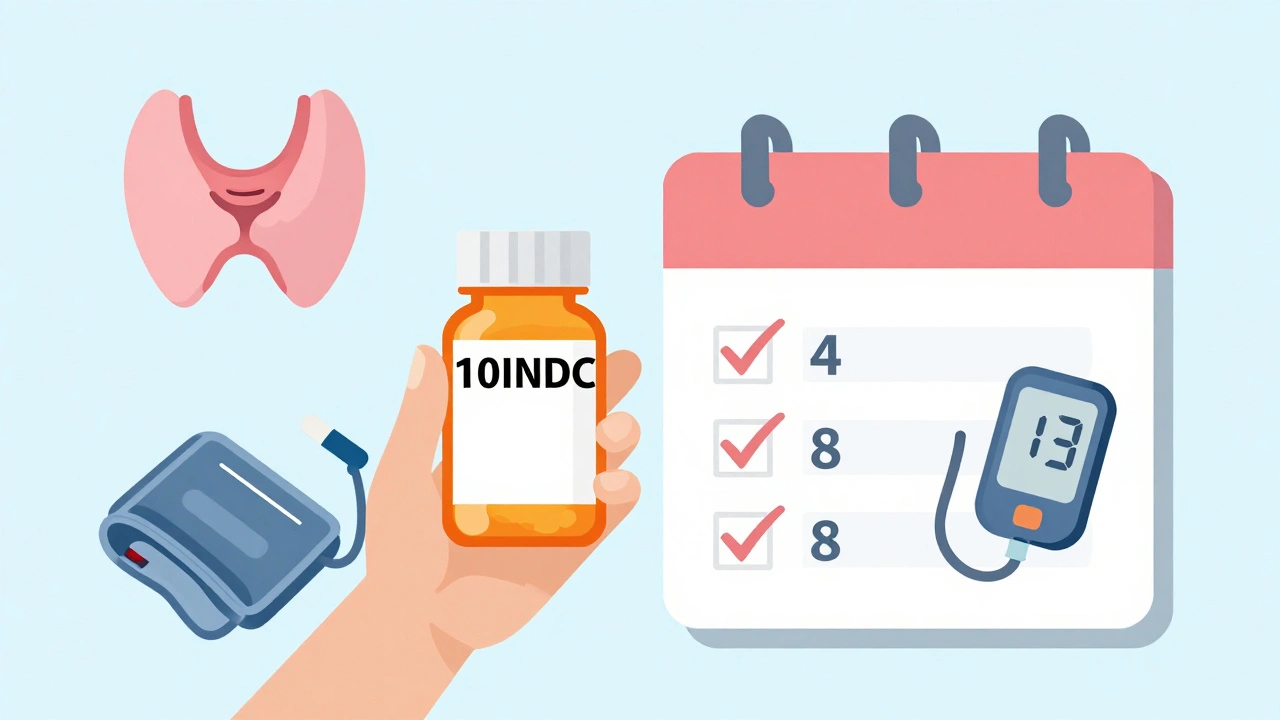
You don’t need to become a full-time health scientist. But you do need to pay attention for the first 30 to 90 days after switching. Here’s what to watch for, based on your condition:- Thyroid meds (like levothyroxine): Track symptoms like fatigue, weight gain, heart palpitations, or mood swings. Get a TSH blood test at 4 and 8 weeks after switching.
- Blood thinners (like warfarin): Check your INR levels more often - every 1-2 weeks for the first month. If your INR jumps or drops suddenly, call your doctor.
- Seizure meds (like lamotrigine or phenytoin): Keep a seizure diary. Note frequency, duration, and intensity. If you have more seizures or new side effects like dizziness or rash, don’t wait.
- Diabetes meds: Monitor your blood sugar daily for at least two weeks. Watch for unexplained highs or lows. Your HbA1c should be checked at 8 weeks.
- High blood pressure meds: Check your blood pressure at home twice a week. If your numbers start climbing, it could be a sign the generic isn’t working the same way.
- Antidepressants or anxiety meds: Watch for changes in mood, sleep, or anxiety levels. Some people report feeling “off” even if lab tests look normal.
Don’t assume every symptom is just stress or aging. If something feels different, it’s worth checking out.
How to Verify You Got the Right Generic
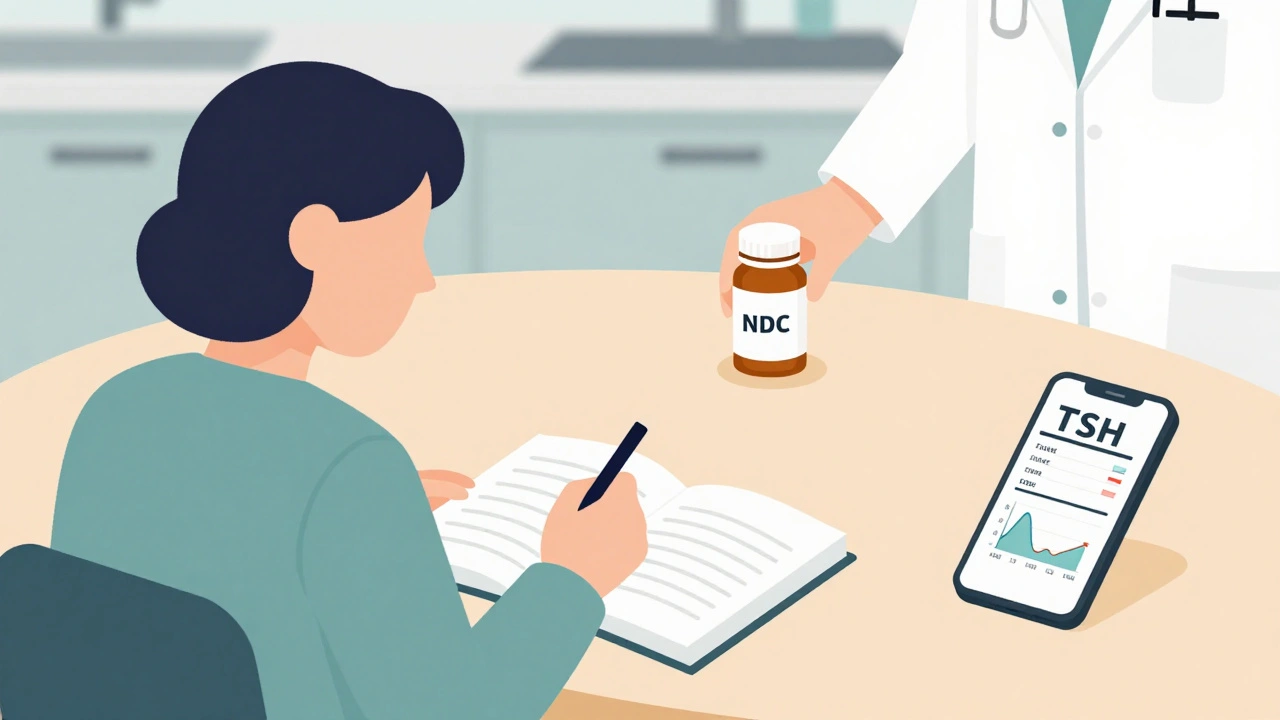
Not all generics are made the same. Different manufacturers use different fillers and manufacturing processes. That’s why two generics of the same drug can behave slightly differently in your body.When you pick up your prescription, check the label. Look for the National Drug Code (NDC) number - it’s a 10-digit code printed on the bottle or box. Write it down. If you refill and the NDC changes, that means you got a different manufacturer’s version. That’s not necessarily bad, but it’s a signal to watch your symptoms even more closely.
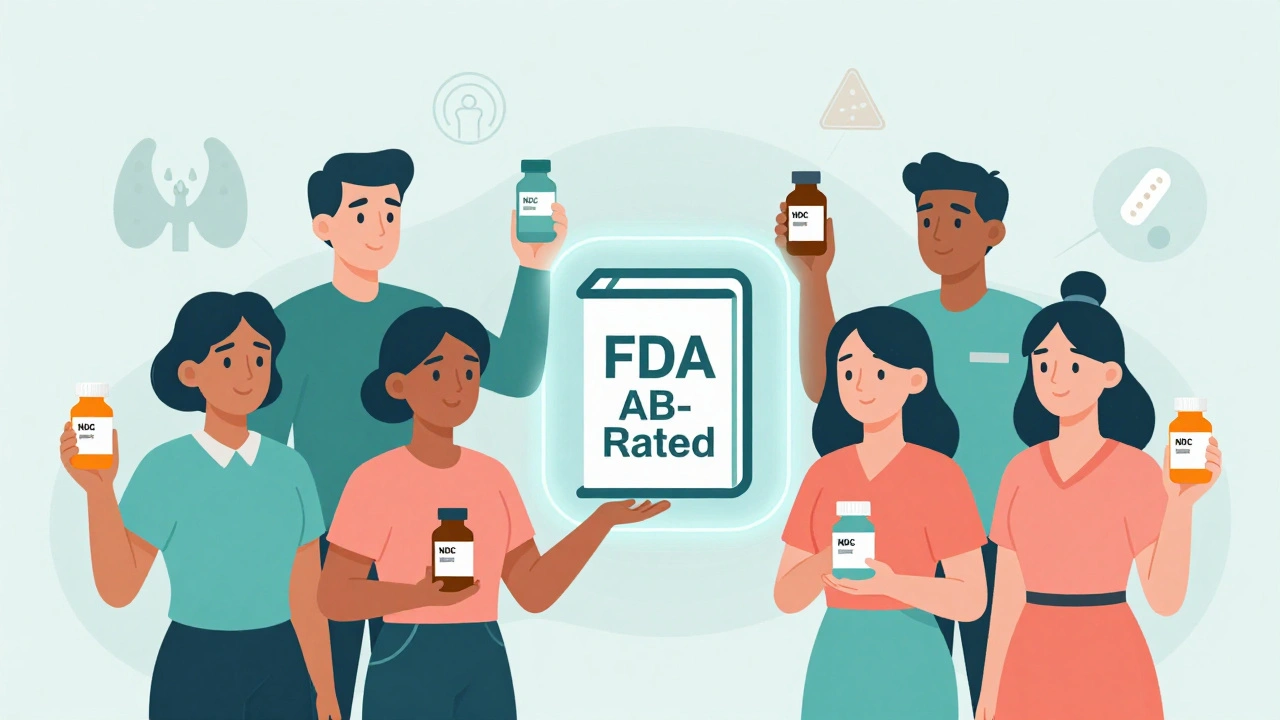
The FDA’s Orange Book lists which generics are rated as “AB” - meaning they’re therapeutically equivalent to the brand. If your generic isn’t AB-rated, ask your pharmacist why. Some older generics may not have been re-evaluated under current standards.
When to Call Your Doctor
You don’t need to panic if you feel a little different. But you should call your doctor if:- Your symptoms worsen or change significantly within 2 weeks of switching.
- You develop a new rash, swelling, or trouble breathing.
- You miss a dose because you’re afraid of side effects.
- Your lab results (like INR, TSH, or blood sugar) go outside your target range.
Your doctor might suggest switching back to the brand, trying a different generic, or adjusting your dose. Don’t try to fix it yourself by doubling up or skipping doses.
How to Report Problems
If you think a generic medication caused a problem, report it. The FDA doesn’t hear about most issues because people don’t speak up. But your report helps them spot patterns.Use the FDA’s MedWatch program. You can file online at www.fda.gov/medwatch or call 1-800-FDA-1088. Be ready with:
- The name of the drug (brand and generic)
- The NDC number and lot number from the bottle
- When you started the new generic
- What symptoms you had and when they started
- Any lab results or doctor visits related to the issue
The FDA reviews all serious reports within 30 days. Your report might help someone else avoid the same problem.
What the Data Really Shows
Let’s be clear: the vast majority of people switch to generics with no issues. A 2023 Consumer Reports survey of over 1,000 people found that 89% were satisfied with their generics. PatientsLikeMe, a health tracking platform with 700,000 users, found that 92.7% of those who switched maintained the same level of symptom control.But that 7.3%? They’re not outliers. They’re data points. And they’re why monitoring matters.
For drugs with narrow therapeutic indices - like thyroid meds, seizure drugs, or blood thinners - even small variations can have real effects. A 2021 study in JAMA Internal Medicine showed that for some patients, switching generics led to clinically meaningful changes in drug levels. That doesn’t mean generics are unsafe. It means some people need a little extra care.
Bottom Line: Be Informed, Not Afraid
Switching to generics is smart, safe, and cost-effective - for most people. But if you’re on a drug where small changes matter, treat the switch like a new prescription. Track your symptoms. Check your labs. Know your NDC number. Talk to your doctor.Generics aren’t inferior. But your body is unique. Paying attention after the switch isn’t being paranoid - it’s being in charge of your health.
Are generic medications as effective as brand-name drugs?
Yes, for the vast majority of people. The FDA requires generics to prove they deliver the same amount of active ingredient into your bloodstream at the same rate as the brand-name version. Over 90% of prescriptions in the U.S. are generics, and studies show they work just as well for most conditions. But for drugs with narrow therapeutic indices - like warfarin, levothyroxine, or certain seizure medications - a small number of patients may notice differences in how they feel or how their lab results change.
How long should I monitor my health after switching to a generic?
For most people, monitor for at least 30 days. If you’re on a drug with a narrow therapeutic index - like thyroid medication, blood thinners, or seizure drugs - monitor for 60 to 90 days. Schedule follow-up lab tests at 4 and 8 weeks. Keep a daily log of symptoms, blood pressure, blood sugar, or seizure frequency. If everything stays stable after 90 days, you’re likely fine. But if symptoms change, contact your doctor right away.
Which generic medications need the most monitoring?
Drugs with a narrow therapeutic index require the closest monitoring. These include: levothyroxine (for thyroid), warfarin (blood thinner), phenytoin and lamotrigine (for seizures), digoxin (for heart failure), lithium (for bipolar disorder), and some antidepressants like bupropion. Even small changes in how these drugs are absorbed can lead to serious side effects or reduced effectiveness. Always check with your doctor if you’re unsure.
Can I switch back to the brand-name drug if I have problems?
Yes, you can. If you notice significant changes in your symptoms or lab results after switching to a generic, talk to your doctor. They can prescribe the brand-name version instead, or try a different generic manufacturer. Some insurance plans require prior authorization for brand-name drugs, so your doctor may need to submit documentation showing why the generic didn’t work for you. Don’t stop your medication - work with your provider to find a solution.
How do I know if I got a different generic version?
Check the National Drug Code (NDC) on your prescription bottle. It’s a 10-digit number usually printed near the barcode. If the NDC changes from one refill to the next, you’ve received a different manufacturer’s version of the same drug. That’s normal, but it’s also a signal to watch for changes in how you feel. Write down your NDC each time you refill so you can track changes.
Should I be worried about generic drug shortages?
Shortages can happen, and they’re more common with generics because they’re often made by fewer manufacturers. In 2022, 38% of U.S. drug shortages involved generic medications. If your generic becomes unavailable, your pharmacy may switch you to another version - which could require monitoring again. Ask your pharmacist if there’s a known shortage and whether the new version has the same NDC. Keep a backup supply if possible, and always check your medication label.
Chad Handy
December 4, 2025 AT 00:33Switching to generics felt like playing Russian roulette with my thyroid levels. I went from feeling fine on Synthroid to crashing hard-fatigue, brain fog, heart palpitations. I didn’t think it was the med until I checked the NDC and realized my pharmacy switched me to a different generic without telling me. Took me three months and two blood tests to get back to baseline. Now I write down every NDC. No more guessing. If your doctor doesn’t care, you have to care for them.
Jenny Rogers
December 5, 2025 AT 13:41It is both a moral and scientific imperative to acknowledge that the FDA’s bioequivalence standards, while statistically robust, are fundamentally inadequate in capturing the nuanced pharmacokinetic variability experienced by individual patients. The notion that ‘90% of users experience no adverse effects’ is a statistical fallacy when applied to human physiology, which is inherently non-linear and context-dependent. One must not confuse population-level efficacy with individual therapeutic fidelity. The body does not obey averages.
Rebecca Braatz
December 5, 2025 AT 22:02YOU GOT THIS. Seriously-tracking your symptoms after a switch isn’t being paranoid, it’s being empowered. Write it down. Take notes. Check your labs. You’re not just a patient-you’re the CEO of your own health. If something feels off, don’t wait for your doctor to notice. Be the one who speaks up. You’ve got the power. And if you need a reminder: you’re not alone. I’ve been there. You’re doing amazing.
Jordan Wall
December 7, 2025 AT 14:33It’s fascinating how the pharmacoeconomic imperative has subsumed clinical nuance in the US healthcare apparatus. The AB-rating system, while ostensibly rigorous, is predicated on AUC and Cmax metrics that fail to account for inter-individual variability in CYP450 metabolism, gut microbiota modulation, and epigenetic expression profiles. Moreover, the proliferation of generics manufactured in offshore facilities with inconsistent QA protocols introduces a latent risk vector that regulatory capture has systematically underreported. One must interrogate the ontology of ‘equivalence’ in this context.
Karl Barrett
December 9, 2025 AT 06:02I’ve been thinking about this a lot lately-not just as a patient, but as someone who’s watched family members struggle with the invisible toll of medication changes. It’s not just about labs or NDCs. It’s about trust. You trust your body to tell you something’s wrong, and then you trust the system to listen. Too often, it doesn’t. The real crisis isn’t the generic drug-it’s the dismissal of patient experience as anecdotal. Science needs stories too. Especially the quiet ones.
Elizabeth Crutchfield
December 10, 2025 AT 23:55i switched to a generic for my anxiety med and felt like a zombie for 3 weeks. i thought i was just depressed again but it was the med. my doc was like ‘it’s the same thing’ but no it’s not. i went back to brand and i’m human again. why do they make us suffer to save 5 bucks?
Ben Choy
December 12, 2025 AT 02:30My dad’s on warfarin and switched generics last year. His INR spiked to 5.2. He almost bled out. We didn’t realize it was the med until we checked the NDC-different manufacturer. Now we keep a spreadsheet. I know it sounds overkill, but when your life’s on the line, you do what you gotta do. Thanks for posting this-it’s the kind of info nobody tells you until it’s too late.
Emmanuel Peter
December 13, 2025 AT 03:16Look, let’s cut the crap. Most people who say generics don’t work are just lazy or want the brand because it’s ‘prestige.’ If you’re having side effects, maybe you’re just not taking it right. Or maybe you’re one of those people who thinks every headache is a brain tumor. 99% of generics are fine. Stop whining and take your pills.
Ashley Elliott
December 14, 2025 AT 09:03Thank you for this. So many people dismiss patient reports as ‘in their head’-but your post validates what so many of us feel but are too afraid to say. I’ve been on levothyroxine for 12 years. I’ve switched generics six times. Each time, I tracked my sleep, weight, and mood. Three times, I had to switch back. I didn’t ‘overreact.’ I paid attention. That’s not paranoia. That’s responsibility.
Augusta Barlow
December 15, 2025 AT 10:28Did you know that the FDA allows generics to vary by up to 20% in absorption? That’s not a typo. Twenty percent. And the companies that make them? They’re owned by the same conglomerates that make the brand names. They’re playing a game. They want you to think it’s ‘the same’-but they’re testing on people who don’t report side effects. And the ones who do? They get ignored. You think this is about savings? It’s about control. They want you dependent on the system, not your own body.
Ollie Newland
December 15, 2025 AT 12:19My GP told me generics are ‘interchangeable.’ Then I got a rash after switching my lamotrigine. Turns out, the filler was corn-based-I’m severely allergic. The brand used rice starch. The generic didn’t list it because it’s ‘inactive.’ That’s not inactive. That’s a death sentence waiting to happen. Always check the excipients. Always.
Benjamin Sedler
December 16, 2025 AT 08:53Generics are just the pharmaceutical industry’s way of saying ‘you’re not special enough for the real stuff.’ I’ve been on the same brand for 8 years. My thyroid is stable. My mood is stable. My bank account? Not so much. But I’d rather pay $200 a month than risk becoming a human lab rat for some overseas factory’s cost-cutting experiment. This isn’t about money. It’s about dignity.
Alex Piddington
December 16, 2025 AT 09:56Thank you for sharing this thoughtful and clinically grounded perspective. It is imperative that patients remain vigilant when transitioning to generic alternatives, particularly with medications possessing a narrow therapeutic index. I encourage all individuals to maintain a personal medication log, including NDC numbers, symptom diaries, and laboratory results, as a proactive measure to ensure continuity of care. Your advocacy reinforces the importance of patient-centered pharmacotherapy.