Methadone and QT-Prolonging Drugs: What You Need to Know About the Arrhythmia Risk
 Jan, 1 2026
Methadone QT Prolongation Risk Calculator
Assess Your QT Prolongation Risk
This tool estimates your combined risk of QT prolongation when taking methadone with other medications. Results are for informational purposes only and should not replace professional medical advice.
When you're on methadone for opioid dependence or chronic pain, your doctor focuses on keeping you stable, reducing cravings, and helping you rebuild your life. But there's a quiet, dangerous side effect that doesn't always get talked about - your heart. Methadone can mess with your heart’s electrical system, and when you add other common medications on top of it, the risk of a life-threatening arrhythmia goes up fast.
How Methadone Affects Your Heart
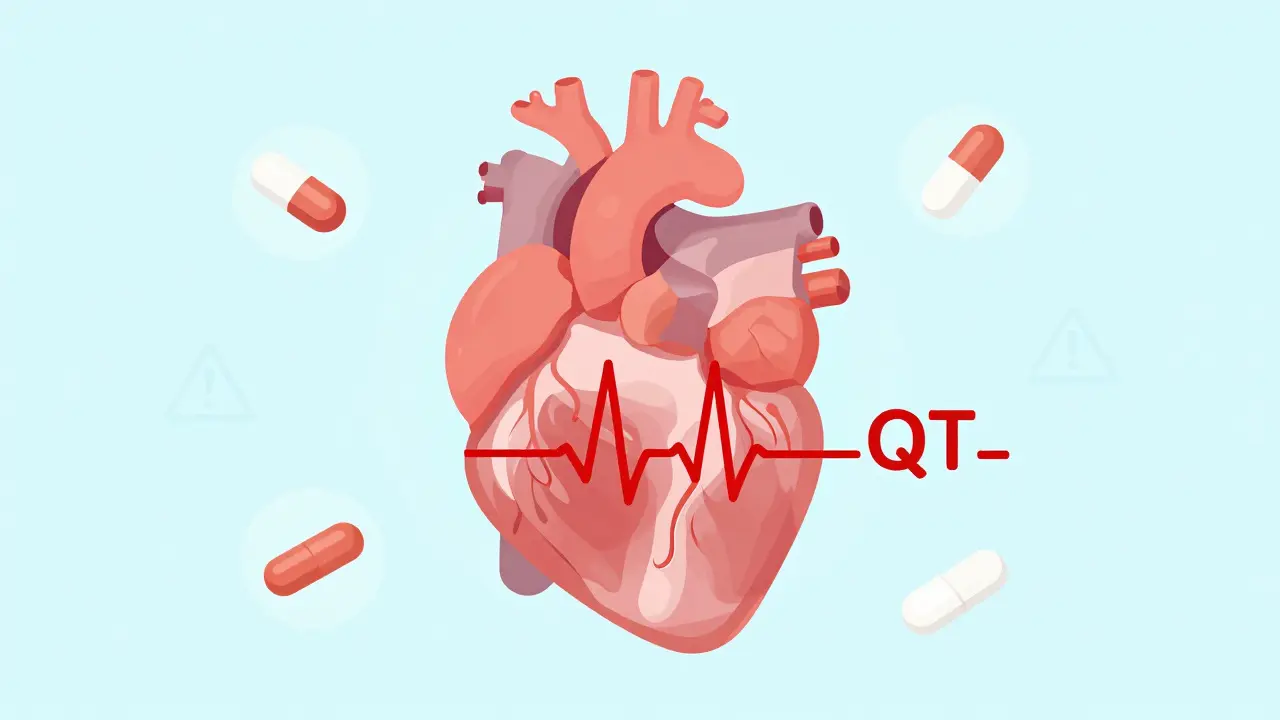
Methadone doesn’t just bind to opioid receptors. It also blocks key potassium channels in your heart, especially the hERG channel, which controls how quickly your heart resets after each beat. This delay in repolarization shows up on an ECG as a longer QT interval. A normal QTc (corrected QT interval) is 430 ms or less for men and 450 ms or less for women. Once it climbs past 500 ms, your risk of torsades de pointes - a dangerous, twisting ventricular arrhythmia - jumps sharply.
Research from 2022 in the Journal of the American Heart Association found methadone doesn’t just block one channel. It also blocks IK1, another critical potassium current. This dual-action makes methadone far more dangerous than other drugs that only affect hERG. Even small doses can cause unpredictable delays in heart muscle recovery, leading to early after-depolarizations - tiny electrical glitches that can trigger full-blown arrhythmias.
Over time, the QT interval keeps getting longer. One study showed that after 16 weeks of methadone therapy, nearly 70% of men and over 70% of women had QTc values above the danger threshold. And it’s not just about the dose. Even at 60 mg/day, some people see significant prolongation. At 100 mg/day and above, the risk becomes much more common.
Why Combining Drugs Is So Risky
Methadone doesn’t work in isolation. Most people on methadone are also taking other meds - for depression, anxiety, infections, or other conditions. Many of those drugs also prolong the QT interval. When you stack them, the effect isn’t just added - it’s multiplied.
Take antibiotics like clarithromycin or moxifloxacin. These are common prescriptions. But when paired with methadone, they can push QTc past 500 ms in patients who were previously stable. Antifungals like fluconazole, antidepressants like citalopram or venlafaxine, and antipsychotics like haloperidol are all on the same list. Even some HIV meds, like ritonavir, do double damage: they slow down how fast your body breaks down methadone (raising blood levels) and directly prolong QT.
One case from 2006 involved a patient on methadone who started using cocaine. Cocaine’s half-life is short, but it still blocked potassium channels. Within days, the patient developed persistent QT prolongation and torsades de pointes. The takeaway? It doesn’t matter if a drug is short-acting. If it affects the heart’s rhythm, it can turn methadone into a ticking time bomb.
Who’s at the Highest Risk?
Not everyone on methadone will have problems. But certain people are sitting on a much higher risk pile:
- Those already on other QT-prolonging drugs
- People with low potassium or magnesium levels
- Patients with structural heart disease, heart failure, or prior arrhythmias
- Those with a family history of long QT syndrome or sudden cardiac death
- Women (they tend to have longer baseline QT intervals)
- Older adults (slower drug clearance, more comorbidities)
- People taking methadone doses above 100 mg/day
In New Zealand, two cases stood out. One patient on 150 mg/day of methadone collapsed at home and died. Another, on 120 mg/day, had repeated episodes of torsades. When their dose was cut to 60 mg/day, the QT interval returned to normal. That’s not luck - it’s proof that dose matters, and so does monitoring.
What Doctors Should Do - And What You Should Ask For
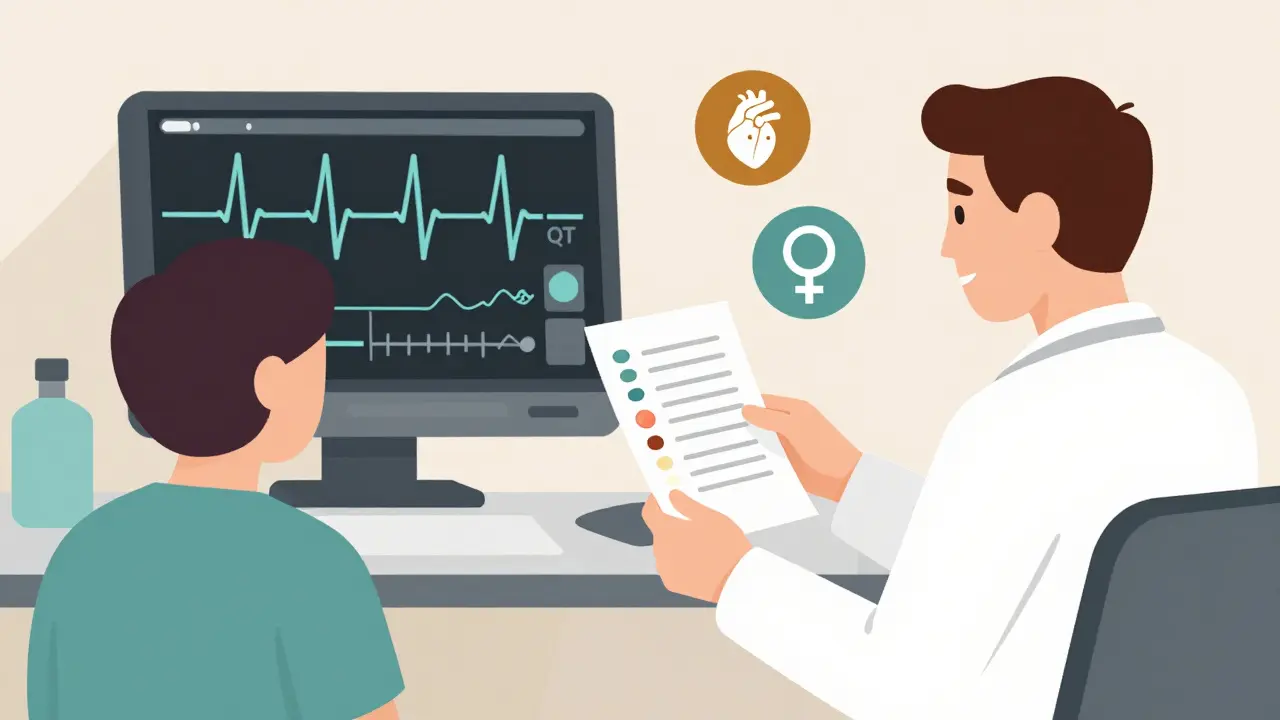
Guidelines from the FDA and major cardiology groups are clear: baseline ECG is mandatory before starting methadone. But too often, it’s skipped. If you’re being prescribed methadone and no one ordered an ECG, ask why.
After starting, ECGs should be repeated:
- After 2-4 weeks of treatment
- After any dose increase
- Every 3-6 months during maintenance
- Immediately if you feel dizzy, faint, or have palpitations
Watch for QTc over 450 ms in men or 470 ms in women - that’s a warning sign. Over 500 ms? That’s a red flag. An increase of more than 60 ms from your baseline? That’s urgent.
Doctors should also check your electrolytes. Low potassium or magnesium? Fix it. Those levels can make QT prolongation worse, even if methadone alone wouldn’t have caused it.
Alternatives to Methadone
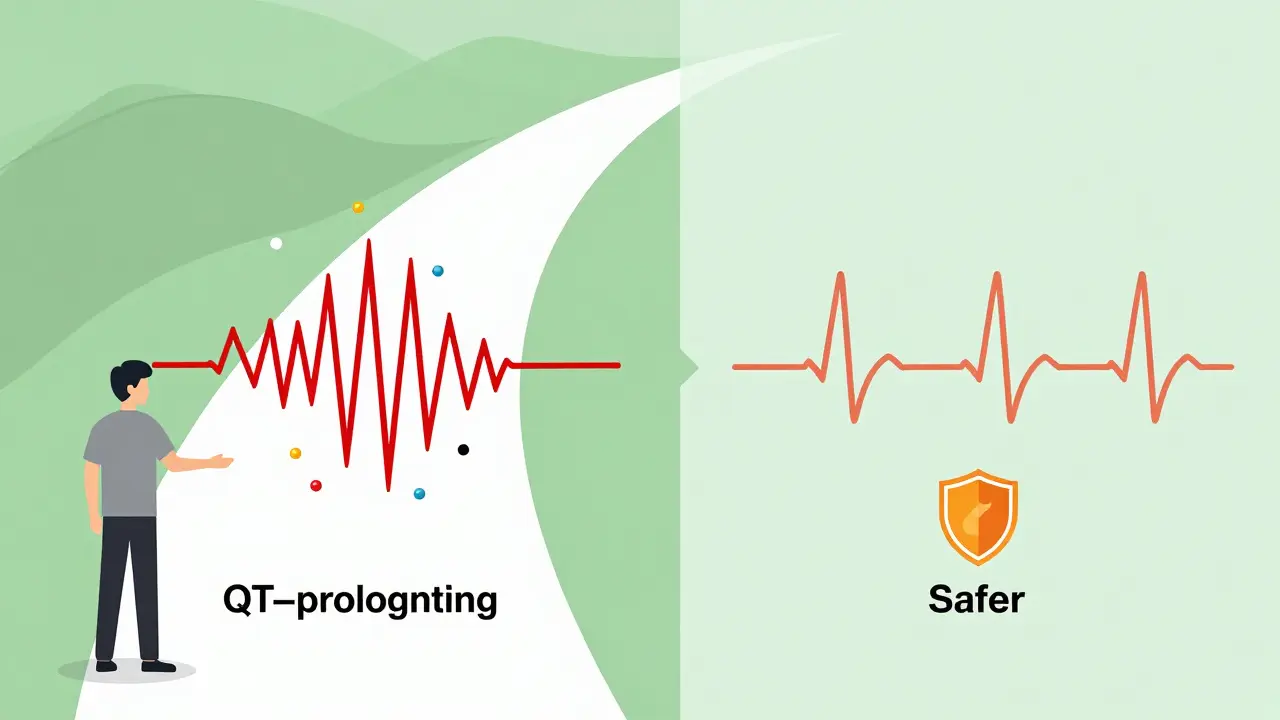
If your risk profile is high - say, you’re on multiple QT-prolonging drugs or have a history of heart issues - buprenorphine is a safer choice. It blocks hERG channels about 100 times less than methadone. Studies show it doesn’t significantly prolong QT, even at high doses. It’s not a perfect fit for everyone, but for those with cardiac risk, it’s a game-changer.
Levomethadyl is another option, but it acts almost identically to methadone in terms of QT prolongation. So switching to that won’t help. Stick with buprenorphine if your heart is the concern.
What to Do If You’re Already on Methadone
If you’re already taking methadone, here’s what you can do right now:
- Make a full list of every medication you take - including over-the-counter drugs, supplements, and herbal products. Many people forget things like antihistamines or cough syrups with diphenhydramine, which also prolong QT.
- Ask your pharmacist or doctor to run a drug interaction check. Use a tool like Cerner or Micromedex if available. Don’t assume your doctor knows every drug you’re on.
- Request a recent ECG if you haven’t had one in the last 6 months.
- Watch for symptoms: dizziness, fainting, racing heart, chest tightness, or sudden fatigue. Don’t brush them off as "just stress."
- If you’re on a dose above 100 mg/day, ask if a reduction or switch to buprenorphine is possible.
Don’t stop methadone on your own. Withdrawal can be dangerous. But do talk to your care team. You’re not being paranoid - you’re being smart.
The Bigger Picture
Methadone saves lives. It reduces overdose deaths, cuts crime, lowers HIV transmission, and helps people stay in treatment. That’s why it’s still used - and why we can’t just ditch it. But we also can’t ignore the heart risk. The goal isn’t to scare people away from treatment. It’s to make sure treatment is safe.
Every patient deserves to know: "This drug can affect your heart. Here’s how we’ll watch for it." That’s not extra care - it’s standard care. And if your provider isn’t doing it, you have the right to ask.
With better screening, smarter prescribing, and more awareness, we can keep the benefits of methadone without the preventable deaths. The science is clear. The tools are there. It’s time to use them.