Medication Adherence: How to Stick to Your Treatment Without Losing Your Life
 Feb, 7 2026
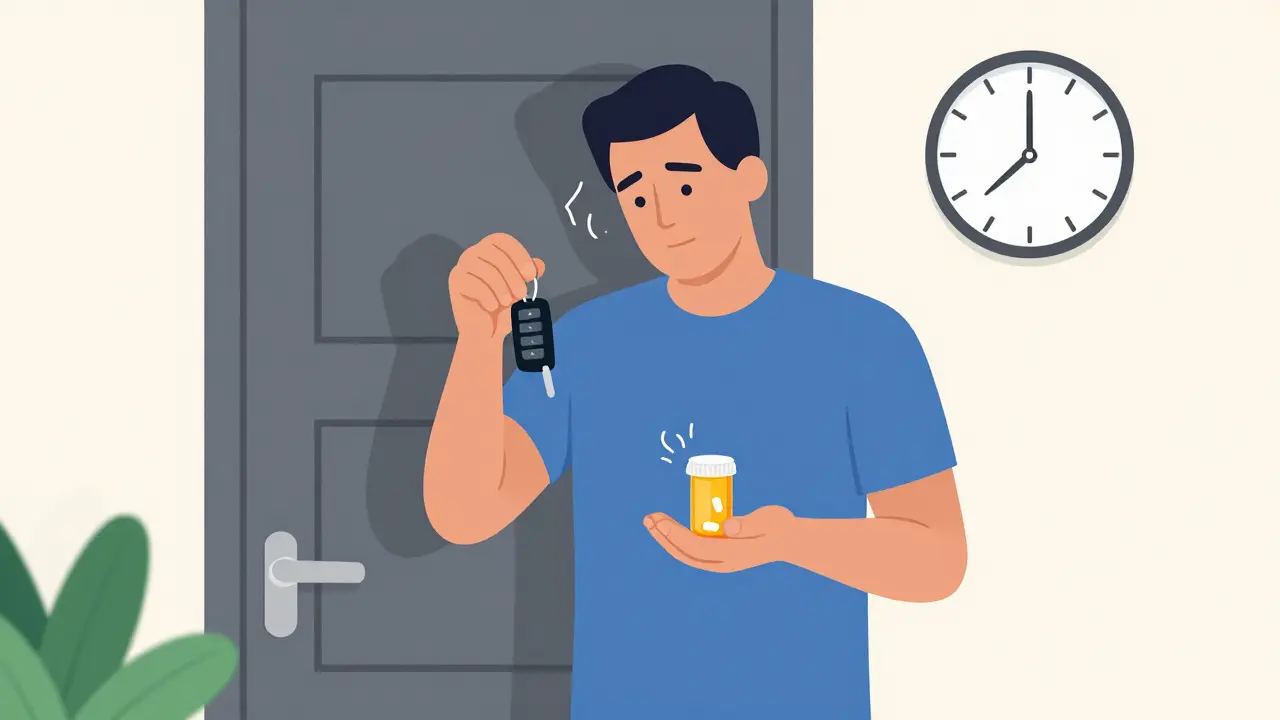
Imagine this: you’re about to leave for your daughter’s soccer game. You’ve been taking your blood pressure meds every morning like clockwork. But today, you skip one pill. Not because you forgot. Not because you’re rebellious. You skip it because you know the side effect-dizziness and fatigue-will make you slump in the bleachers, too tired to cheer. You’re not breaking rules. You’re making a choice. And you’re not alone.
Medication adherence isn’t about blindly following a script. It’s about balancing the life-saving power of drugs with the reality of how those drugs make you feel day to day. The World Health Organization defines it as how closely your behavior matches what you and your provider agreed on. That’s key: agreed on. It’s a conversation, not a command.
What Adherence Really Means (And Why 80% Is the New 100%)
You’ve probably heard that you need to take 100% of your meds, every single time. But that’s not how real life works. The medical community now uses an 80% threshold as the standard for being considered adherent. That means if you’re supposed to take a pill once a day, you can miss about 7 days a year and still be in the green zone.
Why? Because perfection isn’t sustainable. Studies show that when patients are told they must take every pill without exception, they feel like failures. And when you feel like a failure, you stop trying. The real goal isn’t perfect numbers-it’s keeping you alive and feeling like yourself.
Doctors measure adherence using tools like the Proportion of Days Covered (PDC). It doesn’t care if you opened the bottle-it cares if you had enough pills to cover the days you needed them. Even that’s not perfect. Electronic pill bottles that log every opening show that people take 20-30% fewer pills than they say they do. Why? Because they’re embarrassed. Or because they’re adjusting their doses on purpose.
The Cost of Not Taking Your Meds (And the Cost of Taking Them)
Skipping meds has real consequences. In the U.S., non-adherence causes 125,000 deaths each year. For people with high blood pressure, missing doses doubles the risk of a heart attack. For diabetics, it spikes blood sugar and increases the chance of nerve damage, kidney failure, or amputations.
But here’s the flip side: taking meds can also cost you. A 2022 PatientsLikeMe study found that 42% of patients with chronic conditions changed their dosing because of side effects. Drowsiness? 24% of people cut back. Stomach pain? 28%. Sexual side effects? 19%. One man on Reddit said he stopped his antidepressant for six weeks because he couldn’t kiss his wife without feeling numb inside. He didn’t quit treatment-he negotiated with his doctor and switched to a different drug.
That’s the tension: the drug saves your life, but it also steals parts of it. And when providers dismiss those losses as "just side effects," patients feel unheard. That’s when adherence drops-not because they’re lazy, but because they feel like their quality of life doesn’t matter.
Why Your Regimen Is Working Against You
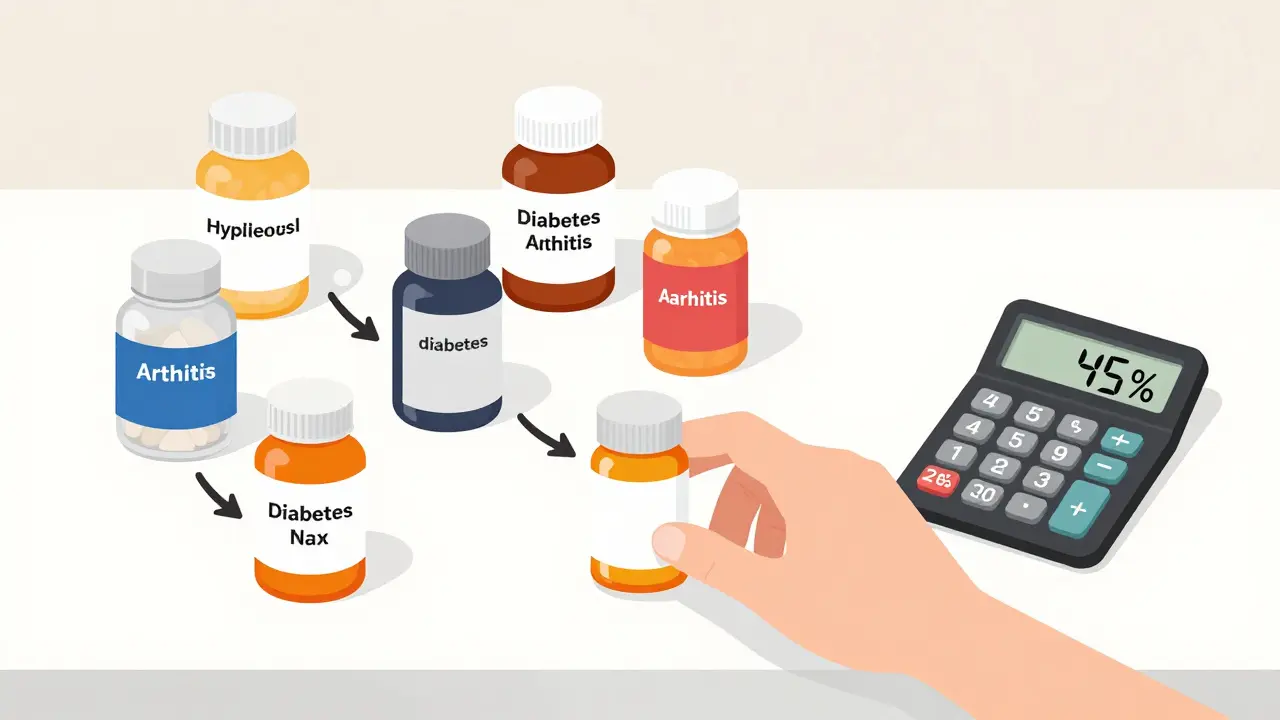
Let’s say you have three conditions: high blood pressure, diabetes, and arthritis. Your provider gives you:
- One pill for blood pressure (morning)
- Two pills for diabetes (morning and night)
- Three pills for arthritis (three times a day)
That’s seven pills a day. And each extra pill cuts adherence by 26%. So if you were 90% adherent on one pill, you’re now at 45% with seven. It’s math, not morality.
And then there’s cost. One in four Americans skip doses because they can’t afford them. A woman in Melbourne told me she cuts her cholesterol pills in half because her prescription co-pay is $80 every month. She says, "I’d rather risk a stroke than lose my rent money."
Complexity isn’t just about pills. It’s about timing, food restrictions, storage, refills. If you work swing shifts, a once-a-day pill at 8 a.m. doesn’t work. If you have memory issues, a bottle with 12 different pills is a nightmare. If you’re homeless, refrigerating insulin is impossible.
When Patients Take Control (And Why Providers Should Let Them)
Some of the most effective adherence stories come from patients who pushed back-and were heard.
One woman with rheumatoid arthritis took daily methotrexate pills. The side effects? Nausea, fatigue, mouth sores. She was only taking 55% of her doses. Her doctor didn’t lecture her. She asked: "What part of your life matters most?" The woman said, "I want to be able to hug my grandkids without feeling sick." So they switched to a weekly injection. Adherence jumped to 92%.
Another patient with diabetes had rigid insulin timing. But he worked night shifts. His provider didn’t force him to wake up at 3 a.m. for a shot. They adjusted the schedule to match his sleep cycle. His HbA1c dropped by 1.8 points.
These aren’t exceptions. They’re solutions. And they’re backed by data: patients who work with providers to tailor their regimens have 41% higher adherence than those on standard plans.
What Works (And What Doesn’t)
Simple fixes help. Pill organizers improve adherence by 22%. But if you’re 78 and live alone, setting up a seven-day tray every Sunday might be impossible. Digital apps like Medisafe boost adherence by 35%-but only 28% of people over 65 still use them after three months. Tech alone won’t fix this.
The real game-changer? Conversation. Not a lecture. Not a pamphlet. A real talk.
- Ask: "What’s the hardest part about taking your meds?"
- Ask: "What would make this easier?"
- Ask: "What are you willing to give up? What are you not?"
These questions open doors. One study found that using motivational interviewing (a style of conversation that helps people explore their own reasons for change) improved adherence by 24%.
And then there’s cost. Programs that cap insulin at $35 a month or offer free pill delivery cut non-adherence by 32%. No magic pill. Just affordability.
The Future: Personalized Adherence
The FDA now requires drug makers to study how side effects affect real-world use. That’s huge. It means new drugs will come with data on what patients actually tolerate-not just what lab results say.
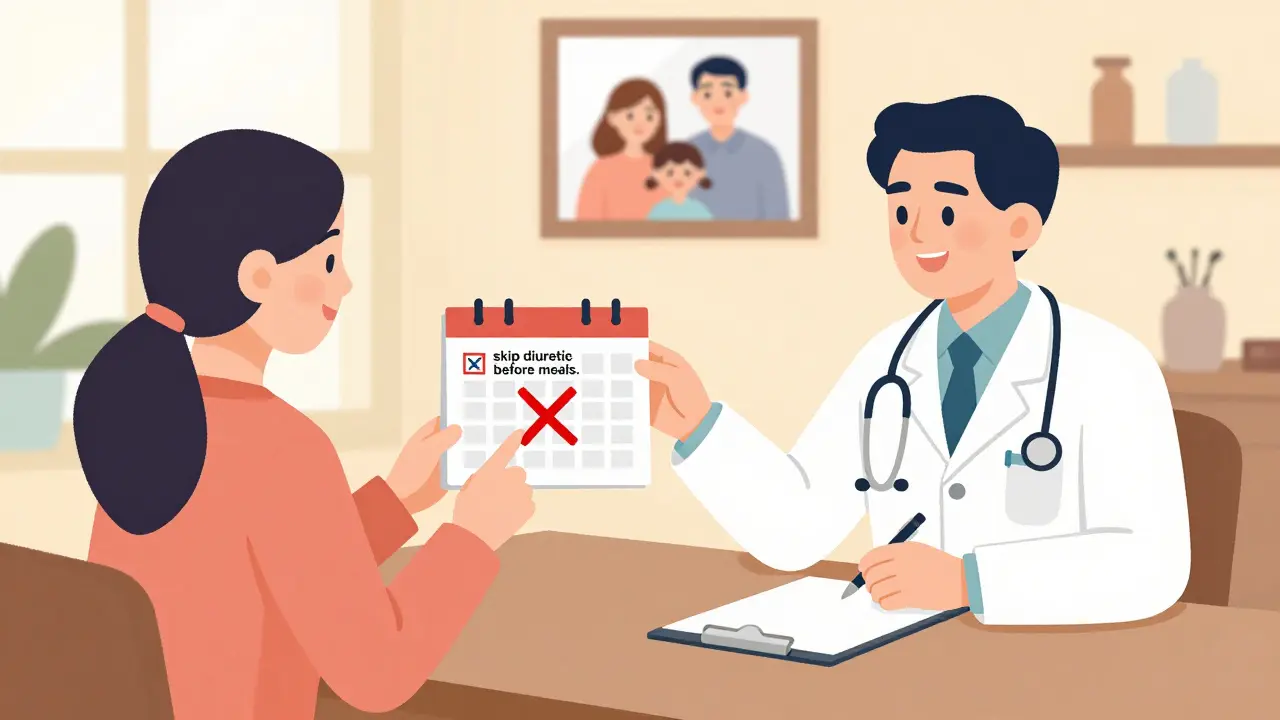
And the smartest approach now? "Adherence tailoring." Instead of asking, "Are you taking your meds?" providers ask, "Which parts of your treatment are you willing to hold onto? Which can we bend?"
One patient said: "I’ll never skip my morning blood pressure pill. But I need to skip my evening diuretic before I go out to dinner." The provider agreed. No judgment. Just a plan.
This isn’t about lowering standards. It’s about raising realism. Treatment works when it fits your life-not the other way around.
What You Can Do Right Now
If you’re struggling:
- Bring all your meds to your next appointment-even the ones you skip. Call it a "brown bag review." It takes 15 minutes. It changes everything.
- Ask: "Can we simplify this?" One pill a day beats three pills twice a day every time.
- Ask: "Is there a cheaper version?" Generic, mail-order, or patient assistance programs exist.
- Ask: "What happens if I take less?" Sometimes, a lower dose still works-and feels better.
- Don’t be afraid to say: "This side effect is making my life worse than my disease." You’re not being difficult. You’re being human.
If you’re a caregiver or provider:
- Stop saying, "Just take it."
- Start asking, "What’s stopping you?"
- Remember: 50% of patients adjust their meds on their own. You’d rather know why than pretend they’re following orders.
Medication adherence isn’t about compliance. It’s about connection. The goal isn’t a perfect pill count. It’s a life worth living-with or without a few missed doses.
Jonah Mann
February 8, 2026 AT 11:13Also, why is insulin $35? My co-pay is $120. I'm not rich, I'm just trying to live.
Tricia O'Sullivan
February 8, 2026 AT 15:39Marie Fontaine
February 9, 2026 AT 12:58THANGAVEL PARASAKTHI
February 10, 2026 AT 13:23Chelsea Deflyss
February 11, 2026 AT 09:44Angie Datuin
February 12, 2026 AT 18:35Frank Baumann
February 13, 2026 AT 19:30Ryan Vargas
February 14, 2026 AT 04:09Tasha Lake
February 15, 2026 AT 19:09