Licorice and Medications: What You Need to Know About This Common Candy’s Hidden Risks
 Jan, 15 2026
Licorice Medication Interaction Risk Calculator
Licorice Interaction Risk Assessment
Based on EU guidelines: Daily intake should not exceed 100mg glycyrrhizin (about 50g of traditional licorice).
Risk Assessment Results
Risk Level:
Key Findings
- Glycyrrhizin content:
- Daily intake:
- Safe threshold:
Recommendations
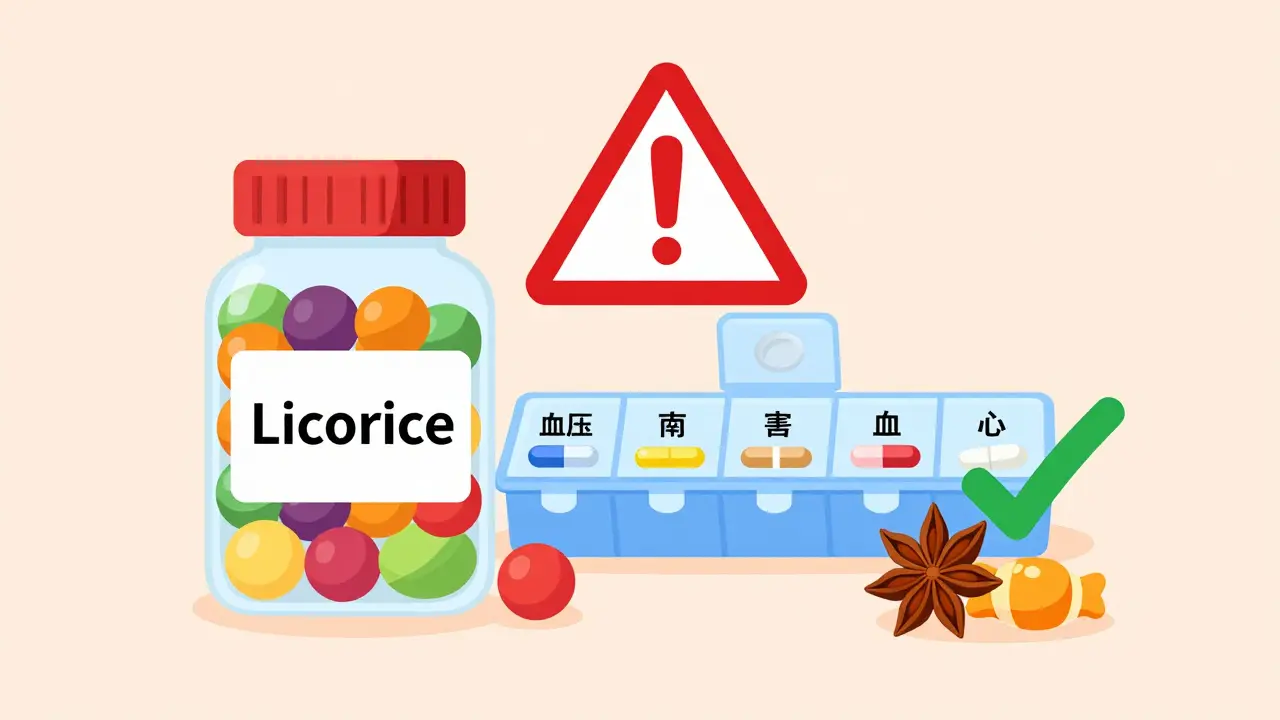
Most people think of licorice as just a sweet, chewy candy-something you grab at the checkout or share with kids. But if you’re taking any kind of medication, that piece of black licorice could be doing more than satisfying a craving. It might be messing with your blood pressure, draining your potassium, or even making your drugs less effective-or more dangerous. This isn’t science fiction. It’s happening to people right now, and most have no idea why.
What’s Actually in Licorice Candy?
Not all licorice is the same. The real deal comes from the root of the Glycyrrhiza glabra plant. That’s where glycyrrhizin comes from-the compound that gives licorice its distinct flavor and, more importantly, its powerful effects on your body. But here’s the catch: a lot of candy labeled "licorice" doesn’t contain any licorice root at all. Instead, it’s flavored with anise oil, which tastes similar but has none of the risks. If you’re trying to avoid interactions, you need to know which kind you’re eating.
Traditional black licorice candy usually contains between 0.5% and 2% glycyrrhizin. That means eating just 50 grams (about 1.7 ounces) of strong licorice candy could give you 100 mg of glycyrrhizin-the daily limit recommended by the European Food Safety Authority. And if you’re snacking on it every day? You’re crossing into risky territory. Herbal supplements? Those can pack 4% to 24% glycyrrhizin. One capsule might equal a whole bag of candy.
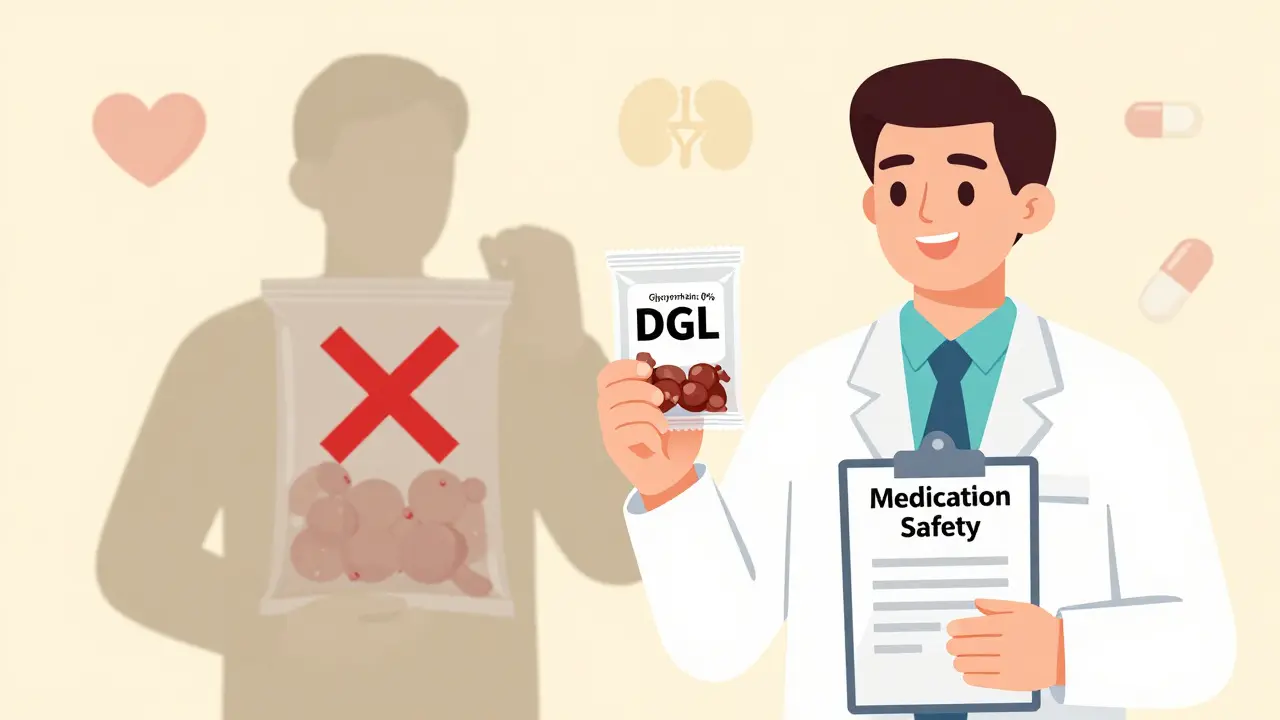
Then there’s DGL-deglycyrrhizinated licorice. This version has the glycyrrhizin stripped out. It’s sold for digestive issues like heartburn and ulcers. If you’re on medication and want to enjoy licorice flavor safely, DGL is your only real option. But check the label. Not all "DGL" products are created equal. Some still sneak in small amounts of glycyrrhizin.
How Licorice Interacts With Your Body
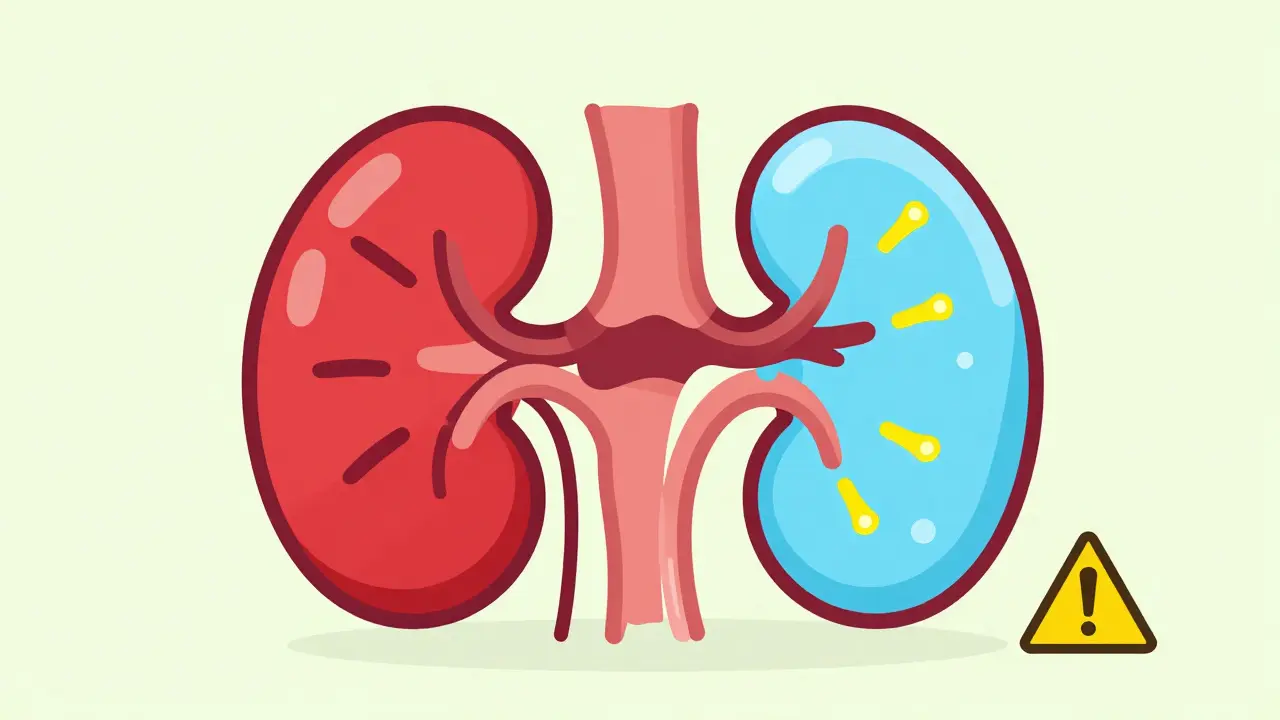
Glycyrrhizin doesn’t just taste sweet-it acts like a fake hormone. It blocks an enzyme in your kidneys called 11β-HSD2. That enzyme normally protects your body from too much cortisol, a stress hormone. When it’s blocked, cortisol starts acting like aldosterone, a hormone that tells your kidneys to hold onto salt and flush out potassium. The result? Your body swells with fluid, your blood pressure spikes, and your potassium levels crash.
That’s why people on blood pressure meds, diuretics, or heart drugs are at risk. A 47-year-old man in a 2012 study ate 200 grams of licorice a day for three weeks. His blood pressure shot up to 210/120. His potassium dropped to 2.6 mmol/L-dangerously low. He needed hospitalization. Another case involved a woman on fludrocortisone (a steroid that mimics aldosterone). She’d been stable for years. Then she started eating licorice candy daily. Her blood pressure jumped to 205/110. She had panic attacks. The licorice wasn’t the cause-it was the trigger.
And it’s not just about blood pressure. Low potassium can cause muscle weakness, cramps, irregular heartbeat, and even sudden paralysis. In rare cases, it’s led to blood clots and limb ischemia. One patient developed a blocked artery in her arm after eating licorice daily. Her potassium was 2.4 mmol/L. She needed emergency surgery.
Which Medications Are Most at Risk?
Some drugs don’t just sit next to licorice-they dance with it. And that dance can turn deadly.
- Diuretics (water pills) like hydrochlorothiazide or furosemide already lower potassium. Add licorice, and your levels can plummet below 3.0 mmol/L. That’s not just low-it’s life-threatening.
- Antihypertensives like lisinopril or losartan are meant to lower blood pressure. Licorice fights back. One Reddit user reported his BP jumped from 120/80 to 165/95 after eating 30 grams of licorice daily for three days. He wasn’t even aware it could do that.
- Corticosteroids like prednisone or fludrocortisone already mimic aldosterone. Licorice doubles down. The effect isn’t additive-it’s explosive.
- Digoxin is used for heart rhythm. Low potassium makes your heart way more sensitive to digoxin. A single case report showed a patient developed digoxin toxicity after eating licorice. His potassium was 2.8 mmol/L. He almost died.
- Warfarin and other blood thinners are tricky. Some studies say licorice makes them stronger. Others say it weakens them. One 92-year-old woman on phenprocoumon (a warfarin-like drug) saw her INR drop sharply after eating licorice. Her blood started clotting. She needed emergency treatment.
- Metformin (for diabetes) might be less effective if you’re taking licorice. Animal studies show this. Human data is limited, but it’s enough to be cautious.
And here’s the kicker: it’s not just what you take. It’s how much, how often, and how long. Two weeks of daily licorice candy can be enough to trigger symptoms. Some people are more sensitive than others. Older adults, people with kidney disease, or those with existing high blood pressure are at highest risk.
What About Herbal Supplements and Tea?
Herbal teas, capsules, and powders labeled as "licorice root" are where things get really dangerous. These aren’t regulated like candy. A 2023 Consumer Reports survey found 78% of licorice supplements didn’t list glycyrrhizin content. You’re buying blind.
One woman took a "natural remedy" for adrenal fatigue that contained licorice root extract. She didn’t know it had 15% glycyrrhizin. After two months, she had severe swelling, headaches, and muscle cramps. Her potassium was 2.9 mmol/L. She stopped the supplement-and within a week, her symptoms faded.
Even "natural" doesn’t mean safe. And just because it’s sold in a health food store doesn’t mean a pharmacist or doctor reviewed it. Many people assume supplements are harmless. They’re not. In fact, 68% of licorice supplement users didn’t know they could interact with medications, according to ConsumerLab.com.
What Should You Do?
If you’re on any medication and you eat licorice regularly, here’s what to do right now:
- Check your candy. Look for "real licorice" or "contains licorice root." If it just says "anise flavor," you’re probably safe. If it doesn’t say anything, assume it’s risky.
- Stop eating licorice if you’re on blood pressure meds, diuretics, steroids, or heart drugs. Even if you feel fine. The damage builds silently.
- Switch to DGL. If you want the flavor without the risk, choose deglycyrrhizinated licorice. Make sure the label says "DGL" and lists glycyrrhizin content as less than 1%.
- Ask your pharmacist. Most don’t know about licorice interactions. But you can ask: "Does this medication interact with licorice root or glycyrrhizin?" If they’re unsure, push for a second opinion.
- Monitor your symptoms. Headaches, swelling in ankles, muscle cramps, fatigue, or a sudden rise in blood pressure? Stop licorice immediately and get your potassium checked.
There’s no magic number that works for everyone. But if you’re eating more than 50 grams of traditional licorice candy per week, you’re in the danger zone. And if you’re taking supplements? Don’t take them at all unless you’ve confirmed the glycyrrhizin content and talked to your doctor.
Why Isn’t This Common Knowledge?
It’s not that doctors don’t know. It’s that the information is scattered. The FDA doesn’t require warning labels on licorice candy. The UK does-but only if it contains over 100 mg glycyrrhizin per serving. In the U.S., it’s a free-for-all. Most packaging is vague. No one tells you.
And it’s not just consumers. A 2021 study found only 37% of community pharmacists could correctly identify all major licorice-drug interactions. If the professionals don’t know, how are patients supposed to?
The market is growing. Licorice supplements are a $1.37 billion industry. And most of those products are sold without clear warnings. That’s not negligence-it’s systemic. We’ve normalized licorice as harmless candy. But it’s not. It’s a botanical with real, measurable, and sometimes life-threatening effects on your body.
What’s Changing?
Change is coming. The FDA now lists licorice as a "high-priority" interaction risk. The European Commission is considering reclassifying high-glycyrrhizin products as medicines, not food. The American Herbal Pharmacopoeia is pushing for mandatory glycyrrhizin labeling by 2026. Japan already limits supplements to 100 mg per day.
But until then, you’re on your own. Don’t wait for a label to save you. Don’t assume "natural" means safe. And don’t brush off a sweet treat as harmless. If you’re taking medication, licorice isn’t just candy. It’s a drug interaction waiting to happen.
Can I eat licorice if I’m on blood pressure medication?
It’s not safe. Licorice raises blood pressure and lowers potassium, which directly counteracts most blood pressure medications. Even small amounts can cause spikes. If you’re on lisinopril, amlodipine, or any diuretic, avoid real licorice entirely. DGL is your only safe option.
Does anise-flavored candy have the same risks as licorice?
No. Anise-flavored candy doesn’t contain glycyrrhizin-the compound responsible for all the drug interactions. If the label says "anise oil" or "natural flavor" without mentioning licorice root, it’s safe. But if it says "licorice extract" or "licorice root," assume it’s risky.
How long does it take for licorice to affect my meds?
Symptoms can appear in as little as two weeks with daily use. A case study showed severe low potassium and high blood pressure after just three weeks of eating 200 grams of licorice daily. But some people react faster-especially older adults or those with kidney issues.
Is DGL licorice safe with all medications?
DGL (deglycyrrhizinated licorice) removes the main harmful compound, glycyrrhizin, so it doesn’t affect blood pressure or potassium. It’s generally safe for people on meds. But always check the label-some DGL products still contain trace amounts. If you’re on warfarin or other sensitive drugs, talk to your doctor before using any form of licorice.
Can licorice affect my potassium levels even if I’m not on diuretics?
Yes. Licorice forces your kidneys to dump potassium regardless of other meds. Even healthy people can develop low potassium after eating large amounts daily. Symptoms include muscle cramps, fatigue, and irregular heartbeat. If you’re eating licorice regularly and feel unusually weak, get your potassium checked.
Travis Craw
January 16, 2026 AT 09:32i had no idea licorice could mess with my blood pressure meds
just ate a bag last week and felt kinda weird but thought it was just the sugar
gonna check my labels now
Christina Bilotti
January 17, 2026 AT 04:22Oh wow. Someone finally wrote about this like a normal human instead of a pharmaceutical brochure. How revolutionary. I’m sure the FDA will rush to ban licorice now that a Reddit post has exposed the conspiracy.
Meanwhile, my 92-year-old aunt still eats a whole bag daily and swears by her ‘natural balance.’ Guess she’s just lucky she didn’t read this.
Samyak Shertok
January 18, 2026 AT 17:02Let me ask you this - if licorice is a botanical drug, why is it sold in candy aisles next to gummy bears?
Is capitalism so broken that we let poison masquerade as nostalgia?
People drink tea made from roots for healing, but when the same root is in a candy bar, it’s ‘just a treat’?
We’ve normalized the dangerous because it tastes sweet.
And now we’re shocked when our bodies revolt?
This isn’t about licorice.
This is about how we’ve outsourced our responsibility to labels we don’t read.
And worse - to doctors who don’t ask.
We are not victims.
We are participants in a system that lets us eat poison because it’s convenient.
So yes - stop the candy.
But also ask why it was ever allowed to be there in the first place.
Rob Deneke
January 19, 2026 AT 05:24Thanks for posting this man
just got prescribed lisinopril last month and i was snacking on licorice like it was popcorn
im switching to anise candy today
and yeah DGL is the way to go if you really miss the flavor
your body will thank you
evelyn wellding
January 19, 2026 AT 14:50OMG I JUST REALIZED I’VE BEEN EATING LICORICE ROOT TEA FOR MY ‘STRESS’ 😱
THANK YOU FOR THIS!!!
im dumping my tea bag right now and grabbing some DGL gummies instead 💪💖
you just saved my heart!!
Corey Chrisinger
January 20, 2026 AT 23:19It’s wild how something so simple - a candy - can be this quietly dangerous.
Most of us don’t think of food as medicine.
But it is.
And the opposite is true too - medicine is food, in a way.
Our bodies don’t care if something is labeled ‘candy’ or ‘supplement’.
They just react to molecules.
Glycyrrhizin doesn’t read the packaging.
It just does its job.
And that job? It’s not sweet.
It’s systemic.
It’s silent.
And it’s lethal.
So yeah - read the label.
Not because you’re paranoid.
But because your body deserves better than assumptions.
Bianca Leonhardt
January 21, 2026 AT 18:05People still eat this stuff? After all the documented cases? You’re not ‘living your truth’ if your potassium is 2.1 and you’re on a heart med. You’re just being reckless. And if you think ‘natural’ means safe, you’re the reason pharmacies have warning signs. Stop it. Seriously.
vivek kumar
January 22, 2026 AT 00:39Interesting. But let’s be precise - not all licorice is dangerous. Anise-flavored is fine. DGL is fine. The danger lies only in glycyrrhizin content above 100mg/day. The real issue is labeling. Why is this not mandated? Why do supplements have no ingredient transparency? This isn’t about fear. It’s about regulation. And the fact that 78% of supplements don’t list glycyrrhizin? That’s a failure of oversight, not consumer ignorance. We need labeling laws - not just warnings. People will always eat what tastes good. But they shouldn’t have to guess if it’ll kill them.
Nicholas Gabriel
January 23, 2026 AT 05:20Thank you for writing this. So many people don’t realize how powerful plant compounds can be. Licorice isn’t the enemy - ignorance is. I’m a pharmacist, and I’ve seen this exact scenario play out three times this year alone. One man had to be hospitalized after eating licorice candy every day for his ‘digestive health.’ He didn’t even know it had real licorice root. He thought it was just ‘flavoring.’
Here’s what I tell every patient: if you’re on meds, assume anything labeled ‘licorice root,’ ‘glycyrrhiza,’ or ‘black licorice’ is risky - unless it says DGL and has a glycyrrhizin content listed under 1%.
And if you’re not sure? Ask. Ask your pharmacist. Ask your doctor. Ask twice. Don’t trust the label. Don’t trust the ‘natural’ buzzword. Ask. Because your life isn’t a gamble.
And to everyone reading this - please share this. Someone you know is eating this right now. They just don’t know it’s dangerous.