Immunosuppressants: Cyclosporine and Tacrolimus Generic Issues
 Jan, 18 2026
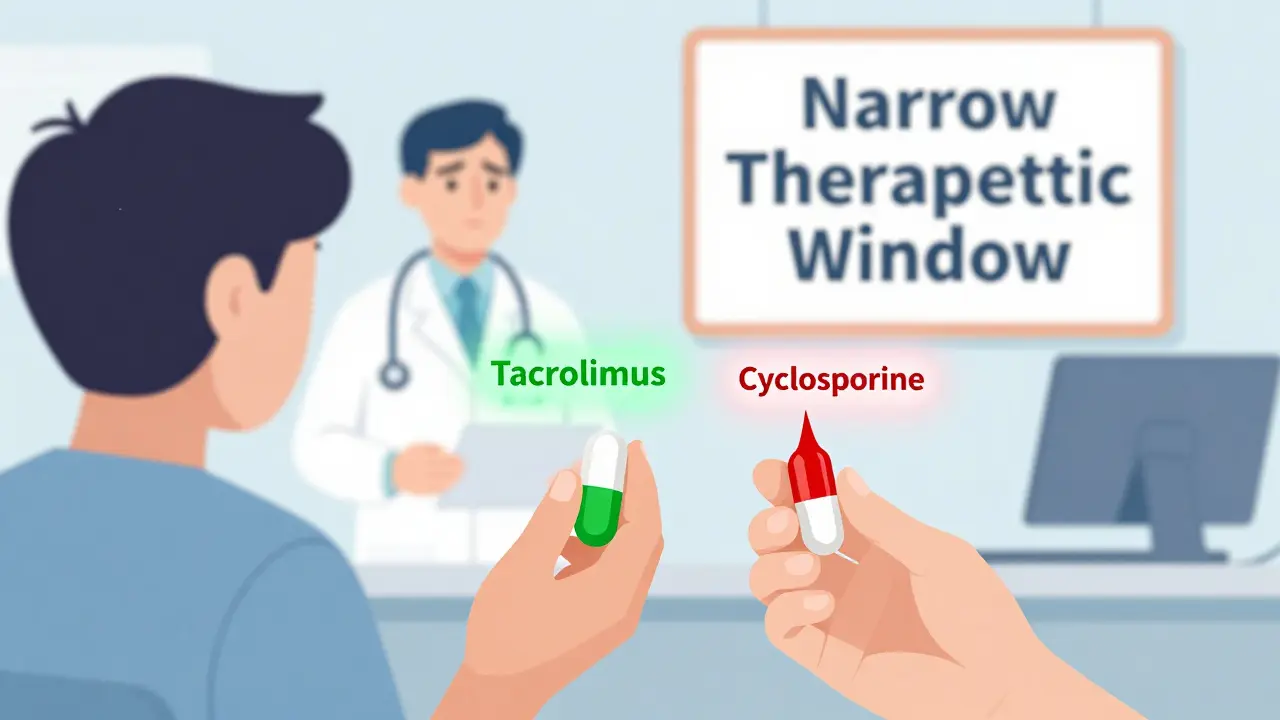
Switching from brand-name to generic immunosuppressants like cyclosporine and tacrolimus can save thousands of dollars a year - but for transplant patients, that savings comes with serious risks. These aren’t ordinary pills. Even tiny changes in blood levels can trigger rejection, organ failure, or life-threatening toxicity. And when you’re on a drug with a narrow therapeutic index, not all generics are created equal.
Why These Drugs Are Different
Cyclosporine and tacrolimus both stop your immune system from attacking a new organ, but they do it in different ways. Cyclosporine binds to cyclophilin; tacrolimus binds to FK-binding proteins. Both block the same final step - turning off T-cells - but tacrolimus works at 20 to 100 times lower doses. You might take 5 mg of tacrolimus twice a day, but 150 mg of cyclosporine. That’s not a typo. The difference in potency is huge. Both drugs are metabolized by the same liver enzyme, CYP3A4. That means anything that affects this enzyme - grapefruit juice, antibiotics, antifungals, even some herbal supplements - can throw your levels off. But here’s the real issue: both drugs have a razor-thin window between too low and too high. For tacrolimus, the target range is 5-15 ng/mL in the first few months after transplant. Go below 5, and your body might reject the organ. Go above 15, and you risk kidney damage, tremors, seizures, or even diabetes. Cyclosporine’s range is wider (100-200 ng/mL), but still narrow enough that a 10% change can cause problems.Generic Switches Are Not Just a Brand Change
When your insurance forces you from Prograf (brand tacrolimus) to a generic version, it’s not like switching from Coke to Pepsi. The FDA says generics must be bioequivalent - meaning their absorption rate must fall within 80-125% of the brand. Sounds fine, right? But that’s a 45% range. Two different generic versions of tacrolimus can have different absorption rates, even if both are “FDA-approved.” Real patients have seen this play out. One transplant recipient on Reddit reported his tacrolimus levels dropped from 8.5 to 5.2 ng/mL after switching to a new generic. He ended up hospitalized for a mild rejection episode. Another said his nephrologist refuses to let him switch generic cyclosporine because his levels were “all over the place” with the first version he tried. A 2022 survey of 1,247 transplant patients found that 42.7% noticed side effects change after switching to generic tacrolimus. Nearly 1 in 5 needed a dose adjustment. And in the U.S. Renal Data System, non-adherence rates were 15.3% higher among those on generics - not because they forgot pills, but because they were scared to take them. They didn’t trust the new version.Why Tacrolimus Is Now the Go-To - But Still Tricky
Since the mid-2000s, tacrolimus has replaced cyclosporine as the first-choice immunosuppressant in most transplant centers. Why? Because it works better. A 2005 study showed only 19.6% of tacrolimus patients had acute rejection in the first six months, compared to 37.3% on cyclosporine. At two years, kidney function was significantly better. Graft survival was higher. It’s why 98.7% of new kidney transplant patients in the U.S. now start on tacrolimus. But it’s not perfect. Tacrolimus has a higher risk of causing new-onset diabetes after transplant - nearly 20% of patients, compared to just 4% on cyclosporine. It also causes more tremors, headaches, and tingling. Still, most doctors agree: the trade-off is worth it. The risk of rejection outweighs the side effects. The problem? Generic tacrolimus is now available from eight different manufacturers in the U.S. Each has a slightly different formulation. Some use different fillers, coatings, or oil-based carriers. These differences affect how the drug dissolves in your gut. And since tacrolimus is absorbed poorly and inconsistently to begin with, even small changes matter.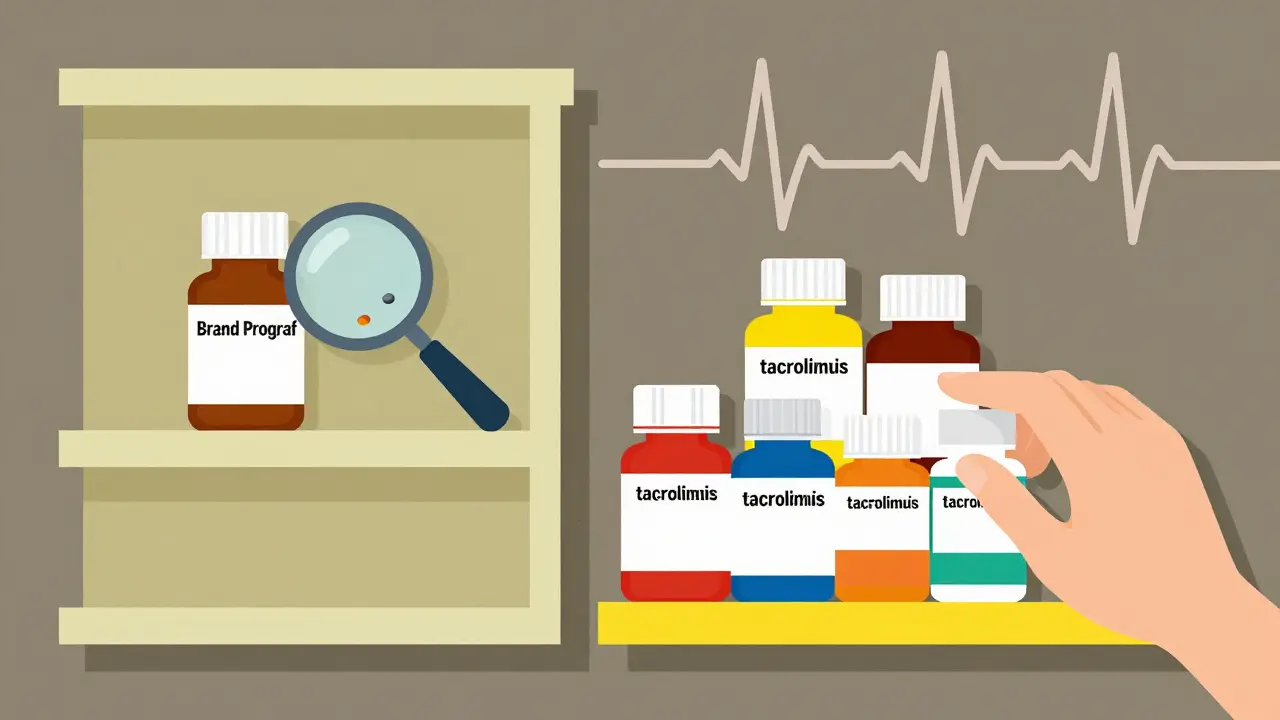
Cyclosporine: The Older Drug With Bigger Generic Problems
Cyclosporine used to come in two forms: Sandimmune (oil-based, unpredictable absorption) and Neoral (microemulsion, more consistent). Neoral replaced Sandimmune because it was more reliable. But now, even Neoral has generics. And here’s the kicker: some generic cyclosporine products still use the old oil-based formula. Others use the microemulsion version. If you’re switched from one to another - even if both are labeled “cyclosporine” - your levels can crash or spike. One study found that switching between generic cyclosporine brands caused blood level changes of up to 40% in some patients. That’s enough to cause rejection or toxicity. And unlike tacrolimus, cyclosporine has fewer monitoring guidelines for generic switches. Many clinics still treat it like a regular drug - which is dangerous.What Transplant Centers Are Doing About It
Hospitals aren’t ignoring this. By 2023, 67% of major transplant centers in the U.S. had switched to “single generic source” contracts. That means they buy only one brand of generic tacrolimus or cyclosporine - and stick with it. If a patient is stable on that version, they stay on it. No switching. No surprises. Pharmacists now monitor levels weekly for the first month after any generic switch. Some centers require a full 6-week monitoring period. Blood tests, dose adjustments, and close follow-up are standard. The American College of Clinical Pharmacy recommends this. But not every clinic has the resources. Smaller centers, especially outside big cities, still struggle. And here’s another problem: most generic manufacturers don’t give doctors detailed bioequivalence data. Only 42% of generic makers provide full study results to prescribers. So your doctor might not even know which formulation you’re getting.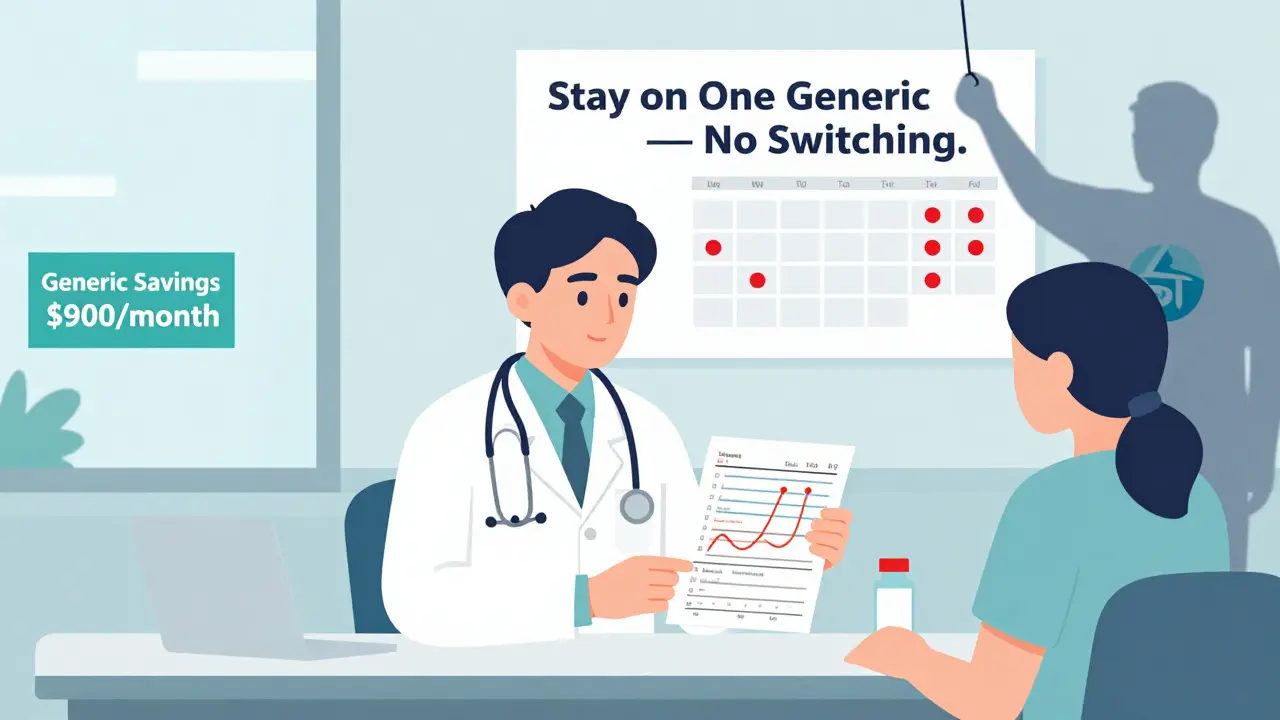
What You Can Do
If you’re on either drug, here’s what matters:- Never switch generics without talking to your transplant team. Even if your insurance says you have to, push back. Ask for a medical exception.
- If you’re forced to switch, get your blood levels checked within 7-10 days. Don’t wait a month.
- Always use the same generic brand. If you get a refill and the pill looks different, ask your pharmacist why.
- Avoid grapefruit, Seville oranges, pomelos, and supplements like St. John’s wort. They interfere with absorption.
- Take your dose at the same time every day - within a one-hour window. Missing a dose or taking it late can throw off your levels.
- Keep a log: date, dose, pill appearance, any new symptoms (tremors, nausea, fatigue, swelling).
The Bigger Picture: Cost vs. Safety
The math is clear. Brand Prograf costs $1,200-$1,500 a month. Generic tacrolimus? $300-$500. Brand Neoral? $800-$1,000. Generic cyclosporine? $150-$300. For many patients, the price difference is the difference between keeping their transplant or losing it. But here’s the truth: saving $900 a month means nothing if you end up back in the hospital with rejection. The National Transplant Insurance Assistance Fund helped over 1,800 patients in 2023 fight insurance mandates to switch generics. Some won. Others had to accept the switch - and monitor like crazy. The European Medicines Agency and FDA both warn that switching between generic versions without monitoring can lead to rejection or toxicity. The International Transplant Society says bluntly: “Generic immunosuppressants provide essential cost savings, but their narrow therapeutic index requires individualized management.”What’s Next?
New formulations are coming. In late 2023, Astellas got FDA approval for LCP-tacrolimus - an extended-release version that smooths out blood level spikes and dips. This could reduce the risk of switching between generics. And research is moving toward personalized dosing based on your genes. If you’re a CYP3A5 fast metabolizer, you need more tacrolimus. If you’re slow, you need less. A 2023 study showed gene-guided dosing cut the time to stable levels by 63%. But until then, the safest approach is simple: know your drug. Know your dose. Know your levels. And never let a pharmacy or insurance company decide your transplant outcome.Can I safely switch between different generic versions of tacrolimus or cyclosporine?
No - not without close monitoring. Even FDA-approved generics can have different absorption rates due to formulation differences. Switching between brands can cause your blood levels to drop or spike, increasing your risk of rejection or toxicity. Always consult your transplant team before switching, and get your levels checked within 7-10 days after any change.
Why do some patients do fine on generics while others have problems?
It depends on the specific generic brand, your body’s metabolism, and how well you stick to your dosing schedule. Some people absorb drugs consistently, others don’t. If you’re on a stable generic version and your levels are steady, you’re fine. But if you switch brands, your absorption pattern changes - and that’s when problems start. Consistency matters more than cost.
Is generic cyclosporine as risky as generic tacrolimus?
Yes - and in some ways, worse. Cyclosporine has more variation between generic formulations, and many still use the older, less reliable oil-based formula. While tacrolimus has tighter monitoring standards, cyclosporine is often treated like a regular drug, which is dangerous. Even small changes in cyclosporine levels can trigger rejection.
What should I do if my pharmacy switches my generic without telling me?
Call your transplant clinic immediately. Check the pill’s shape, color, and imprint - if it looks different, it’s a different generic. Get a blood level test within 3-5 days. Don’t wait for symptoms. Many patients don’t feel anything until their levels are dangerously high or low. Ask your doctor to write a “do not substitute” note on your prescription.
Are there any legal rights to stay on brand-name immunosuppressants?
Yes. Under U.S. law, insurers must provide exceptions for drugs where switching could cause harm. You can file a “prior authorization exception” with your insurance. Your transplant doctor can write a letter stating that switching generics poses a medical risk. Many patients have successfully kept their brand-name meds this way - especially if they’ve had prior rejection episodes or unstable levels.
How often should I get my blood levels checked after switching to a generic?
Check within 7-10 days after the switch. Then again at 2-4 weeks. If levels are stable, you can go back to your usual schedule (usually every 1-3 months). But if your levels fluctuate, your doctor may want weekly tests for a month. Never assume your levels are fine just because you feel okay - these drugs can be dangerous without symptoms.
Tracy Howard
January 18, 2026 AT 15:26Oh sweet mercy, another person who thinks the FDA is some kind of saintly guardian of life? Please. That 80-125% bioequivalence window? That’s not a margin-it’s a goddamn chasm. I’ve seen patients on generics flatline their grafts because some pharma exec decided to swap out a filler that made the pill taste less like chalk. This isn’t ‘generic’-it’s pharmaceutical Russian roulette. And don’t even get me started on how Canadian pharmacies are the only ones with half a brain and actually track batch consistency. The U.S. system is a carnival sideshow with IV drips.
Aman Kumar
January 20, 2026 AT 13:54The entire pharmacokinetic architecture of calcineurin inhibitors is fundamentally compromised by generic substitution due to interformulation variability in dissolution kinetics and lymphatic uptake efficiency. The CYP3A4 polymorphism variance across ethnic populations further exacerbates this-especially in Indian subcontinental cohorts where metabolic phenotypes skew toward ultra-rapid metabolizers. You cannot treat tacrolimus like ibuprofen. The therapeutic index is not a range-it’s a razor’s edge suspended over a cliff of graft failure.
Phil Hillson
January 22, 2026 AT 05:19So basically we’re saying if you’re poor you die? Cool. Got it. Insurance companies are just waiting for you to slip up so they can save a few bucks while you’re on a ventilator. I mean, who cares if your kidney rejects? At least the stockholders got a nice dividend. I’m just here for the popcorn.
Jacob Hill
January 23, 2026 AT 07:52I’ve been on generic tacrolimus for three years now, and honestly? My levels have been rock solid. I take it at 7:00 AM every day, no grapefruit, no supplements, and I track everything in a little notebook. I think the problem isn’t the generic-it’s the chaos. If you switch brands every time your prescription runs out? Yeah, you’re gonna crash. But if you stick with one, monitor, and communicate with your team? You can be fine. It’s not magic, it’s discipline.
Jackson Doughart
January 25, 2026 AT 05:38There’s a quiet tragedy in this issue: patients who survive transplant only to live in constant, low-grade terror of their own medication. The fear isn’t about rejection-it’s about not knowing if the pill in your hand today is the same one that kept you alive yesterday. That psychological burden is as real as any lab value. We treat the numbers, but we forget the human trembling behind them.
Astha Jain
January 26, 2026 AT 09:52generic cyclosporine is literally the worst?? like why do they even make the old oil-based version anymore?? it’s like they’re trying to kill people on purpose. my cousin’s brother’s neighbor had to go back to the hospital after switching and they didn’t even tell her it was a different formula. smh. i hate the system.
Valerie DeLoach
January 27, 2026 AT 22:20My father got a kidney transplant in 2015. He’s been on the same generic tacrolimus since 2018. He’s 76, plays golf twice a week, and his levels are perfect. But here’s the thing-he never switched. Once they found a brand that worked, they locked it in. That’s the real lesson: consistency over cost. It’s not about the name on the bottle-it’s about the consistency of the bottle. If your pharmacy switches without telling you? That’s not a pharmacy. That’s a gamble.
Christi Steinbeck
January 27, 2026 AT 23:02Y’all are overcomplicating this. If you’re on immunosuppressants, you treat them like your life depends on it-because it does. Take it at the same time. Don’t skip. Don’t switch. Check your levels. Keep a log. Ask questions. If your insurance pushes you? Fight back. Call your transplant center. Send them your pill bottle photo. Write a letter. You’re not a number-you’re someone’s parent, sibling, friend. And you deserve stability. Don’t let a spreadsheet decide if you live or die.
Lewis Yeaple
January 29, 2026 AT 11:03According to the 2022 survey referenced, 42.7% of patients reported altered side effects post-switch. However, the study did not control for concomitant medication changes, dietary modifications, or adherence patterns. Therefore, attributing adverse events solely to generic substitution is methodologically unsound. Furthermore, the U.S. Renal Data System’s non-adherence metric conflates pharmacological distrust with behavioral non-compliance. The data is suggestive, not causal.
Malikah Rajap
January 31, 2026 AT 05:15Wait… so if I switch generics and my levels drop, I could lose my new kidney? Like… for real? That’s insane. I just thought generics were cheaper versions of the same thing. I had no idea they could be like… different drugs? I’m gonna call my pharmacist tomorrow and demand to know which brand I’m getting. I don’t care if it costs more-I’m not risking my life for a $20 savings. I love my new kidney too much.
Jake Rudin
February 2, 2026 AT 01:50Here’s the uncomfortable truth: we’ve outsourced medical decision-making to insurance algorithms and pharmacy benefit managers who have no training in pharmacokinetics, no bedside experience, and no moral accountability. We treat transplant patients like cost centers-not humans with fragile, finely tuned biological systems. The FDA’s bioequivalence standard was designed for aspirin, not for drugs that regulate the very immune system that could turn your new organ into a corpse. This isn’t capitalism-it’s biopolitical negligence. And until we recognize that saving $900 a month is a false economy when the alternative is a return to dialysis, or death-we’re not fixing the system. We’re just rearranging the deck chairs on the Titanic.