How to Read Prescription Labels to Prevent Dangerous Drug Interactions
 Apr, 18 2026
Using prescription labels is the primary legally mandated way to identify how different medications, supplements, and foods interact within your body. While it might look like a wall of tiny text, there is a specific logic to how this information is organized. If you know where to look, you can spot red flags before they become emergencies.
Where to Find Interaction Warnings on Your Meds
Not all warnings are created equal. Depending on whether you have a prescription from a doctor or something you bought off the shelf, the information lives in different places.
For prescription drugs, the
FDA is
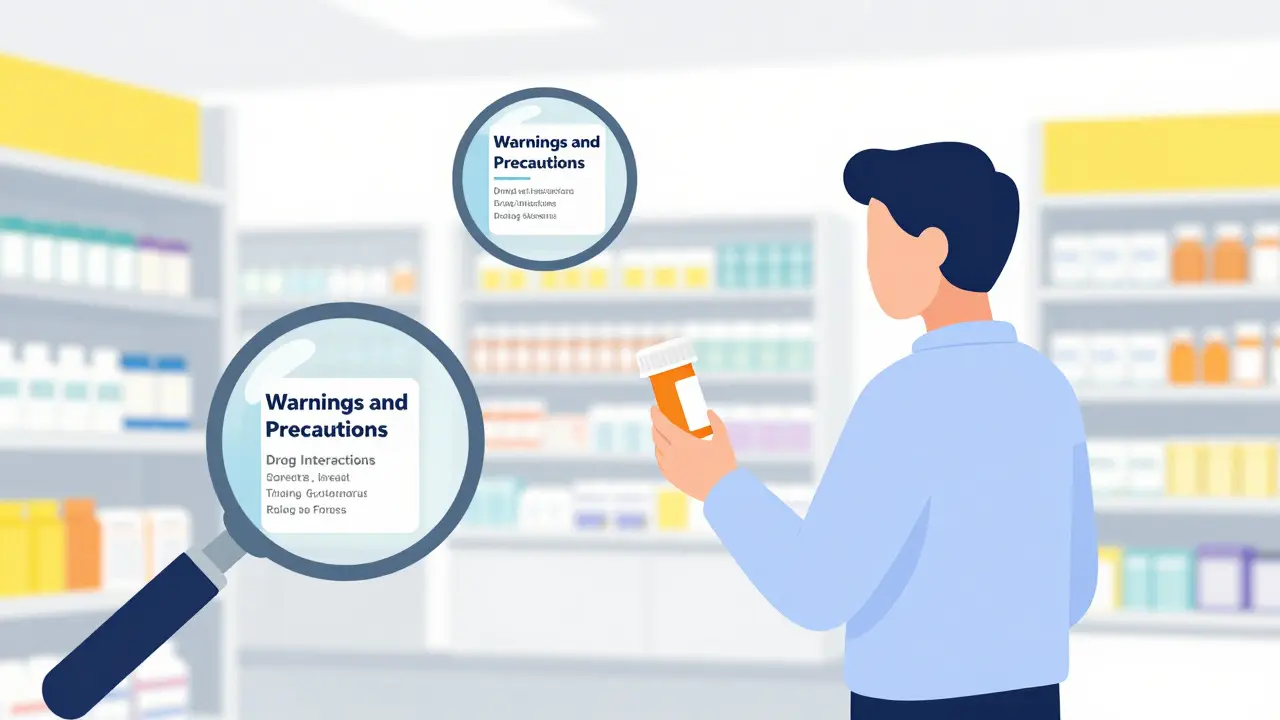
the U.S. federal agency that regulates the labeling of medications to ensure safety and efficacy. They require two specific areas for interaction data. First, look at the "Warnings and Precautions" section. This is where the heavy hitters live-serious interactions that could be life-threatening or require a doctor to monitor your blood work closely. Second, there is a dedicated "Drug Interactions" section. According to 2024 FDA guidance, this section is designed to answer three simple questions: Is there a problem? How bad is it? And what should you do about it?
If you're looking at over-the-counter (OTC) meds, you won't find these formal sections. Instead, check the "Warnings" area. Surprisingly, 98% of common OTC products contain critical interaction info here, but more than half of us skip reading it entirely. Whether it's a nasal spray or an aspirin, that little box of text is your first line of defense.
| Medication Type | Primary Section | What it covers |
|---|---|---|
| Prescription | Warnings and Precautions | Severe risks and mandatory monitoring |
| Prescription | Drug Interactions Section | Clinically significant interactions and dose changes |
| Over-the-Counter | Warnings Section | Common clashes with other meds and health conditions |
Decoding the "Pharmacy Speak"
Have you ever read a label and thought, "I have no idea what this means"? You're not alone. Many people get tripped up by terms like "concomitant use." In plain English, this just means taking two things at the same time. When a label says "Avoid concomitant use of Drug X with Drug Y," it's telling you that the two medications are a dangerous pair.
Look for specific instructions on dosage. Some labels won't tell you to stop a med entirely but will say to "reduce dosage" when used with another specific drug. This is common when one drug makes another stronger, increasing the risk of side effects. If you see a complex table on a medication insert, a pro tip from drug information experts is to look at the graphics on the right-hand side first-they often summarize the risk level more clearly than the long paragraphs of text.
One of the biggest risks isn't actually a missing word, but a similar-sounding one. For example, Klonopin and clonidine sound almost identical, but they do very different things. Mixing these up accounts for about 12% of medication mix-up errors reported to the FDA. To stop this, try labeling your bottles with the *reason* you take them-like "Blood Pressure" or "Anxiety"-rather than just the drug name.
The Supplement Blind Spot
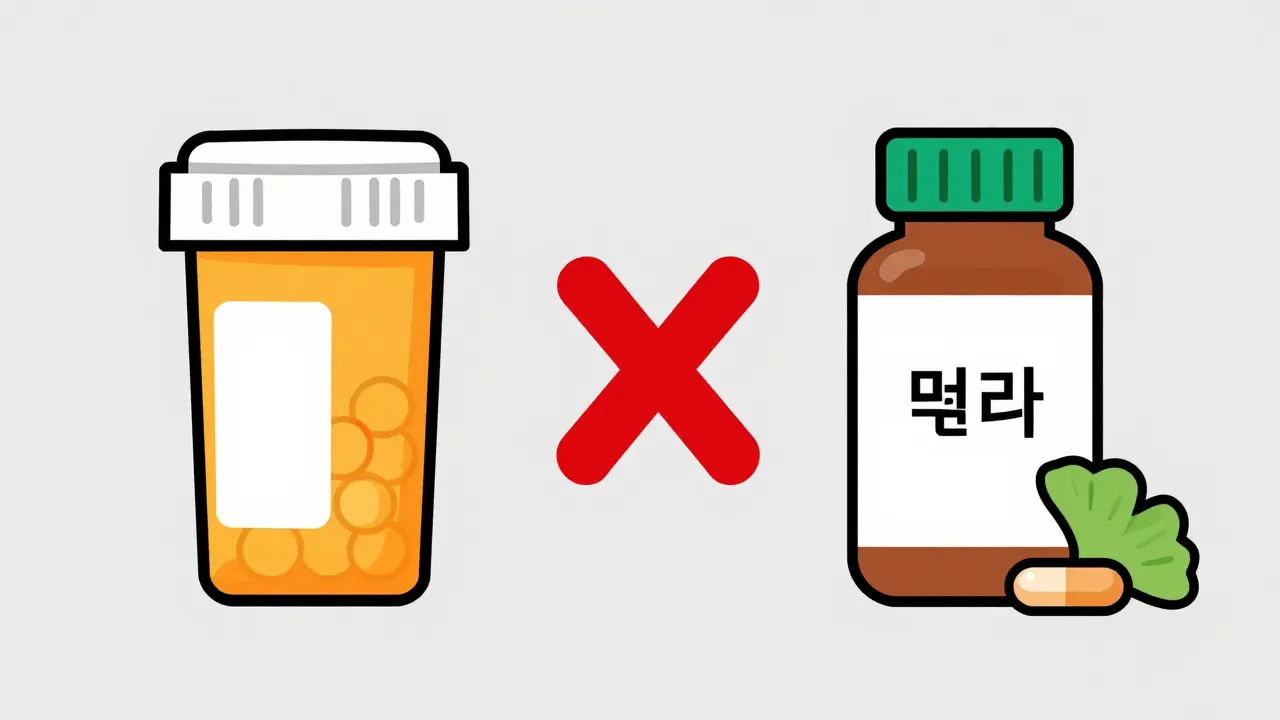
Here is a trap many people fall into: thinking that "natural" means "safe." Prescription labels are great for other FDA-approved drugs, but they are often silent about herbal supplements. In fact, only about 17% of prescription labels mention supplement interactions.
This creates a dangerous gap. A well-known example involves
Warfarin is
a common anticoagulant medication used to prevent blood clots and strokes. If someone taking Warfarin starts taking ginkgo biloba-a common supplement for memory-they can experience severe, uncontrolled bleeding. Because the label for Warfarin might not explicitly warn against ginkgo, patients assume it's fine.
If you take any vitamins, protein powders with added herbs, or herbal teas, don't rely on the label alone. Since these aren't regulated like drugs, the interaction data isn't always synchronized. This is why a complete medication list is your best tool. BeMedWise reports that keeping a list of everything you swallow-prescription, OTC, and supplement-reduces interaction risks by 47% when shared with your care team.
A Practical Step-by-Step Safety Routine
Preventing a bad reaction doesn't have to take all day. Most people can vet their medications in under three minutes per drug if they follow a system.
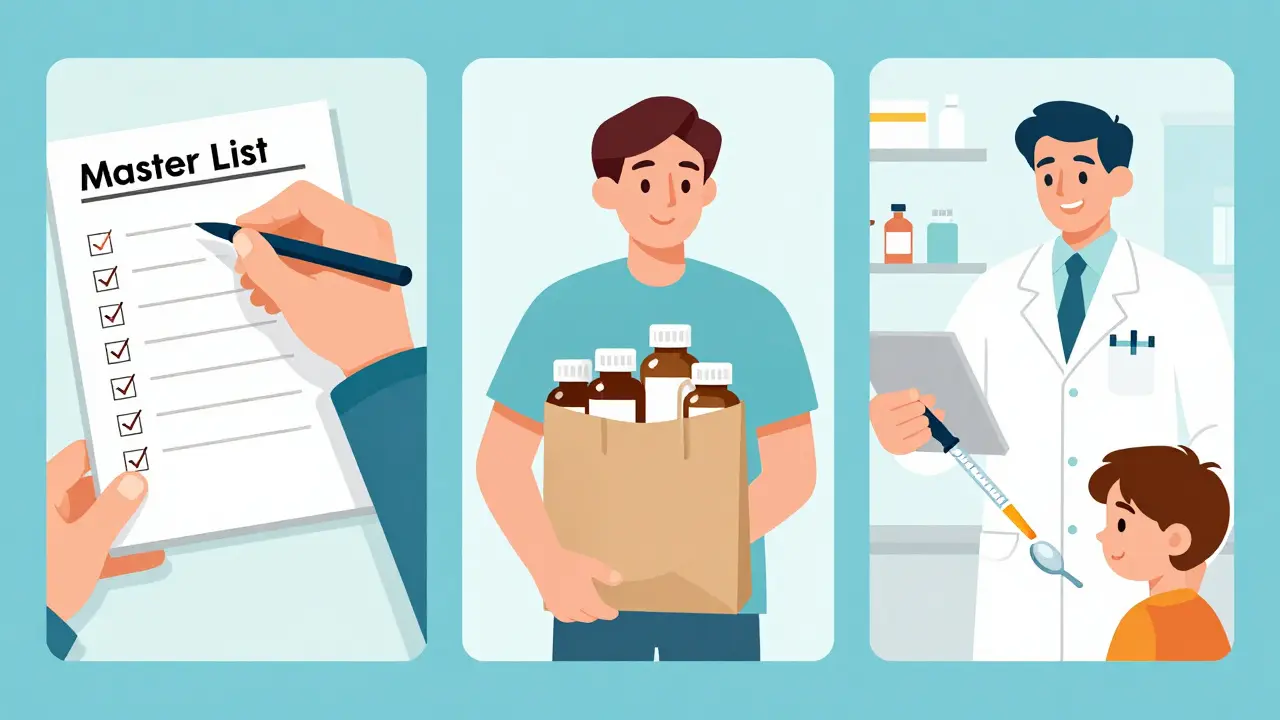
- Build your Master List: Write down every single thing you take. Include the dose and why you take it.
- The Label Sweep: Open the "Drug Interactions" or "Warnings" section. Search for keywords like "Avoid," "Reduce dose," or "Concomitant."
- The OTC Cross-Check: Before taking a new store-bought remedy for a cold or headache, check its warnings against your master list.
- The Pharmacy Hand-Off: When you pick up a new script, don't just grab the bag. Bring your actual bottles (or your master list) and ask the pharmacist, "Will any of these react with the new one?" This simple move identifies potential clashes in about 22% of consultations.
For parents, the stakes are higher because kids can't tell you if they feel "weird" after a dose. The CDC suggests a "Check the Label" approach: read it, follow the directions exactly, and always use the measuring device that came with the medicine. Using a kitchen spoon instead of the provided dropper is where 67% of pediatric dosing errors happen.
Digital Tools vs. Paper Labels
With so many apps available, you might wonder if the paper label is even relevant. Tools like the
Drugs.com Drug Interactions Checker is
a digital tool that allows users to enter multiple medications to screen for potential adverse reactions are incredibly fast and convenient. They process millions of queries a month and are generally very accurate.
However, the prescription label remains the gold standard for one reason: it's manufacturer-validated and legally mandated. While an app might give you a general warning, the label provides the specific, approved instructions for *your* exact medication. Digital tools are a great secondary check, but they should supplement-not replace-the label and the pharmacist's advice.
Looking ahead, the process is getting easier. By 2026, electronic health records are required to integrate FDA interaction data, meaning your doctor's computer will flag these issues before the script is even printed. Some pharmacies are even testing QR codes on bottles that link directly to updated safety info, cutting through the confusion of the tiny print.
What does "concomitant use" mean on my medication label?
It simply means taking two or more drugs at the same time. If your label warns against "concomitant use" of another medication, it means you should not take those two drugs together because they may cause a harmful reaction or make one of the drugs stop working.
Where is the most important interaction information located on a prescription bottle?
Check two main areas: the "Warnings and Precautions" section for high-risk alerts and the "Drug Interactions" section (often Section 7 in official labeling) for a detailed list of what to avoid and how to manage dosage changes.
Should I worry about herbal supplements if my prescription label doesn't mention them?
Yes. Most prescription labels only list interactions with other FDA-approved drugs and omit supplements. Many supplements, like ginkgo biloba or St. John's Wort, can dangerously interact with prescriptions. Always verify supplements with a pharmacist.
How can I avoid mixing up medications with similar names?
A highly effective strategy is to write the purpose of the medication (e.g., "for blood pressure" or "for sleep") directly on the bottle. This prevents you from confusing drugs like Klonopin and clonidine, which sound similar but treat different conditions.
Are drug interaction checker apps as reliable as the labels?
Apps are excellent for quick screenings and are highly accurate, but prescription labels are the only legally mandated, manufacturer-validated source of information for your specific drug. Use apps as a supplement, but always rely on the label and your pharmacist for the final word.
Next Steps for Medication Safety
If you're currently taking more than five medications, you're at a higher risk for complex interactions. Your first step should be a "brown bag review": put every single bottle, vitamin, and cream you use into a bag and take it to your pharmacist for a comprehensive audit.
If you're managing meds for a child, stick to the CDC's guidance: measure every dose with the provided tool-never a kitchen spoon. If you find the text on your labels too small or confusing, ask your pharmacist for a "patient-friendly" summary or use a magnifying app on your phone to ensure you aren't missing critical warnings in the "Warnings and Precautions" section.
Lynn Smith
April 19, 2026 AT 13:29This is such a helpful reminder to be careful with what we take!