How to Prepare Unused Medications for Take-Back Events
 Apr, 13 2026
You’ve finally cleared out your medicine cabinet and found a handful of old prescriptions, expired painkillers, and a few half-empty bottles of cough syrup. Now you want to do the right thing and drop them off at a take-back event. But wait-can you just throw them all in one big bag? Do you need to peel off the labels? If you get it wrong, the collection site might actually reject your meds, meaning you have to take them back home and start over.
Getting your medication disposal ready isn't just about tidying up; it's a huge safety move. When we leave old pills in the house, they often end up being misused by family or friends. Even worse, flushing them sends active chemicals into our water systems, where they've been found in about 80% of U.S. streams. Preparing your meds correctly ensures they actually get incinerated and destroyed, rather than ending up in a landfill or a river.
The Quick Checklist for Preparation
If you're in a rush, follow these three golden rules: remove your name, keep the original bottle, and don't mix different drugs together. If you stick to that, you're likely to be accepted at any authorized site.
| Item Type | Preparation Requirement | Critical Warning |
|---|---|---|
| Pills/Capsules | Original container; redact personal info | Do not mix multiple prescriptions in one bag |
| Liquids | Tightly sealed original bottle or leak-proof container | Ensure the cap is secure to prevent leaks |
| Patches | Fold adhesive-side-in | Avoid exposed sticky surfaces |
| Sharps/Needles | Securely capped in a hard-plastic container | Never put loose needles in a bag |
Protecting Your Privacy First
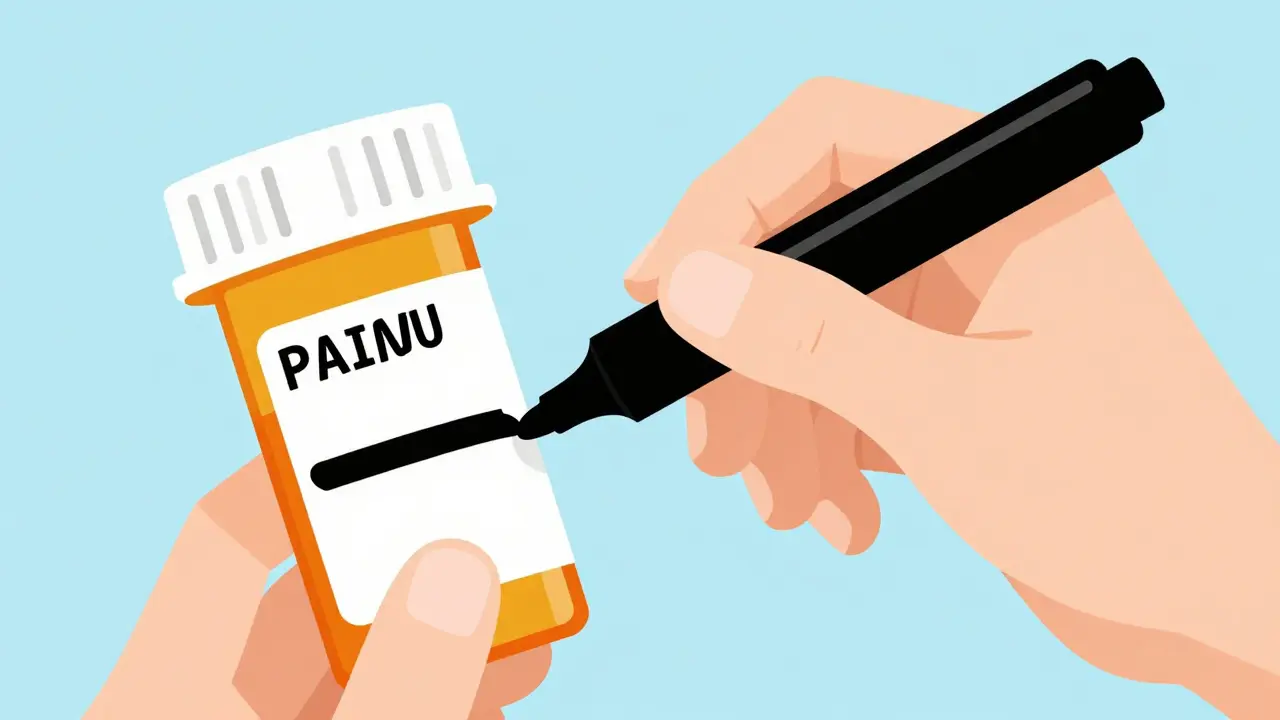
Before you even think about the container, look at the label. Your prescription bottle contains a goldmine of personal data: your full name, address, and prescription number. This is a huge privacy risk. To fix this, use a permanent black marker to cross out your name and address. Some people prefer to peel the label off entirely, but the FDA recommends redaction to ensure the pharmacy can still identify the medication type if needed for safety during transport.
Why does this matter so much? It's not just about identity theft. Experts, including those at Massachusetts General Hospital, warn that leaving this info intact can actually facilitate drug diversion, where someone finds out what medication is being disposed of and tries to intercept it. A quick swipe of a marker removes that risk.
Dealing with Containers and Packaging
Ideally, you should keep medications in their original pharmacy-labeled containers. Why? Because it helps the disposal team identify the substance and ensures the drug stays stable until it's burned. According to DEA data, about 92% of collection sites prefer or require this format.
But what if you've already tossed the bottle? Don't panic. If the original packaging is gone, you can use a small, sealed plastic bottle or a sturdy zip-lock bag. However, be careful with liquids. If you put a liquid medication in a flimsy bag, it's likely to leak, and most collection sites will reject it immediately for safety reasons. Ensure liquid containers are airtight and leak-proof.
Handling Special Cases: Patches, Sharps, and Liquids
Not every medication is a simple pill in a bottle. Some require a bit more attention to detail to be accepted at a Drug Take-Back Event.
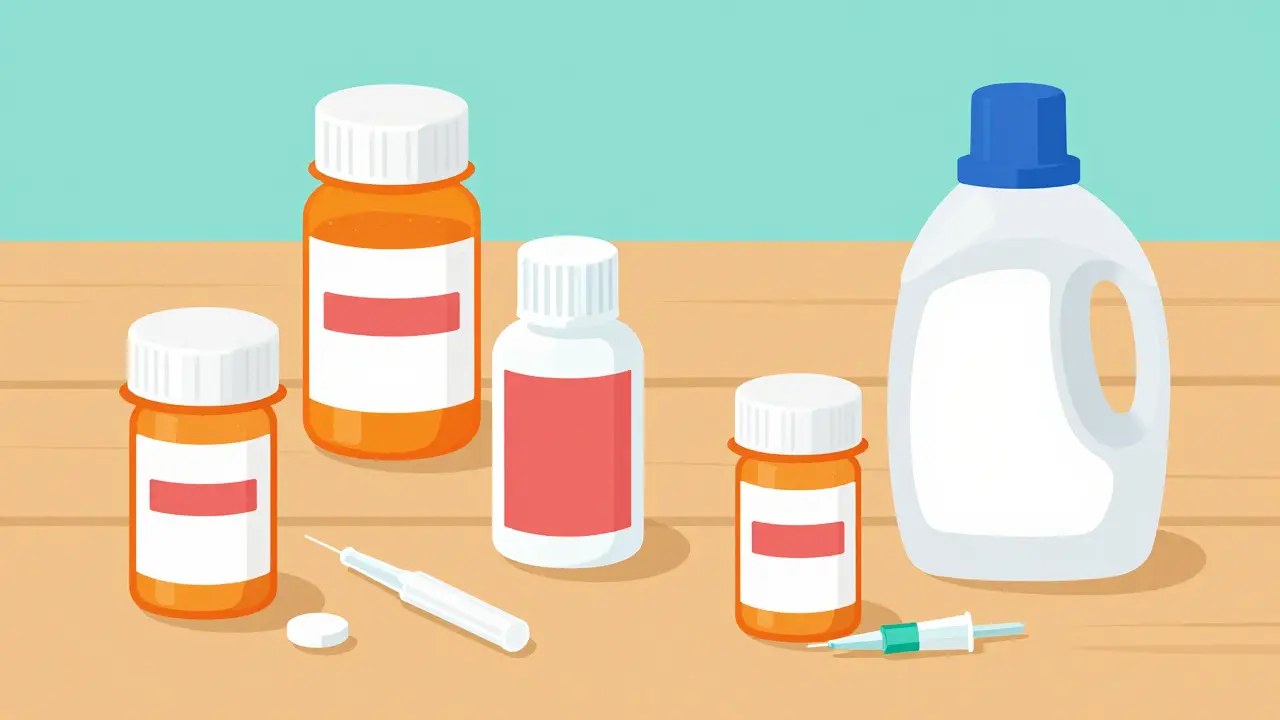
- Transdermal Patches: These are the sticky patches used for pain or nicotine. You must fold them adhesive-side-in. This prevents the medication from sticking to other items or touching the skin of the person handling the waste.
- Insulin Pens and Sharps: These are trickier. While many hospital sites accept them, many retail pharmacies do not. Always ensure needles are capped and placed inside a hard-walled plastic container (like an empty laundry detergent bottle with a lid). Never put a loose needle in a plastic bag.
- Liquid Meds: If you're using a non-original container, double-check the seal. There are countless stories of people being turned away at kiosks because a cap wasn't screwed on tight enough.
What You Absolutely Cannot Bring
It might seem like a waste to take one trip for pills and another for everything else, but some items are dangerous for the incineration process. Most take-back sites will explicitly reject the following:
- Aerosols and Compressed Cylinders: This includes asthma inhalers. Because they are pressurized, they can explode when heated in an incinerator.
- Hydrogen Peroxide and Iodine: These chemicals can react violently or create toxic fumes during the disposal process.
- Thermometers: Old mercury thermometers are hazardous waste and require a different disposal stream than pharmaceuticals.
- Illicit Drugs: These events are for legal, unused medications. Bringing illegal substances can lead to legal complications.
Navigating Local Differences
Depending on where you live, the rules can feel like a moving target. For instance, some regions like California are very strict about original containers and redaction. Others, like Washington State, are a bit more flexible with sealed bags. Even different pharmacy chains have different vibes; some Walgreens kiosks have a very simple "drop and go" approach, while others may have staff who check your containers before you leave.
To avoid the frustration of being turned away, the best bet is to use the DEA's online locator tool to find a permanent site and give them a quick call to ask about their specific container rules. A two-minute phone call can save you a wasted trip across town.
Common Mistakes to Avoid
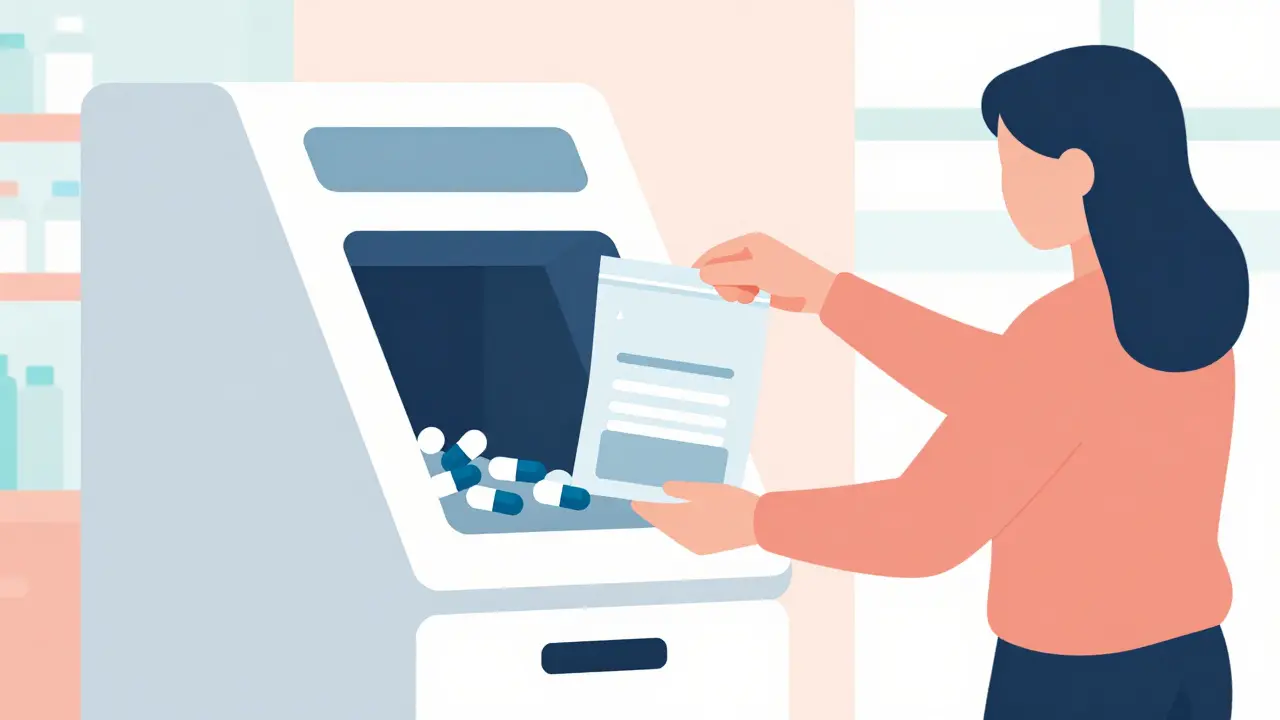
Most rejections happen because of a few simple errors. The most common is incomplete redaction-leaving a part of a name visible on a label. The second biggest mistake is improper liquid containment. If you're unsure, imagine the bottle being tipped over in a bin; if it leaks, it's a problem.
Another mistake is mixing multiple prescriptions into one bag without any labels. While it seems efficient, it makes it impossible for technicians to know what they are handling in case of a spill. Keep your meds separate or, at the very least, ensure they are in a secure, sealed environment.
Can I put my vitamins and pet medications in the take-back bin?
Yes, virtually all registered DEA collection sites accept over-the-counter vitamins, supplements, and medications prescribed for pets. The same preparation rules apply: redact your personal info and keep them in a sealed container.
What should I do if I don't have a permanent marker to hide my name?
If you don't have a marker, you can carefully peel the label off the bottle. If the label is stuck, you can use a piece of heavy-duty opaque tape to cover your information, though a permanent marker is the most reliable method for ensuring the data can't be read through the tape.
Are inhalers accepted at take-back events?
Generally, no. Because inhalers are compressed aerosols, they are considered a safety hazard in the high-heat incinerators used for pharmaceutical waste. Check with your local pharmacy for specific hazardous waste disposal instructions for aerosols.
Do I need to bring my meds to a specific "National Take-Back Day"?
While the National Prescription Drug Take-Back Days are great for awareness, the DEA has shifted toward an "Every Day is Take Back Day" model. This means there are over 16,000 permanent collection sites (like pharmacies and police stations) available year-round.
Can I just flush my meds if I can't find a take-back site?
Unless the medication packaging specifically tells you to flush it (which is very rare and only for a few high-risk opioids), avoid flushing. It contaminates the water supply. If you absolutely cannot find a take-back site, mix the meds with an unappealing substance like coffee grounds or cat litter, seal them in a bag, and throw them in the household trash.
Next Steps for Different Scenarios
If you are a caregiver: You likely have a larger volume of medications. Instead of a small zip-lock bag, use a larger plastic tub with a lid to organize different patient medications before arriving at the site to keep the process organized.
If you have needles/sharps: Don't head to a retail pharmacy first. Start with hospital-based collection sites or dedicated hazardous waste centers, as they are much more likely to have the specialized equipment needed to handle sharps safely.
If you are unsure about a specific drug: When in doubt, leave it in the original bottle and redact the name. This is the "safest" way to present your medication to a collector, as it provides the most information while protecting your identity.