How to Create a Medication Action Plan with Your Healthcare Team
 Apr, 6 2026
Ever felt like you're guessing whether your meds are actually working, or struggled to remember if that little blue pill is for your blood pressure or your cholesterol? You're not alone. For many of us, managing a handful of prescriptions feels like a second full-time job. The real danger isn't just forgetting a dose; it's the confusion that leads to adverse drug events, which cost the healthcare system billions every year and land thousands of people in the hospital unnecessarily.
The solution isn't just a list of pills on a piece of paper. You need a medication action plan is a patient-centric document that tracks progress for self-management and provides clear steps to optimize health outcomes. Unlike a static list, this is a living strategy co-created with your doctors and pharmacists to make sure your treatment actually fits your life.
What Exactly is a Medication Action Plan?
Think of a standard medication list as a map that shows you where you are. A Medication Action Plan (or MAP) is more like a GPS-it tells you where you're going, how to get there, and what to do if you take a wrong turn. It's a core part of Medication Therapy Management (MTM), a professional service where pharmacists ensure your meds are working together safely.
A real MAP doesn't just say "Take Drug X twice a day." It includes specific, actionable goals. For example, instead of just listing a diuretic, your plan might say: "Take 25mg Furosemide at 8 AM. Goal: Maintain weight within 2 lbs of baseline. If ankles swell, call Dr. Smith immediately." It turns a passive list into an active tool for your health.
Building Your Plan: The Step-by-Step Process
Creating a MAP isn't something you do in a five-minute window while a doctor is walking out the door. It requires a structured approach, usually starting with a Comprehensive Medication Review (CMR). This is a deep dive into everything you're taking-not just the prescriptions, but those vitamins, herbal teas, and over-the-counter painkillers you might forget to mention.
- The Inventory Phase: Gather every single bottle and supplement you use. Don't assume your doctor knows about that St. John's Wort you bought online; some supplements can dangerously interfere with prescription drugs.
- The Reconciliation: Your care team compares your list against their records to find discrepancies. This is where they spot duplications (like taking two different brands of the same drug) or potential interactions.
- Identifying Barriers: This is the "human" part of the plan. Be honest. If you hate swallowing large pills or if you always forget your evening dose because you're asleep on the couch, tell them. A plan that doesn't fit your routine is a plan that will fail.
- Drafting Action Steps: Your pharmacist helps you create "if-then" scenarios. If you feel dizzy after a dose, the plan should tell you exactly what to do: "Sit down, drink water, and call the pharmacy if it lasts more than 30 minutes."
Who Needs to Be at the Table?
A successful MAP isn't a solo project. It's a collaborative effort involving your entire care team. While the prescribing physician sets the goal, the pharmacist is often the primary architect of the actual plan because they see the full picture of every medication you're dispensed.
| Team Member | Primary Contribution | Key Action Step |
|---|---|---|
| Prescribing Physician | Medical diagnosis and goals | Determines the drug and dosage based on your condition. |
| Pharmacist | Safety and adherence logic | Checks for interactions and designs the daily schedule. |
| Patient / Caregiver | Real-world application | Reports side effects and confirms the plan fits their lifestyle. |
| Specialist (e.g., Endocrinologist) | Disease-specific expertise | Adjusts dosages for high-risk meds like insulin or anticoagulants. |

Why This Actually Works: The Evidence
You might wonder if a piece of paper really makes a difference. The data says yes. Research shows that when patients actively help build their MAPs, adherence rates jump by 25% to 40%. That's the difference between a treatment that works and one that fails because the patient was confused.
For people managing three or more chronic conditions, the impact is even bigger. In the U.S., data from the Centers for Medicare & Medicaid Services indicated that patients receiving these personalized plans had 32% fewer medication-related hospitalizations. Why? Because they stopped making the small, preventable errors-like taking a dose twice or skipping a critical evening pill-that lead to emergency room visits.
Pro Tips for a Better Plan
To make your MAP actually useful, avoid the "medical jargon trap." If your plan says "Administer titration every 14 days," ask your pharmacist to change it to "Increase dose every two weeks." Use language you and your family understand.
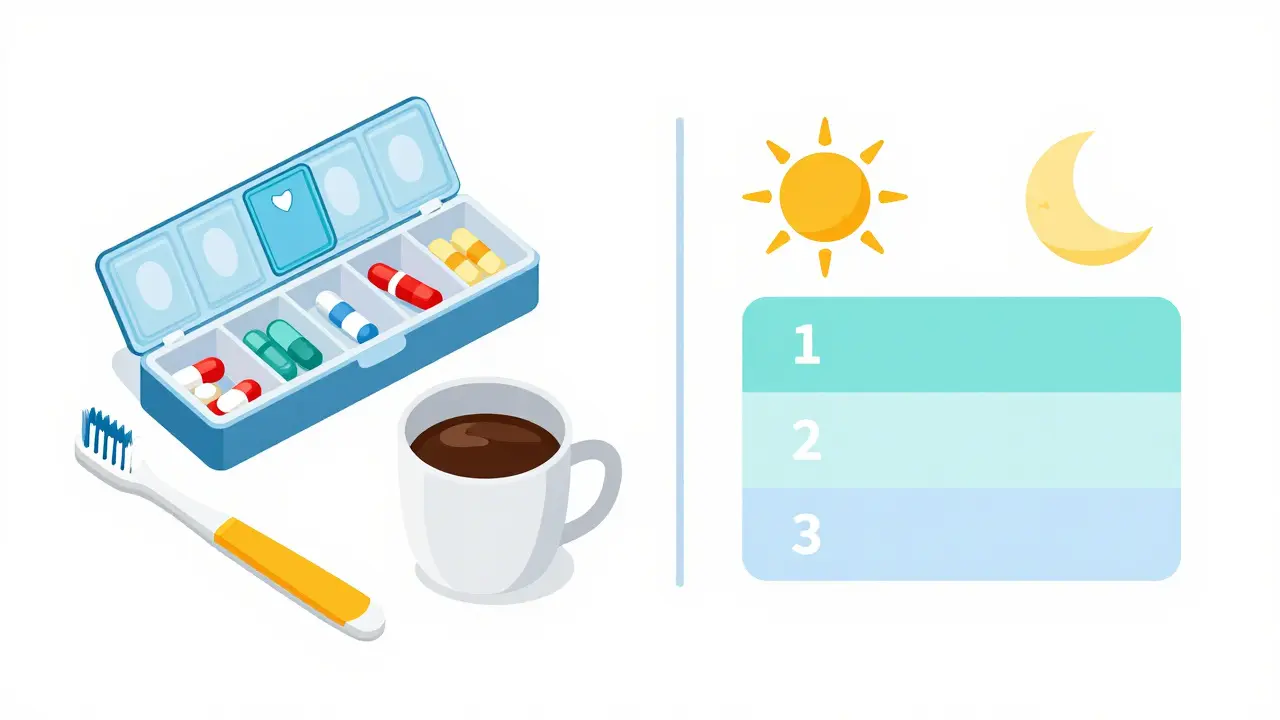
Get creative with visuals. Some patients find that a text-based list is overwhelming. Try creating a visual chart. Instead of writing "Morning," put a picture of a coffee cup. Instead of "Evening," use a picture of a dinner plate. For those with severe memory issues, linking a medication to a physical trigger-like placing your pill organizer right next to your toothbrush-can increase adherence from 65% to over 90%.
Updating Your Plan for the Long Haul
A Medication Action Plan is not a "set it and forget it" document. Your body changes, your prescriptions change, and your life changes. The American Academy of Family Physicians suggests reviewing your plan at least every quarter. If you start a new medication, get a flu shot, or even start a new vitamin regimen, your MAP needs an update.
In some countries, like Germany, the system is even more integrated, where pharmacists are required to update the plan during the dispensing process. While we may not have that exact mandate everywhere, you can take the lead. Every time you pick up a new script, ask: "Does this change my Action Plan?"
Am I eligible for a Medication Action Plan?
While anyone can ask for one, they are standard in Medication Therapy Management (MTM) programs. For example, Medicare Part D beneficiaries taking five or more chronic medications are often eligible. However, if you have a complex condition (like diabetes or heart disease) or take multiple high-risk drugs, you should request one regardless of your insurance plan.
What is the difference between a medication list and an action plan?
A medication list is just a record of what you take (name, dose, frequency). An action plan is a strategy. It includes the 'why' (the medical indication), the 'how' (specific timing and triggers), and 'what if' (instructions for side effects and goals for tracking progress).
How long does it take to create a plan?
A Comprehensive Medication Review usually takes between 30 and 60 minutes. This includes the time to go over your history, review all current bottles, and discuss the specific barriers you face with taking your medicine.
Can a MAP help with children or teens?
Absolutely. For pediatric patients, these plans are critical for life-threatening conditions. They provide a standardized guide that can be shared between parents, schools, and community coaches to ensure medication is given on a strict schedule and symptoms are monitored consistently.
What should I do if I can't get my doctors to collaborate?
Your community pharmacist is your best ally here. Because they act as the hub for all your prescriptions, they can often bridge the gap. Ask your pharmacist to lead the MTM process and provide a printed copy of your plan that you can physically bring to each of your different doctors' appointments.
Next Steps for Your Health Journey
If you're ready to take control, start by gathering every pill bottle in your house tonight. Next time you visit your pharmacist or doctor, don't just ask for a refill-ask for a comprehensive medication review. Tell them you want to move beyond a simple list and build a personalized action plan that fits your daily routine.
If you're a caregiver, your role is to be the "observer." Note the times when the patient struggles most-is it the mid-day dose? The morning rush? Bring these specific observations to the care team so they can build a plan based on reality, not a textbook.