How to Clear Security with Liquid Medications and Supplies at Airports
 Jan, 26 2026
Traveling with liquid medications doesn’t have to be a nightmare. Millions of people fly every year with insulin, chemotherapy drugs, EpiPens, or other essential liquids-and most of them get through security without a hitch. But if you’ve ever been stopped, asked to open your bag, or told your medication doesn’t look right, you know how stressful it can be. The good news? The rules are clear. The bad news? Not every TSA officer knows them. Here’s how to make sure you’re not the one getting delayed.
Know What’s Allowed
TSA lets you carry liquid medications in any quantity, no matter how big the bottle. That means your 8-ounce insulin vials, your 16-ounce chemotherapy bag, or your 32-ounce saline solution are all fine. The 3.4-ounce (100ml) rule? It doesn’t apply to you. This exemption covers:- Prescription liquids (insulin, liquid antibiotics, seizure meds)
- Injectable medications (EpiPens, glucagon kits, testosterone injections)
- Prescription creams and gels (for eczema, psoriasis, pain)
- Oral solutions (like liquid morphine or pediatric antibiotics)
Keep It in Original Containers
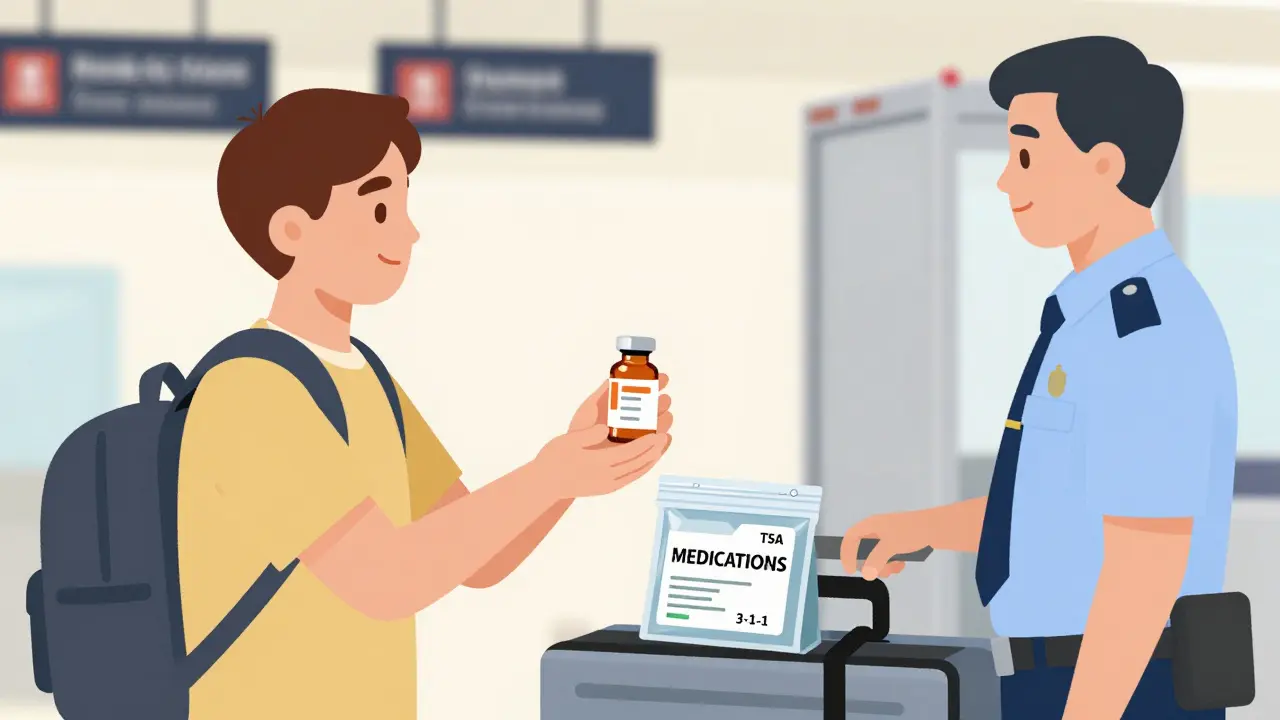
This is the single biggest thing you can do to avoid delays. Over 60% of medication-related security issues in 2024 happened because someone moved their meds into unlabeled pill organizers or random bottles. TSA officers aren’t pharmacists. They can’t tell if a clear vial labeled "B12" is actually insulin or just a vitamin. But if it says "Insulin Glargine, 100 units/mL, Rx# 78945, Dr. Patel"? That’s instant recognition. Don’t transfer your meds. Keep them in the pharmacy bottle with the prescription label intact. If you’re worried about bulk or spills, pack them in a clear plastic bag-but leave the labels visible. Some travelers use zip-top bags with clear windows, or even small clear plastic cases designed for meds. Just make sure the label isn’t hidden under tape or folded over.Declare It Before Screening
Don’t wait for the officer to ask. As soon as you walk up to the security checkpoint, say: "I have liquid medications in my carry-on." Do it calmly, clearly, and before you put your bag on the belt. This tells the officer to expect something different. It also means they’ll be ready to handle it properly. You’re not required to take your meds out of your bag-but if you do, put them in a separate clear bag, away from your 3-1-1 toiletries bag. TSA’s own data shows travelers who separate meds from regular liquids cut screening time by more than half. Keep your medication bag in an outer pocket of your carry-on so you can grab it fast.Ice Packs and Coolers Are Allowed
If you need your insulin or other meds cold, you can bring ice packs. Frozen ice packs? Fine. But they must be completely solid when you get to the checkpoint. If they’re melting into water, TSA will treat them like regular liquids. That means you’ll have to declare them, and they’ll go through the same screening as your meds. Coolers? Allowed, but size matters. The Juvenile Diabetes Research Foundation recommends coolers under 8x6x2 inches. Bigger ones might get flagged as suspicious. Stick to small, soft-sided coolers with a tight seal. Don’t pack them with dry ice unless you know the airline’s rules-some airlines limit it, and others ban it entirely.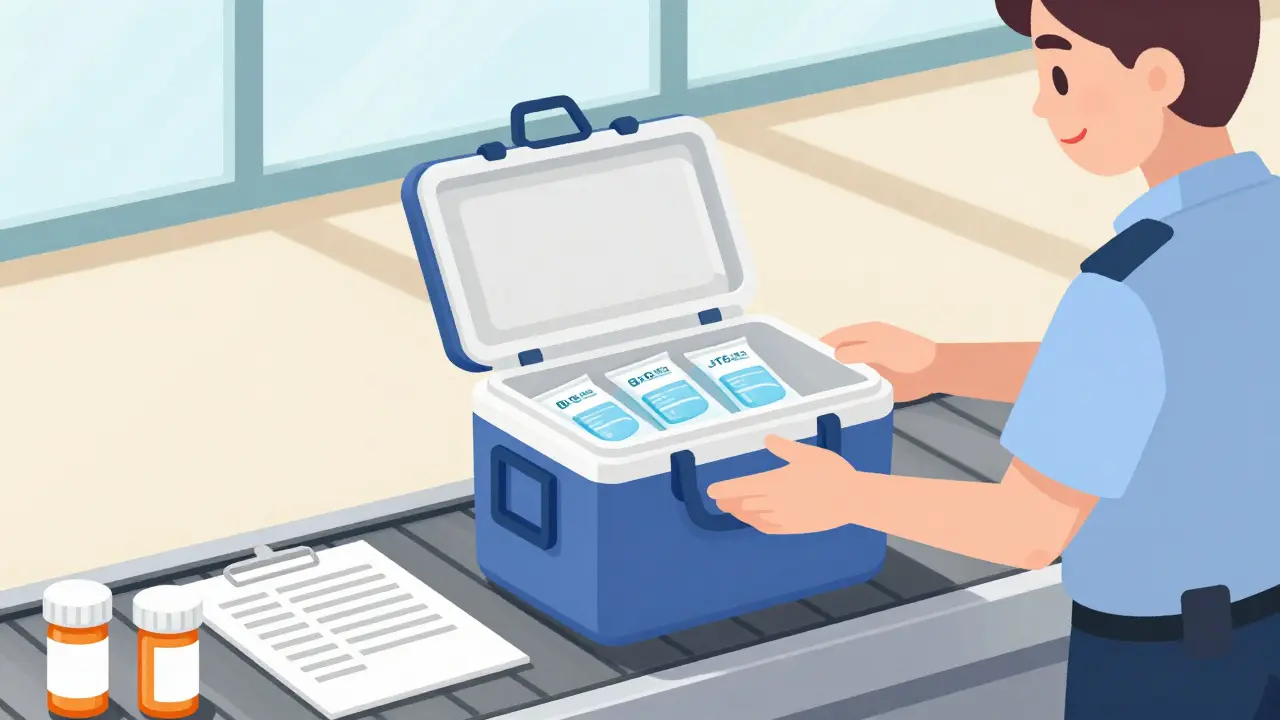
Bring a Medication List
It’s not mandatory-but it’s smart. Write down:- Drug name (generic and brand)
- Dosage
- Prescribing doctor’s name and phone number
- Prescription number
- Reason for use (e.g., "Type 1 Diabetes," "Chemotherapy for breast cancer")
What to Expect at Screening
Most of the time, your meds will go through the X-ray machine with your other stuff. No problem. But if the officer is unsure, they might ask to see the container, smell it, or swab it for residue. That’s normal. You can ask for a visual inspection instead of X-ray if you’re worried about your meds being damaged-especially if you’re carrying insulin or other sensitive biologics. TSA allows this. Just say: "I’d prefer a visual inspection for my medication." They’ll usually take it to a private area, open it in front of you, and check the label. No need to be nervous. Officers are trained to handle this. But if they don’t know the rules? That’s when your prep matters.When Things Go Wrong
Sometimes, you’ll get an officer who’s never seen a 10-ounce insulin bottle before. Or they think your glucagon kit is a weapon. Or they say, "We don’t allow liquids over 3.4 ounces." That’s when you need to stay calm and know your rights. Here’s what to do:- Politely repeat: "My medication is exempt from the 3-1-1 rule under TSA guidelines."
- Hand them your prescription label or medication list.
- If they still refuse, ask to speak to a supervisor. Supervisors are trained on these rules.
- Don’t argue. Don’t raise your voice. Just stay firm and clear.
Prepare Ahead of Time
The average traveler spends 2.7 hours getting ready for a trip with liquid meds. That’s not because it’s hard-it’s because people wait until the last minute. Here’s your checklist:- Confirm all prescriptions are filled and labeled
- Copy your medication list (print and digital)
- Pack meds in original containers
- Use a separate clear bag for meds (not the 3-1-1 bag)
- Check if your coolers meet size limits
- Bring extra supplies (syringes, alcohol wipes, backup EpiPen)
- Know your airline’s policy on medical devices
What’s Changing in 2025 and Beyond
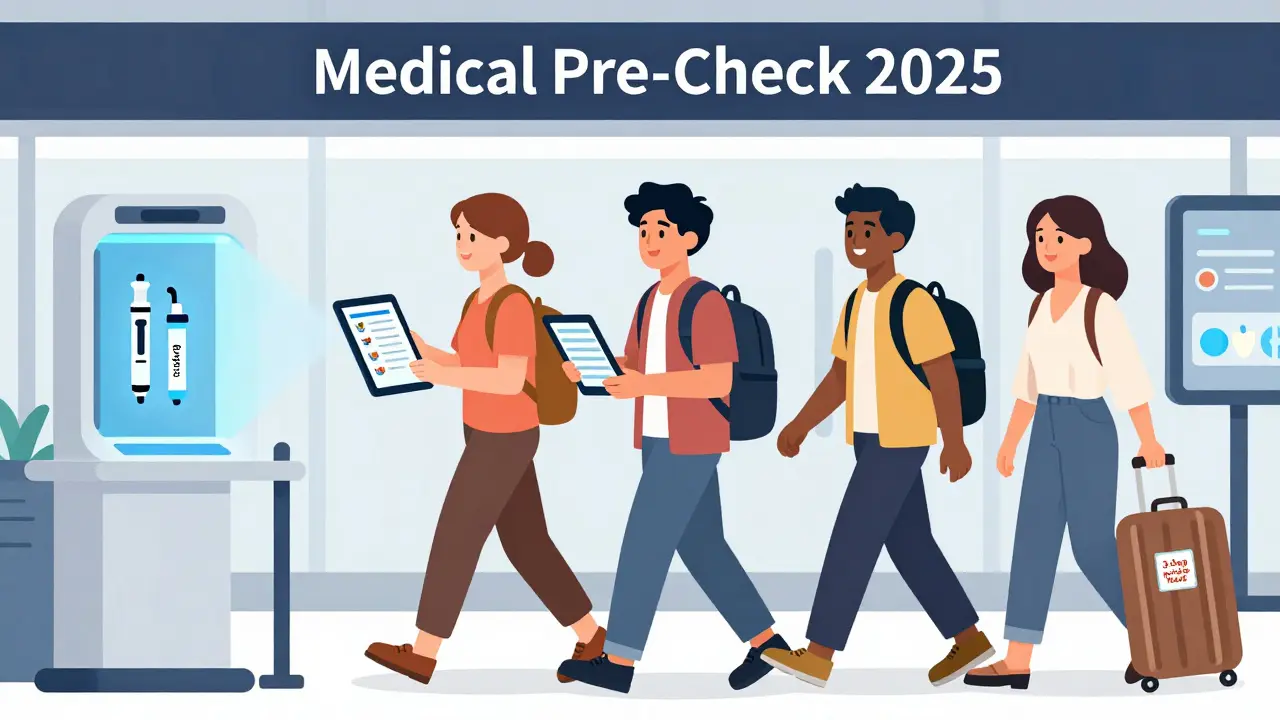
TSA is rolling out a new Medical Traveler Pre-Check program starting September 2025. It’s voluntary. You register online, get a code, and at 12 major U.S. airports, you’ll get a faster lane for medical items. No more waiting for supervisors. No more explaining your insulin. By 2026, 50 major airports will start using AI systems to scan and identify medications automatically. Early tests in Dallas showed a 41% drop in screening errors. That means fewer people getting stopped because an officer didn’t recognize a glucagon pen. These changes are coming because more people need them. In 2024, 34.2 million Americans used insulin. That’s up from 28.7 million in 2020. More people are on injectable drugs. More people are traveling. TSA knows this. And they’re trying to fix the system.Final Tip: Don’t Fly Without Backup
Always pack extra medication in your checked bag. Yes, you need your meds with you. But if your carry-on gets lost, you still need to survive. Keep a 3-day supply in your suitcase. Same with your prescriptions. If you’re flying internationally, carry a letter from your doctor explaining why you need these meds. Some countries have strict rules-even if the U.S. doesn’t. Traveling with liquid meds isn’t about fighting the system. It’s about working with it. Know the rules. Prepare ahead. Stay calm. And you’ll breeze through security every time.Can I bring liquid medications over 3.4 ounces on a plane?
Yes. TSA allows liquid medications in any quantity as long as they’re medically necessary and declared at security. Prescription insulin, chemotherapy liquids, EpiPens, and other required medications are exempt from the standard 3.4-ounce limit. You don’t need to put them in a quart-sized bag.
Do I need to declare my medications at airport security?
Yes. Always tell the TSA officer you have liquid medications before your bag goes through the X-ray machine. Even if you’re not asked, volunteering this information speeds things up. Officers are trained to handle declared medical items faster than unexpected ones.
Can I use a pill organizer for my liquid meds?
No. Transferring liquid medications into unlabeled containers is the #1 cause of delays. TSA officers can’t verify what’s inside unless it’s in the original pharmacy bottle with the prescription label. Always keep liquids in their original containers.
Are ice packs allowed for refrigerated medications?
Yes, but they must be frozen solid when you arrive at security. If they’re melting into liquid, they’ll be treated like regular liquids and screened separately. Keep them in a small cooler (under 8x6x2 inches) and declare them along with your meds.
What if a TSA officer doesn’t know the rules?
Stay calm and ask to speak to a supervisor. Supervisors are trained on TSA’s medical exemption policies. Bring your prescription label or medication list to show them. You’re not breaking any rules-you’re following them. Most delays are resolved within minutes once the right person is involved.
fiona vaz
January 27, 2026 AT 06:01Timothy Davis
January 28, 2026 AT 17:33Sue Latham
January 29, 2026 AT 07:06Colin Pierce
January 31, 2026 AT 05:04Lexi Karuzis
January 31, 2026 AT 21:14Brittany Fiddes
February 1, 2026 AT 05:27Mark Alan
February 2, 2026 AT 07:17Amber Daugs
February 3, 2026 AT 18:09Ambrose Curtis
February 4, 2026 AT 00:09Linda O'neil
February 5, 2026 AT 22:18Robert Cardoso
February 6, 2026 AT 16:44James Dwyer
February 7, 2026 AT 05:11jonathan soba
February 8, 2026 AT 10:58fiona vaz
February 8, 2026 AT 22:51