Gout Medications: Allopurinol and Azathioprine Interaction Risks
 Jan, 30 2026
Medication Interaction Checker
Check for Dangerous Interaction
This tool helps you understand if you're at risk of a dangerous interaction between allopurinol and azathioprine. These medications can cause life-threatening bone marrow suppression when taken together.
Enter your medication information and click "Check Interaction" to see if you have a dangerous combination.
Combining allopurinol and azathioprine can be deadly - not because either drug is inherently dangerous, but because together, they can shut down your bone marrow. This isn’t a theoretical risk. It’s happened to real people, often because a doctor didn’t know the patient was already on azathioprine when prescribing allopurinol for gout. The result? Life-threatening drops in white blood cells, platelets, and hemoglobin. Some patients needed blood transfusions. Others spent weeks in the hospital. And it’s entirely preventable.
Why This Interaction Is So Dangerous
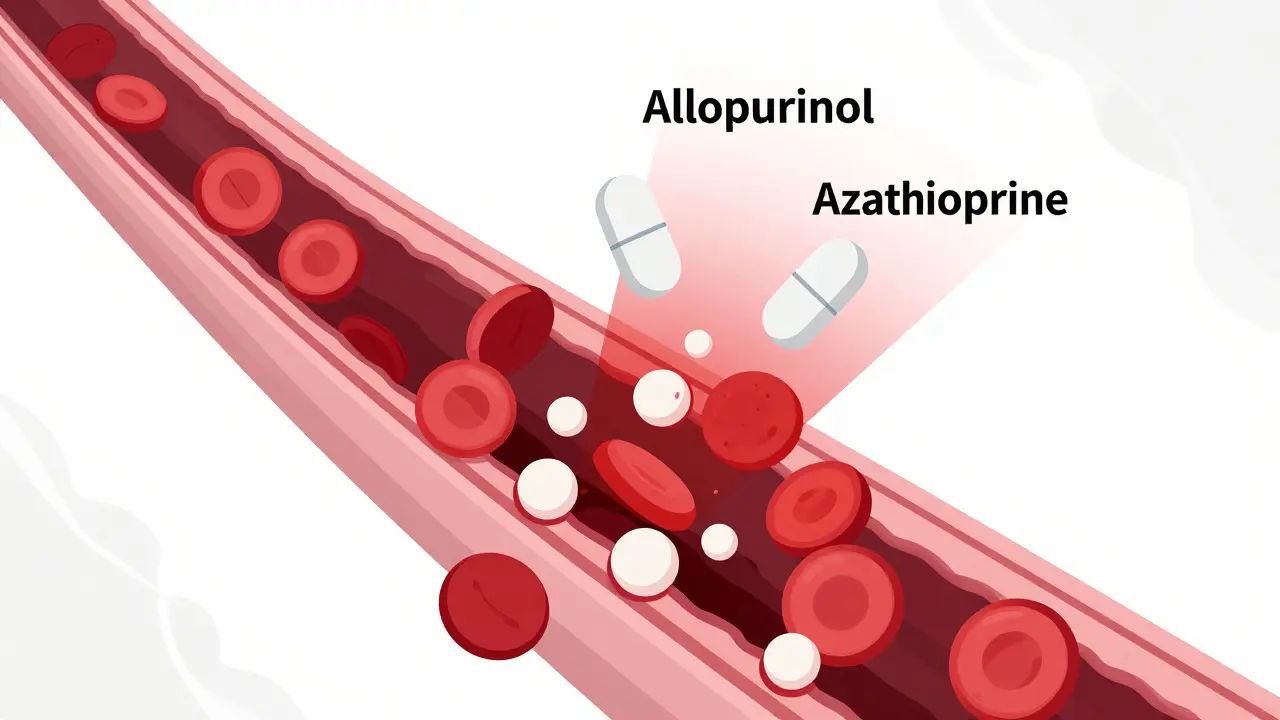
Allopurinol is a common gout medication. It works by blocking xanthine oxidase, an enzyme that helps make uric acid. Less uric acid means fewer painful gout flares. Azathioprine, on the other hand, is an immunosuppressant used for conditions like Crohn’s disease, ulcerative colitis, rheumatoid arthritis, and after organ transplants. It breaks down in the body into 6-mercaptopurine (6-MP), which then gets processed by enzymes to become active or inactive forms. Here’s where things go wrong: allopurinol blocks one of the main enzymes - xanthine oxidase - that breaks down 6-MP. When that enzyme is turned off, 6-MP builds up in the blood. Instead of being safely cleared, it gets redirected into a different pathway that creates too much of the active form, thioguanine nucleotides (6-TGN). This floods the bone marrow, stopping white blood cells from multiplying. In extreme cases, patients’ white blood cell counts drop below 1,000 cells per microliter (normal is 4,000-11,000). Neutrophils - the cells that fight infection - can fall below 500. Platelets crash. Hemoglobin plummets. The body can’t fight infection or carry oxygen. This isn’t just a side effect. It’s bone marrow failure.A Real Case That Changed Medicine
In 1996, a 63-year-old heart transplant patient was admitted to hospital with severe fatigue, fever, and bruising. He was on azathioprine to prevent organ rejection. His doctor, seeing swelling in his wrist, diagnosed gout and prescribed allopurinol. Within weeks, his blood counts collapsed. His white blood cell count hit 1,100/mm³. Platelets dropped to 20,000/mm³. Hemoglobin fell to 3.7 g/dL - less than half the normal level. He needed four units of blood and a drug called GM-CSF to stimulate his bone marrow. He spent over a month in the hospital. The bill? Over $25,000 in today’s money. This case, published by DT Kennedy and colleagues, became one of the most cited drug interaction reports in medical history. It wasn’t an anomaly. It was a warning.What Happens in Your Body When These Drugs Mix
When allopurinol is taken with azathioprine, your body’s normal metabolism of 6-MP gets hijacked. Normally, about 45% of 6-MP is turned into inactive 6-thiouric acid by xanthine oxidase. The rest becomes either active 6-TGN (good for suppressing immune activity) or toxic 6-MMP (bad for your liver). With allopurinol blocking xanthine oxidase, nearly all of the 6-MP gets shunted toward 6-TGN. Studies show 6-TGN levels can rise up to four times higher than normal. At the same time, 6-MMP levels drop by up to 70%. That might sound good - less liver damage - but the cost is catastrophic bone marrow suppression. The excess 6-TGN gets built into DNA in your bone marrow cells. This stops them from dividing. It also triggers cell death. The result? You become vulnerable to infections, bleeding, and extreme fatigue. In one documented case, a 57-year-old patient developed pancytopenia after just two weeks of taking both drugs. He had no prior history of blood disorders. He didn’t know the risks. His doctor didn’t check his medication list properly.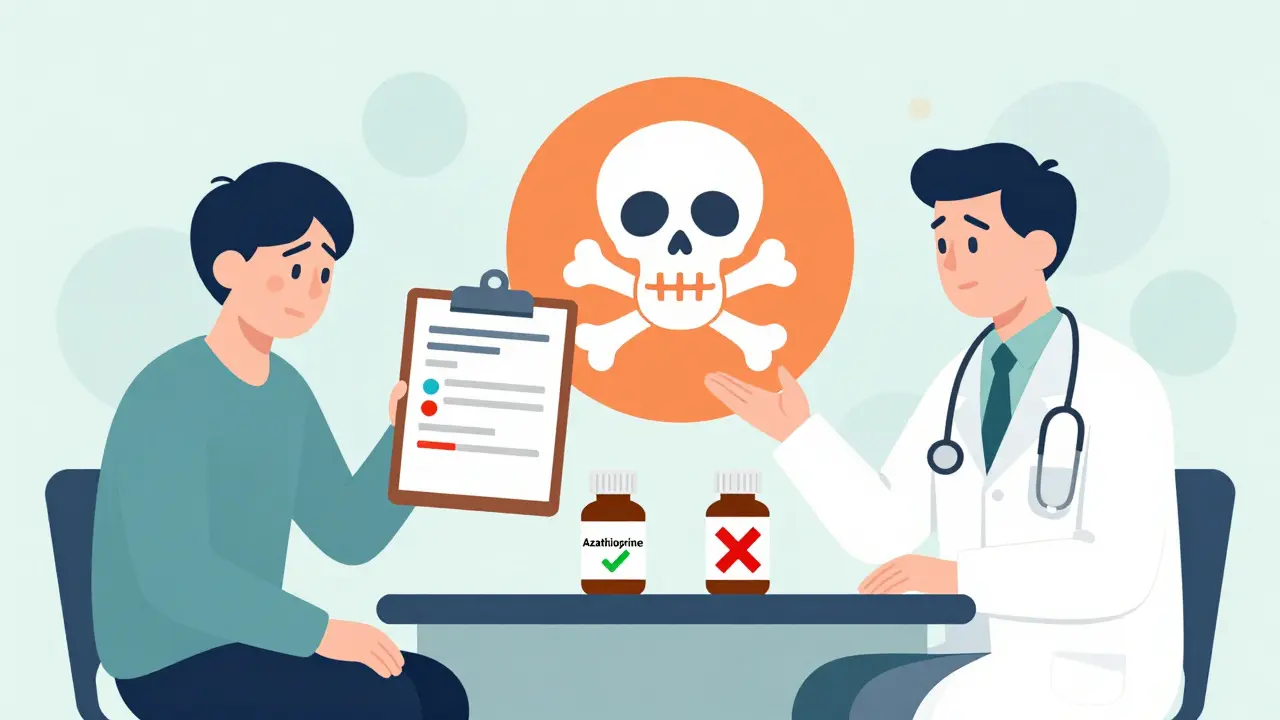
When Is This Combination Actually Used?
Despite the danger, some specialists use this combo - but only in very specific cases. About 25-30% of people with inflammatory bowel disease (IBD) are "thiopurine shunters." Their bodies convert too much azathioprine into 6-MMP, which causes liver damage instead of helping their disease. These patients don’t respond well to standard doses of azathioprine. Their doctors see high liver enzymes and low therapeutic benefit. In these rare cases, adding a low dose of allopurinol can fix the problem. By blocking xanthine oxidase, allopurinol forces the body to use the 6-TGN pathway instead. This means the patient gets the immune-suppressing effect without the liver damage. A 2018 study showed that when this combo was used in 73 IBD patients, 53% went into steroid-free remission. Another study found that patients on this regimen had significantly lower levels of fecal calprotectin - a marker of gut inflammation - meaning their intestines were healing. But here’s the catch: this isn’t something you do at your local clinic. It requires expert management. You need regular blood tests, metabolite level checks, and dose adjustments based on lab results. The dose of azathioprine must be cut to 25% of the usual amount - so if you were taking 150 mg daily, you’d drop to 35-40 mg. Allopurinol is started at 100 mg per day. Blood counts are checked weekly for the first month, then every two weeks, then monthly. Without this monitoring, you’re playing Russian roulette with your bone marrow.What Doctors Should Do - And What You Should Ask
If you’re on azathioprine for Crohn’s, ulcerative colitis, or after a transplant, never take allopurinol unless your specialist says so. Even if you have gout, there are safer options. Febuxostat is another gout medication that doesn’t interfere with azathioprine. Pegloticase is another alternative for severe cases. Before starting azathioprine, your doctor should ask: "Are you taking any gout meds?" That’s not optional - it’s mandatory. In New Zealand, the Medicines Safety Authority requires this check. In the U.S., the FDA’s label for azathioprine carries a black box warning - the strongest possible - about this interaction. Many doctors still miss it. A 2021 survey found only 32% of U.S. gastroenterologists had ever used this combo, and nearly all of them worked at academic hospitals. If you’re prescribed allopurinol for gout and you’re on azathioprine, ask: "Is this safe with my other meds?" If your doctor isn’t sure, ask for a pharmacist consult. Pharmacists are trained to catch these interactions. If you’re being treated for IBD and your doctor suggests adding allopurinol to your azathioprine, ask: "What are my 6-TGN and 6-MMP levels?" and "How often will you check my blood counts?" If they can’t answer, get a second opinion.What to Do If You’re Already Taking Both
If you’re currently taking allopurinol and azathioprine together - even if you feel fine - stop allopurinol immediately and contact your doctor. Don’t wait for symptoms. Symptoms like unexplained bruising, frequent infections, extreme tiredness, or shortness of breath can appear suddenly and worsen fast. Your blood counts may already be dropping without you noticing. Your doctor should order a complete blood count (CBC) and possibly a thiopurine metabolite test. If your white blood cell count is below 3,000/mm³, your azathioprine dose needs to be cut, or stopped. If you’re in the middle of an IBD flare and your doctor wants to keep you on both drugs, make sure they’re following the protocol: azathioprine at 0.5-0.7 mg/kg/day, allopurinol at 100 mg/day, weekly CBCs for the first four weeks, and metabolite testing every 3-6 months.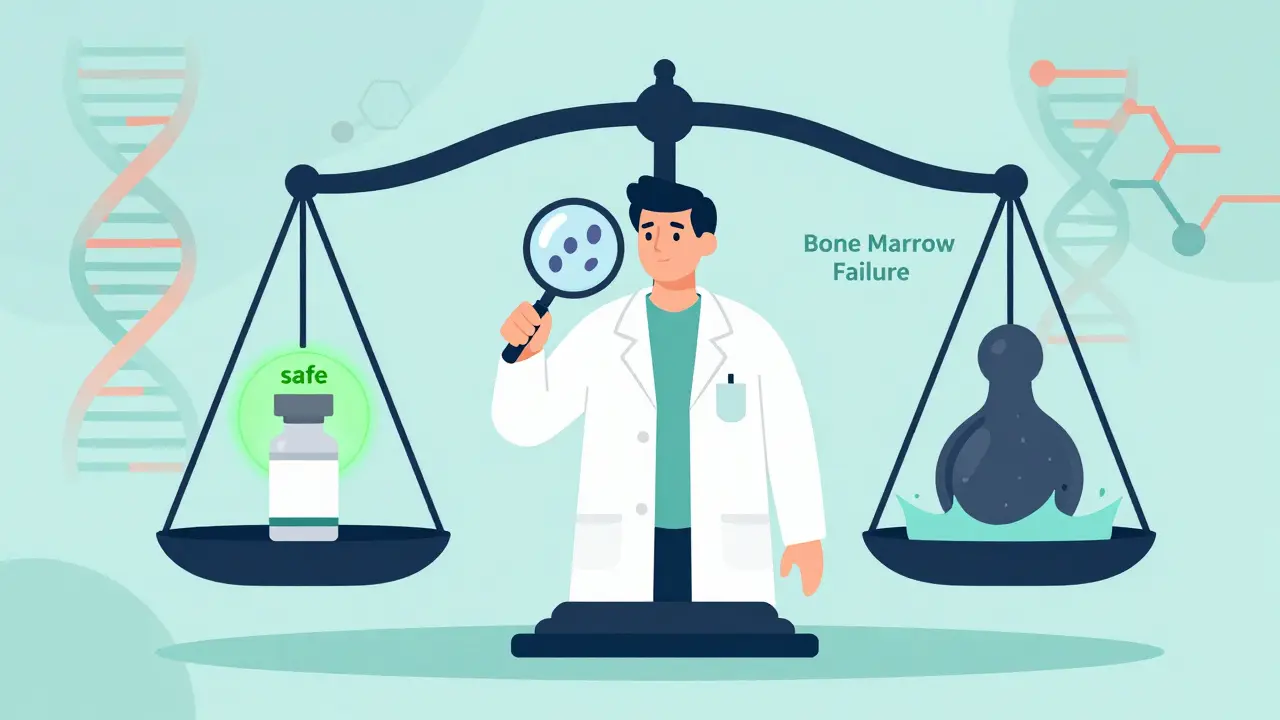
Alternatives to Allopurinol for Gout
If you have gout and are on azathioprine, you don’t need allopurinol. There are safer choices:- Febuxostat - blocks uric acid production like allopurinol, but doesn’t affect xanthine oxidase the same way. It’s safe with azathioprine.
- Pegloticase - an IV drug that breaks down uric acid directly. Used for severe, treatment-resistant gout. No interaction with azathioprine.
- Colchicine - used to treat gout flares, not prevent them. Safe with azathioprine.
- Probenecid - helps your kidneys flush out uric acid. Safe with azathioprine, but not for people with kidney stones or poor kidney function.
Long-Term Outlook
This interaction will never be routine. The risks are too high, the monitoring too intense. But for a small group of IBD patients who can’t tolerate standard thiopurine therapy, it’s a lifeline - if managed correctly. The American College of Gastroenterology now gives it a conditional recommendation, but only for specialists with experience in thiopurine metabolism. The future may bring better tools. Genetic testing for TPMT (thiopurine methyltransferase) can identify people who are more likely to have toxic reactions to azathioprine. About 10% of people have intermediate TPMT activity, making them more vulnerable to this interaction. Testing before starting azathioprine can help avoid complications. For now, the message is simple: don’t mix these drugs unless you’re under the care of a specialist who knows exactly what they’re doing. And if you’re taking either one, always tell every new doctor about your full medication list - including over-the-counter pills and supplements. This interaction doesn’t care if you’re a doctor, a nurse, or a patient. It only cares if you’re unaware.What You Need to Remember
- Allopurinol and azathioprine together can cause life-threatening bone marrow suppression.
- This interaction is well-documented, predictable, and preventable.
- If you’re on azathioprine, never take allopurinol without explicit approval from your specialist.
- Safe use requires dose reduction (azathioprine to 25% of normal), weekly blood tests, and metabolite monitoring.
- There are safer alternatives for gout: febuxostat, pegloticase, colchicine, probenecid.
- If you’re already taking both, stop allopurinol and get a blood test immediately.
Diksha Srivastava
February 1, 2026 AT 04:52Wow, this is such an important post! I’m so glad someone took the time to lay this out clearly. I’ve seen friends struggle with gout and IBD and never realized how dangerous mixing meds could be. Please, everyone-share this. It could save a life.
Keep spreading awareness like this. You’re doing amazing work.
Sidhanth SY
February 2, 2026 AT 23:42Man, I’m surprised more doctors don’t know this. I had a cousin who got hospitalized for this exact thing back in 2019. They thought it was just ‘bad luck’ until the pharmacist caught it. This isn’t rare-it’s preventable. Why aren’t we teaching this in med school?
Also, febuxostat is way underused. It’s not perfect, but it’s safer. Ask for it.
Adarsh Uttral
February 4, 2026 AT 11:55allopurinol + azathioprine = bad news bear. i had no idea. my uncle took both and ended up in the icu. no one told him. he’s fine now but lost 3 months of work. pls tell your drs.
Shubham Dixit
February 6, 2026 AT 09:42This is why Western medicine is failing people. You give someone a pill for every symptom without ever looking at the whole body. In India, we treat gout with turmeric, ginger, and diet changes-not chemical warfare on your bone marrow. This is what happens when you outsource healing to Big Pharma.
They want you dependent. They don’t want you healed. They profit from your suffering. This interaction? It’s not an accident. It’s a business model.
Stop trusting doctors who read from a script. Learn your body. Eat real food. Move. Sleep. That’s real medicine.
And if you’re on azathioprine? Don’t even touch that allopurinol. Your marrow is your temple. Don’t let them desecrate it.
KATHRYN JOHNSON
February 7, 2026 AT 22:04This is a critical public health issue that remains under-recognized. The FDA black box warning exists for a reason, yet adherence to screening protocols remains suboptimal across primary care settings. The absence of mandatory electronic health record alerts for this interaction is indefensible.
Pharmacists are the frontline defense, yet their input is often excluded from prescribing workflows. Institutional policy reform is urgently required.
Sazzy De
February 8, 2026 AT 23:54Thanks for posting this. I’m on azathioprine for Crohn’s and just got prescribed allopurinol last week for gout. I’m going to call my GI doc first thing tomorrow. I didn’t know this could happen. I feel lucky I saw this before anything bad happened.
Also, febuxostat sounds like a better option. I’ll ask about that.
Carolyn Whitehead
February 9, 2026 AT 01:09So many people don’t realize how much your meds can mess with each other. I had no idea about this one. I’m glad you shared it. I’m going to send this to my aunt-she’s on azathioprine and just started allopurinol last month. She’s going to need to talk to her doctor ASAP.
Thanks for being so clear. This is the kind of info that saves lives.
Amy Insalaco
February 10, 2026 AT 13:59While the pharmacokinetic interaction is well-documented, the clinical prevalence of this phenomenon is likely overstated in popular discourse. The 2018 IBD cohort study cited demonstrates a therapeutic window where 6-TGN elevation is both measurable and clinically beneficial-albeit under strict therapeutic drug monitoring (TDM) protocols.
Furthermore, the assumption that all patients are equally vulnerable ignores the polymorphic nature of TPMT and NUDT15 enzymes. Genotyping prior to thiopurine initiation has been standard of care in Europe since 2015. The U.S. lags in implementation due to insurance reimbursement barriers and fragmented EHR integration.
Thus, the issue isn’t the combination per se-it’s the absence of precision medicine infrastructure. Dismissing allopurinol entirely is a therapeutic regression, not a safety advancement.
Marc Bains
February 11, 2026 AT 13:43This is why global health education matters. I’m from Nigeria, and we don’t have easy access to febuxostat or genetic testing. But we do have pharmacists who know their stuff. I’ve seen local clinics here teach patients to bring all their meds-pills, herbs, supplements-in a bag when they see a new doctor.
It’s not fancy, but it works. If you’re on azathioprine, don’t just say ‘I take my meds.’ Show them. Bring the bottle. Let them see the name.
Knowledge isn’t just power-it’s protection. And we all deserve that.
Rob Webber
February 11, 2026 AT 20:09Big Pharma is killing people with this. They know about this interaction. They’ve known since the 90s. But they don’t care. They make billions off allopurinol. They make billions off azathioprine. They don’t want you switching to febuxostat because it’s more expensive and they don’t own the patent.
Doctors are complicit. They’re lazy. They don’t check. They don’t care. This isn’t an accident. It’s corporate negligence. And people are dying.
Don’t trust the system. Protect yourself. Read the label. Ask for the metabolite test. Demand answers. Or you’re next.
Lisa McCluskey
February 13, 2026 AT 06:40Important. I’m a pharmacist and this interaction is one of the top 5 we’re trained to catch. If you’re on azathioprine and get allopurinol, flag it immediately. We can adjust doses, suggest alternatives, or even call the prescriber on your behalf.
Don’t be shy about asking. We’re here to help. And if your doctor doesn’t know this? They need to learn. Bring this post.
owori patrick
February 15, 2026 AT 05:12Bro, this is why we need more community health workers. In my village, people just take what the pharmacy gives them. No questions. I told my friend who takes azathioprine to never take gout pills without asking. He didn’t even know he had a chronic condition-he thought it was just a bad knee.
Education is the real medicine. Not the pills.
Claire Wiltshire
February 16, 2026 AT 15:03Thank you for this comprehensive breakdown. The distinction between high-risk population use and general contraindication is crucial. The American College of Gastroenterology’s conditional recommendation reflects evolving clinical nuance-not negligence.
It’s also worth noting that in transplant patients, where azathioprine use is declining due to newer agents, this interaction is becoming increasingly rare. The real challenge lies in primary care settings where gout is treated without knowledge of immunosuppressive regimens.
Standardized EHR alerts and pharmacist-led med reconciliation are the most scalable solutions.
Holly Robin
February 17, 2026 AT 21:19THIS IS A GOVERNMENT COVER-UP. Allopurinol was intentionally kept on the market because the FDA is owned by the same people who own the pharmaceutical companies. They don’t want you to know that febuxostat is safer because it’s not patented yet. The bone marrow failure? That’s just collateral damage for profit.
And don’t even get me started on the TPMT testing-why don’t they test everyone? Because it costs money. They’d rather kill 1% of patients than lose 10% in profits.
They’re poisoning us. Wake up. Share this. Fight back.
Lily Steele
February 19, 2026 AT 09:38My dad had this happen. He didn’t even know he was on azathioprine-he thought it was just for his arthritis. Turns out it was for an old transplant. He was in the hospital for weeks. He’s okay now, but he still gets scared when he sees new pills.
Just... always tell your doctor everything. Even the stuff you think doesn’t matter. I wish we’d known sooner.