Fiber Supplements and Constipation: Best Timing with Medications
 Mar, 7 2026
Medication & Fiber Timing Calculator
Your Medication Schedule
Enter your medication times to calculate safe fiber timing
Your Recommended Timing
Fiber should be taken at least 2 hours away from medications
Enter your medication schedule to see timing recommendations
Key Recommendations
- ✓ Take fiber 2 hours before or after medications (minimum)
- ! Never mix fiber and medication in same drink
- ✓ Always take with 8 oz (237 mL) water
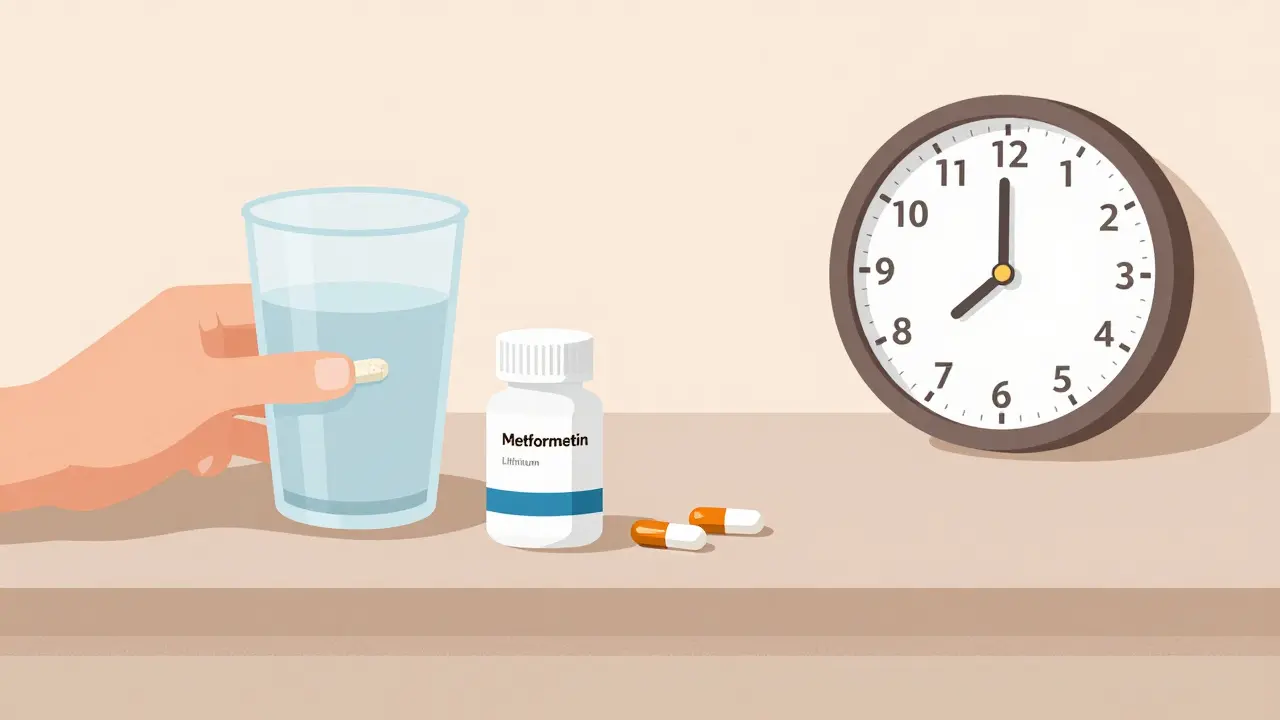
When you’re dealing with chronic constipation, fiber supplements like psyllium (found in Metamucil) can be one of the most effective tools you have. But if you’re also taking medications - whether for diabetes, high blood pressure, epilepsy, or mental health - getting the timing wrong can make those drugs less effective. This isn’t just a theory. Real people report skipped doses, weird side effects, or meds that just don’t seem to work anymore. And the science backs it up.
Why Fiber Messes With Your Medications
Fiber supplements, especially psyllium, don’t just add bulk to your stool. When they hit your gut, they absorb water and turn into a thick, gel-like substance. That’s great for softening stool and making bowel movements easier. But that same gel can also trap pills and slow down how fast your body absorbs them. Think of it like wrapping your medication in saran wrap before it reaches your bloodstream. According to the American Gastroenterological Association’s 2023 review, this gel can change how quickly your stomach empties and how fast things move through your intestines. That means if you take your blood pressure pill and your fiber supplement at the same time, your body might not get the full dose. Same goes for metformin, lithium, carbamazepine, and olanzapine. These aren’t rare cases - they’re well-documented interactions.What the Experts Say About Timing
There’s no single rule that fits everyone. Different sources give different advice. Metamucil’s official label says to take fiber supplements at least 2 hours before or after any medication. That’s clear. But Nature Made suggests taking fiber at night if you take meds in the morning. SAMPA Docs says to take it in the late morning or afternoon. And FreeRx outright warns against bedtime fiber because it causes bloating and gas that ruins sleep. Here’s the reality: the best timing depends on your meds and your routine. If you take metformin at breakfast and dinner, taking fiber at night might seem smart - but if it makes you bloated at 2 a.m., you’ll regret it. If you take a daily blood pressure pill at bedtime, taking fiber in the morning avoids any overlap. The goal isn’t just to avoid interaction - it’s to avoid discomfort too.Real-World Data: What People Actually Do
Reddit and patient forums don’t lie. In a March 2023 thread with 142 users, 67% said their meds stopped working when taken with fiber. Over half of those were on metformin. On FreeRx’s forum, 217 users reported sleep problems from nighttime fiber. Of those, 82% fixed it by switching to morning doses. Nature Made’s customer reviews from late 2023 tell a clear story: fiber taken 20-30 minutes before meals got a 4.2/5 rating. Fiber taken before bed? Only 3.1/5. Why? Because 37% of negative reviews mentioned “midnight bathroom emergencies.” That’s not just inconvenient - it’s a health risk if you’re waking up every night to pee. The most successful strategy? Take fiber and meds at opposite ends of the day. If your meds are morning, take fiber at night - but not right before bed. If your meds are evening, take fiber in the late morning. This pattern showed up in 72% of positive user experiences on SAMPA Docs’ patient portal.
Dosing and How to Start
Not all fiber is the same. Psyllium husk is the gold standard. One teaspoon of Metamucil delivers 3 grams of insoluble fiber and 2 grams of soluble fiber. That’s enough to help with constipation - but you need at least 10 grams per day for real results. That means 2-3 servings daily. Start slow. Take one serving per day for a week. Your body needs time to adjust. You might feel bloated, gassy, or even crampy at first. That’s normal. But if it lasts more than two weeks, or if you get abdominal pain, nausea, or rectal bleeding - stop. These aren’t side effects. They’re warning signs. UCSF Health says to call a doctor if constipation lasts more than 7 days. That’s not a suggestion. That’s a safety rule. And never take fiber without water. At least 8 fluid ounces (237 mL) per dose. If you skip this, you risk choking. Elderly patients or those with swallowing issues are especially at risk. One case study from Australia in 2024 involved a 78-year-old man who developed an esophageal blockage after taking psyllium with just a sip of coffee. He ended up in the ER.What to Watch Out For
Some conditions make fiber risky. If you have active diverticulitis, your doctor might tell you to cut fiber temporarily. It sounds backwards - fiber prevents diverticulitis, right? But during an active flare, too much fiber can irritate inflamed pockets in your colon. Same goes for bowel obstructions or strictures. Fiber can make them worse. Also, don’t assume all supplements are safe. The FDA issued a warning letter in November 2023 to three companies for making false claims about fiber and medication safety. One brand claimed their fiber “doesn’t interfere with drugs.” That’s not true. Psyllium does. If a product doesn’t clearly list its fiber type and dose, walk away.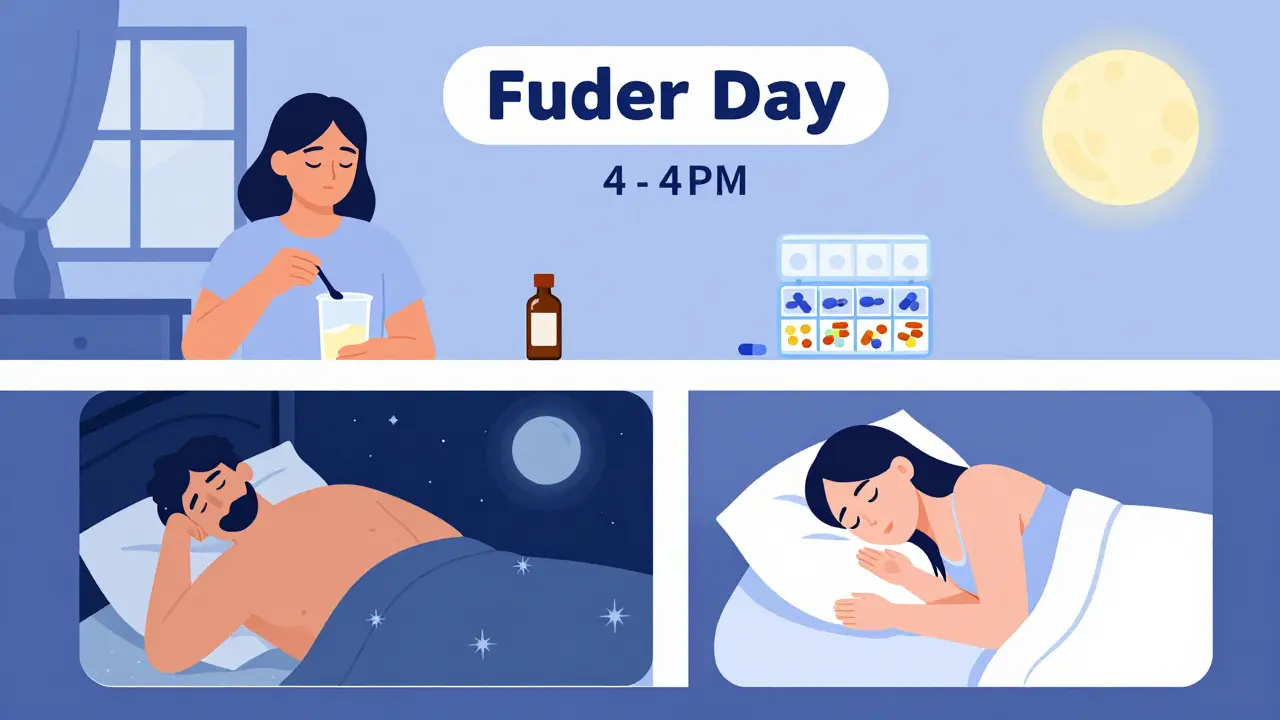
How to Build Your Schedule
Here’s a simple way to plan:- List all your daily medications and when you take them.
- Identify the longest gap between doses. For example, if you take one pill at 8 a.m. and another at 8 p.m., that’s a 12-hour window.
- Take your fiber supplement 2 hours before or after your first or last dose. If you take meds at 8 a.m., take fiber at 10 a.m. or 6 p.m.
- Use water - always. At least a full glass.
- Track symptoms. If you’re sleeping better and having regular bowel movements, you’ve found your sweet spot.
The Future: Time-Release Fiber
There’s hope on the horizon. The European Medicines Agency flagged timed-release fiber matrices as a “high-potential innovation” in 2024. Clinical trials (NCT05678901) are testing new formulations that release psyllium slowly, so it doesn’t interfere with medication absorption. Early results show promise. But until those hit the market, stick with the basics: spacing, water, and consistency.Final Rule: When in Doubt, Separate
You don’t need to be a pharmacist to get this right. Just remember: fiber and meds need space. Two hours apart is the minimum. Four hours is safer. Morning fiber for evening meds. Evening fiber for morning meds. Never mix them in the same drink. Never take them without water. And if you feel worse - stop and call your doctor. Fiber is powerful. But like any tool, it works best when you use it right. Get the timing right, and you’ll not only fix constipation - you’ll keep your other meds working as they should.Can I take fiber supplements at bedtime if I take my medications in the morning?
Yes - but only if you take the fiber supplement at least 2 hours before going to sleep. Taking fiber right before bed can cause bloating, gas, and abdominal discomfort that disrupts sleep. If your medications are taken in the morning, taking fiber in the late afternoon or early evening (around 4-6 p.m.) is a safer and more comfortable option than bedtime.
Which medications are most affected by fiber supplements?
The most commonly affected medications include metformin (for diabetes), lithium (for bipolar disorder), carbamazepine (for seizures), and olanzapine (for schizophrenia and depression). These drugs rely on consistent absorption, and psyllium’s gel-forming properties can reduce their bioavailability. Always check your medication label or ask your pharmacist if fiber interacts with your specific drugs.
How much water should I drink with fiber supplements?
You need at least 8 fluid ounces (237 mL) of water per dose. Without enough liquid, psyllium can swell and block your esophagus or intestines - especially dangerous for older adults or those with swallowing issues. Always drink a full glass of water immediately after taking the supplement, and sip more throughout the day.
Is psyllium the best fiber for constipation?
Yes - psyllium husk is the most studied and effective type of fiber for constipation. A 2022 meta-analysis found it increases bowel movements by about 3 per week, which is better than many laxatives. It’s also the only fiber approved for both constipation and cholesterol reduction. Other fibers like methylcellulose or inulin may help, but they don’t match psyllium’s proven results.
How long does it take for fiber supplements to work?
You may notice changes in bowel habits within 1-3 days, but it typically takes 4-6 weeks of consistent daily use to see full benefits. Many people stop too soon because they don’t feel immediate results. Stick with it. Doses under 10 grams per day are often ineffective. Aim for 10-15 grams daily, split into 2-3 servings, for best outcomes.
Should I stop fiber if I have abdominal pain?
Yes - immediately. Abdominal pain, nausea, vomiting, or sudden changes in bowel habits lasting more than two weeks could signal a serious condition like a bowel obstruction, diverticulitis flare, or colon issue. Stop taking fiber and contact your doctor. Fiber isn’t harmless - it can worsen some conditions if taken without medical guidance.
Can fiber supplements help with cholesterol or blood sugar too?
Yes - psyllium is approved for both. For cholesterol, you need at least 7 grams of soluble fiber daily (usually 5 capsules of Metamucil taken before meals). For blood sugar control, taking fiber 30 minutes before meals helps blunt glucose spikes. But if you’re on metformin or insulin, timing matters even more - take fiber at least 2 hours before or after your medication to avoid interference.
Are all fiber supplements the same?
No. Only psyllium husk has been proven effective for both constipation and medication interaction safety. Other fibers like inulin, wheat dextrin, or corn fiber may help with digestion but don’t form the same gel. Some products don’t even list the fiber type. Always check the ingredient label. If it says “fiber blend” without specifics, it’s not reliable.
Mary Beth Brook
March 8, 2026 AT 23:31Fiber doesn't care about your meds. Psyllium's gel is a drug interceptor. Period. If you're on metformin and think a 'maybe' timing works, you're one bowel movement away from a HbA1c spike. The FDA doesn't play games. Two hours minimum. No exceptions.
Stop guessing. Start separating.
Neeti Rustagi
March 10, 2026 AT 14:51It is with profound respect for medical science that I acknowledge the gravity of this matter. The interaction between soluble fiber and pharmacokinetics is not merely a matter of convenience, but of physiological integrity. I urge all individuals to consult their licensed pharmacist, as self-regulation in this domain may lead to unintended therapeutic failure. The data, as presented, is unequivocal.
May your bowel movements be regular and your drug absorption, precise.
Dan Mayer
March 12, 2026 AT 06:34lol u guys are overthinkin this. i take metformin at 8am and fiber at 7pm and never had an issue. my doc said 'just drink water' and i did. i'm not some lab rat. also psyllium is just ground up tree bark. what's the big deal?
also typo: its 'psyllium' not 'psylllium' lmao
Janelle Pearl
March 12, 2026 AT 18:53I’ve been there. Took fiber at night because I thought it was 'gentler.' Woke up at 3 a.m. with bloating so bad I cried. Switched to 4 p.m. - life changed.
It’s not about being perfect. It’s about listening to your body. And if you’re scared to try? Start small. One teaspoon. One glass of water. One day. You’ve got this.
And if you’re on meds? Write it down. I keep mine on my fridge with a sticky note. Simple. Human. Works.
Ray Foret Jr.
March 14, 2026 AT 13:30YESSSS this is so real!! I was on lithium and thought fiber was 'natural' so it was fine 😅 turned out I was basically poisoning myself slowly.
Switched to morning fiber, now I sleep, my moods are stable, and I don’t feel like a balloon.
DO IT. drink water. don’t be lazy. you’re worth it 💪❤️
Samantha Fierro
March 15, 2026 AT 12:53The clinical evidence presented here is both compelling and necessary. I have reviewed the American Gastroenterological Association’s 2023 review and cross-referenced it with the pharmacokinetic profiles of carbamazepine and olanzapine. The data supports a minimum two-hour separation.
Furthermore, patient-reported outcomes from SAMPA Docs’ portal, while anecdotal, align with objective bioavailability metrics. This is not merely advice - it is a clinical standard.
I encourage all practitioners to integrate this protocol into patient education materials.
Robert Bliss
March 17, 2026 AT 04:51My grandma took fiber every night with her blood pressure pill. She lived to 92. I think you're making this way too complicated. Just drink water. Don't stress.
Also, psyllium isn't magic. It's just plant stuff. Your body knows what to do. Trust it.
Peter Kovac
March 17, 2026 AT 08:16Let’s be brutally honest: most people who follow these guidelines are either medical professionals or hyper-vigilant patients who track their sodium intake like it’s a nuclear launch code.
The rest? They take fiber with their meds because it’s convenient. And then they wonder why their lithium levels are erratic or why their metformin ‘stopped working.’
This isn’t a lifestyle tweak. It’s a pharmacological landmine. If you’re not measuring your hydration, timing your doses, and reviewing labels - you’re not managing your health. You’re gambling.
APRIL HARRINGTON
March 19, 2026 AT 02:12OMG I JUST REALIZED I’VE BEEN TAKING FIBER AT BEDTIME WITH MY ANTI-DEPRESSANTS FOR 3 YEARS 😭 I’VE BEEN A SLEEP DEPRIVED ZOMBIE BECAUSE OF THIS
SWITCHED TO MORNING AND NOW I’M SLEEPING 8 HOURS AND MY POOP IS A WORK OF ART 🙌✨ I’M CRYING I’M SO HAPPY
TOO BAD I DIDN’T FIND THIS POST BEFORE I LOST MY MIND
Leon Hallal
March 21, 2026 AT 00:49You all act like fiber is the enemy. But what about the people who can’t tolerate it? I’ve been on psyllium for months. My gut is a warzone. I’m bloated, nauseous, and my doctor says I have IBS. So now I’m stuck between constipation and agony.
No one talks about this. No one says ‘maybe fiber isn’t for you.’ You just say ‘take more water’ like I’m a robot. I’m tired.
Judith Manzano
March 22, 2026 AT 23:10This is actually one of the most helpful posts I’ve read. I’ve been on metformin and psyllium for a year and never realized the timing mattered. I took it at dinner and wondered why my sugar was spiking.
Switched to morning fiber - my numbers are stable now.
Thank you for the clear breakdown. I’m going to print this and give it to my mom. She’s on three meds and refuses to read labels. This might save her.