Fentanyl Patch Side Effects: Overdose and Withdrawal Risks
 Feb, 28 2026
Fentanyl Patch Withdrawal Risk Assessment Tool
Your Safety Assessment
This tool helps you understand your risk when stopping fentanyl patches and what steps you should take for safe withdrawal.
Using a fentanyl patch isn't like taking a pill. It's a slow, steady drip of a powerful drug straight into your bloodstream - and that’s exactly why it can be so dangerous if you don’t know what you’re dealing with. Fentanyl patches are meant for people with severe, long-term pain who’ve already tried other opioids and still can’t get relief. But even when used exactly as prescribed, the risks of overdose and withdrawal are real - and sometimes deadly. If you or someone you care about is using this patch, you need to understand what’s at stake.
How Fentanyl Patches Work - and Why That’s Risky
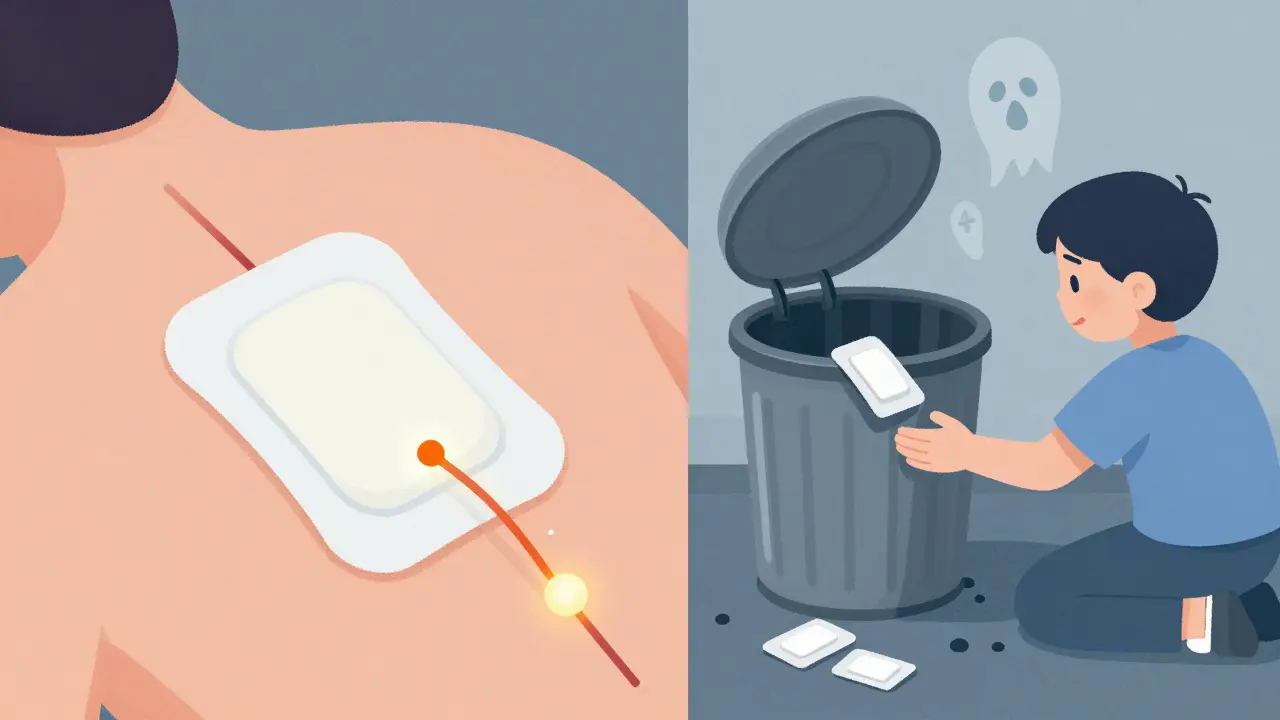
Fentanyl patches deliver medication through the skin over 72 hours. Unlike oral painkillers that spike and drop, this patch gives a constant flow of fentanyl into your body. That sounds good for steady pain control - until you realize how potent fentanyl actually is. It’s 50 to 100 times stronger than morphine. A single patch contains enough fentanyl to kill someone who’s never taken opioids before. Even a used patch, folded up and tossed in the trash, can still have enough drug left to overdose a child or pet.
The FDA has documented 32 accidental pediatric deaths between 1997 and 2012 from kids finding and playing with discarded patches. That’s why every prescription comes with strict warnings: keep patches out of reach, fold used patches sticky-side together before throwing them away, and never apply heat to the patch area. A hot shower, a heating pad, or even a fever can make your skin absorb fentanyl faster - turning a safe dose into a lethal one.
Signs of Fentanyl Overdose - Don’t Wait
If you’re using a fentanyl patch, you need to know the signs of overdose - and act fast. These aren’t vague symptoms. They’re clear, life-threatening signals:
- Slow, shallow, or stopped breathing
- Unresponsiveness - you can’t wake the person up
- Cold, clammy, or blue skin, especially lips and fingernails
- Pinpoint pupils
- Extreme drowsiness, dizziness, or weakness
- Slow heartbeat or seizures
These signs don’t always come slowly. Overdose can happen within minutes - especially if someone takes extra patches, uses alcohol, or combines the patch with benzodiazepines like Xanax or sleeping pills. The FDA now recommends that all patients prescribed fentanyl patches also get naloxone (Narcan) at the same time. Naloxone can reverse an overdose, but it must be given quickly. Keep it in your home. Teach family members how to use it. Don’t assume it won’t happen to you.
Withdrawal Isn’t Just Uncomfortable - It’s Dangerous
Stopping a fentanyl patch suddenly isn’t like quitting caffeine. If you’ve been using it for more than a few weeks, your body has adapted. Your nervous system expects the drug. Take it away too fast, and your body goes into chaos.
Withdrawal symptoms usually start 8 to 24 hours after your last patch. They peak around 36 to 72 hours and can last 7 to 10 days - sometimes longer. You might feel:
- Intense anxiety or panic
- Restlessness, shaking, or muscle aches
- Profuse sweating, chills, and goosebumps
- Runny nose, watery eyes
- Severe nausea, vomiting, diarrhea
- Rapid heartbeat, high blood pressure
- Insomnia - you can’t sleep even when you’re exhausted
The FDA says abrupt withdrawal can even trigger suicidal thoughts. That’s why no doctor should ever tell you to just stop. Tapering off fentanyl patches takes time - often weeks or months. A typical plan reduces your dose by 10% to 25% every 1 to 3 weeks. Going faster than that increases the risk of severe symptoms, uncontrolled pain, and relapse.
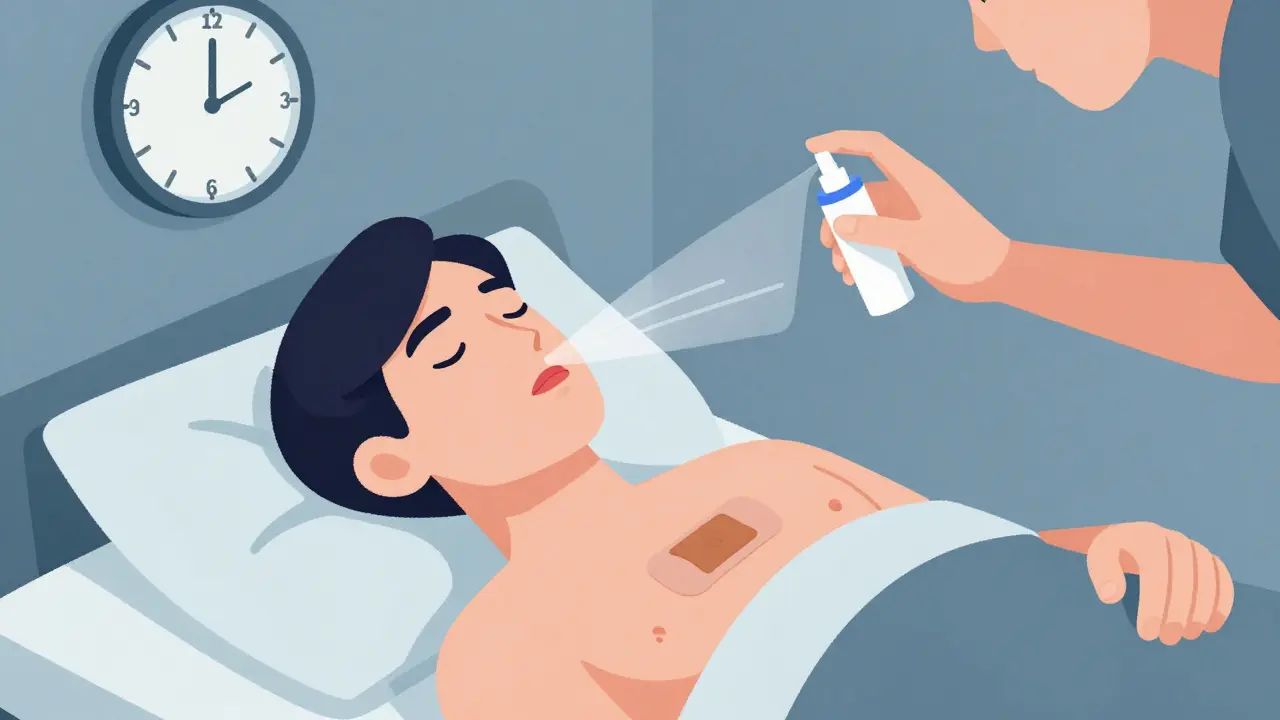
Why Stopping Cold Can Lead to Overdose
This is the part most people don’t realize: if you stop fentanyl patches and then start using again - even a small amount - you’re at higher risk of overdose than ever before.
Why? Because your tolerance drops fast. After a few days without opioids, your body forgets how to handle the drug. A dose that once felt manageable can now be fatal. A 2021 Johns Hopkins study found that 37% of fatal fentanyl overdoses happened in people who had recently stopped using. They thought they could handle it like before. They couldn’t.
That’s why doctors now emphasize: if you’re thinking about stopping, talk to your provider first. Don’t wait until you’re out of patches. Don’t try to quit on your own. A supervised taper, with support and possibly other medications like buprenorphine, is the only safe way.
What You Must Do - Right Now
If you’re using a fentanyl patch, here’s what you need to do immediately:
- Keep patches away from children and pets. Store them locked up. Dispose of used patches properly - fold sticky sides together and throw them in the trash, not the toilet.
- Never use heat. No hot tubs, saunas, heating pads, or even tight blankets on the patch area. Fever can be deadly.
- Get naloxone. Ask your doctor for a prescription. Keep it at home. Teach someone else how to use it.
- Don’t mix with alcohol or sedatives. Benzodiazepines, sleep aids, and even some muscle relaxers can turn a safe dose into a fatal one.
- Never stop cold turkey. If you want to stop, schedule a plan with your doctor. Tapering slowly is the only safe path.
- Tell every doctor and dentist you see. Even if you’re going in for a tooth extraction or surgery, they need to know you’re on fentanyl. Anesthesia can interact dangerously.
The CDC says fentanyl patches should only be used by people already tolerant to opioids - meaning they’ve been taking at least 60 mg of morphine per day for at least a week. That’s not a suggestion. It’s a rule. If you’re not sure whether you qualify, ask your doctor. Many people are prescribed these patches without ever being properly assessed for opioid tolerance.
What’s Changing - And Why
Prescriptions for fentanyl patches have dropped 42% since 2016. Why? Because doctors are learning. The FDA’s mandatory Risk Evaluation and Mitigation Strategy (REMS) since 2012 forced prescribers to get trained. The 2019 label changes required warnings about withdrawal. The 2023 push for naloxone co-prescribing is saving lives.
But the real shift? A new mindset. Fentanyl patches aren’t a first-line treatment anymore. They’re a last-resort option - only after other pain management methods have failed. The American Medical Association found that 78% of doctors now follow this rule, up from just 52% in 2016. That’s progress.
Researchers are even testing new patch designs that reduce accidental exposure. Two clinical trials are underway to create patches that release less fentanyl if they’re tampered with or exposed to heat. That’s the future - safer delivery, fewer deaths.
Final Reality Check
Fentanyl patches can help people with extreme pain live better lives. But they’re not a magic solution. They’re a high-risk tool. One mistake - a child finding a patch, a fever rising, a sudden stop - can end in tragedy.
If you’re using one, you’re not alone. But you’re also not invincible. The system is built to protect you - if you follow the rules. Talk to your doctor. Get naloxone. Never stop cold. Keep patches locked up. And if you’re even a little unsure, ask again. Your life depends on it.
Can you die from fentanyl patch withdrawal?
Withdrawal from fentanyl patches is not usually life-threatening on its own, but it can lead to serious complications. Severe vomiting and diarrhea can cause dehydration and dangerous electrolyte imbalances, which may trigger heart problems. In rare cases, especially with pre-existing health conditions, this can become fatal. That’s why medical supervision during tapering is critical.
How long does it take for a fentanyl patch to leave your system?
Fentanyl has a long half-life. Even after removing the patch, the drug continues to be absorbed from skin tissue for up to 24 hours. It can take 3 to 5 days for most of the fentanyl to leave your bloodstream. But traces can linger in your body for weeks, especially if you’ve been using it for months. This is why withdrawal symptoms can last longer than expected.
Can you use a fentanyl patch if you’ve never taken opioids before?
No. Fentanyl patches are strictly for patients already tolerant to opioids - meaning they’ve been taking at least 60 mg of morphine per day for a week or longer. Using one without opioid tolerance can cause fatal respiratory depression. The FDA and EMA both list opioid-naive patients as a contraindication.
What should you do if a child touches a fentanyl patch?
Remove the patch immediately and call 911 or your local emergency number. Wash the child’s skin with plain water - don’t use soap or alcohol. Do not induce vomiting. Keep the child calm and monitor their breathing. Even brief exposure can be deadly. Always store patches in a locked container out of reach of children.
Is it safe to cut or crush a fentanyl patch?
Never cut, crush, or alter a fentanyl patch. These patches are designed to release medication slowly over 72 hours. Damaging the patch can cause the entire dose to be absorbed at once - leading to overdose. If you need a different dose, talk to your doctor. There are other patch strengths available.
Can you drive while using a fentanyl patch?
You should not drive or operate heavy machinery when you first start using the patch, or if your dose is changed. Fentanyl can cause drowsiness, dizziness, and slowed reaction time. Even if you feel fine, your body may still be adjusting. Wait until you know how the medication affects you - and always follow your doctor’s advice.
Aisling Maguire
February 28, 2026 AT 11:51Brandon Vasquez
March 1, 2026 AT 00:30Vikas Meshram
March 2, 2026 AT 01:39Ben Estella
March 2, 2026 AT 12:26Jimmy Quilty
March 4, 2026 AT 01:44Ajay Krishna
March 5, 2026 AT 06:23Charity Hanson
March 6, 2026 AT 22:54Noah Cline
March 7, 2026 AT 13:00Lisa Fremder
March 9, 2026 AT 07:02Justin Ransburg
March 9, 2026 AT 13:44Sumit Mohan Saxena
March 9, 2026 AT 14:21Miranda Anderson
March 11, 2026 AT 13:03Gigi Valdez
March 11, 2026 AT 21:24