FDA Facility Inspections: How the Agency Ensures Quality in Manufacturing
 Dec, 1 2025
How the FDA Checks Manufacturing Sites to Keep Products Safe
The FDA doesn’t wait for people to get sick before acting. Instead, it shows up at factories, labs, and warehouses - often without warning - to make sure what’s being made is safe, clean, and works as it should. These aren’t casual visits. They’re formal, detailed inspections that can make or break a company’s ability to sell its products in the U.S. Every year, the agency inspects about 12,000 domestic and 1,000 foreign facilities that produce drugs, medical devices, biologics, and food. That’s more than 13,000 sites checked annually, all to prevent contaminated, ineffective, or dangerous products from reaching consumers.
These inspections are based on a risk model, not luck. A facility making life-saving cancer drugs gets looked at more often than one making over-the-counter vitamin gummies. The FDA looks at three things: how serious the product is, how the company has performed in the past (have they had recalls or violations?), and how complex or new their manufacturing process is. High-risk sites might get visited every 6 to 12 months. Low-risk ones might go 3 to 5 years between inspections.
The Four Types of FDA Inspections
Not all inspections are the same. The FDA uses four main types, each with a different purpose and trigger.
- Pre-approval inspections happen before a new drug or device gets approved. The FDA needs to see that the facility can consistently make the product according to its approved design. These inspections must be completed within 30 days of the agency saying the facility is ready.
- Routine surveillance inspections are the most common. They’re scheduled every few years to check ongoing compliance with Current Good Manufacturing Practices (CGMP). These are the checks that keep the system running day to day.
- Compliance follow-up inspections return to sites that had problems in the past. If a facility got a Form 483 listing violations, the FDA will come back to see if those fixes were actually made - not just written down.
- For-cause inspections happen when something goes wrong. Maybe a patient died after using a device. Maybe a whistleblower called in. Maybe there’s a sudden spike in complaints. These can come with zero notice and are often the most intense.
Each type follows the same basic structure: notification, preparation, the inspection itself, and then follow-up. But the stakes change depending on the type. A pre-approval inspection can delay a product launch by months. A for-cause inspection can shut down a factory.
What Happens During an FDA Inspection
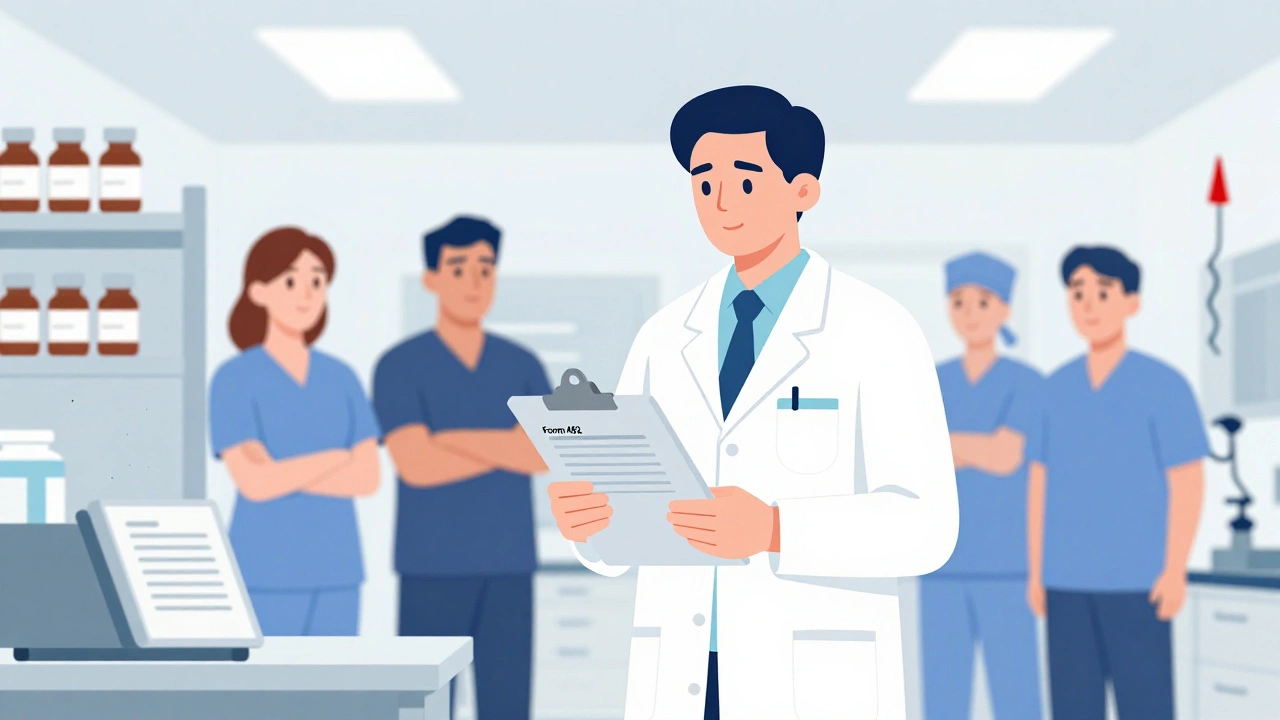
When FDA inspectors walk in, they don’t ask for coffee. They hand over FDA Form 482 - the official Notice of Inspection - and start working. They’re trained professionals with deep expertise in specific product types: drugs, devices, biologics, or food. They’re not there to be nice. They’re there to find gaps.
The inspection lasts anywhere from 3 to 10 days. During that time, inspectors will:
- Walk through the facility - checking cleanliness, equipment condition, and workflow
- Ask to see records: deviation logs, training files, validation reports, change control documents
- Interview staff - from line workers to quality managers - asking the same questions to different people to check for consistency
- Collect samples - sometimes taking raw materials, finished products, or even swabs from surfaces
One of the most common mistakes companies make? Thinking the inspection is just about paperwork. It’s not. It’s about proof. Can you show the inspector exactly how you control your process? Can you trace every batch back to its raw materials? Can you prove your staff were trained on the version of the procedure they’re actually using?
At the end of the inspection, inspectors don’t hand out grades. They give you FDA Form 483 - a list of observations. These aren’t citations. They’re red flags. Things like: "Training records incomplete," "Equipment not calibrated," or "Deviation investigations not documented." You have 15 working days to respond with a detailed plan to fix each item. If you ignore it, or give a weak response, the FDA can issue a warning letter - and that can lead to import bans, product seizures, or even criminal charges.

What Causes the Most Problems?
Industry data shows the same few issues keep showing up on Form 483s, year after year. A 2024 analysis of over 2,400 inspection reports found that 78% of observations came from just four areas:
- Inadequate deviation investigations (32%) - Companies notice a problem, but don’t dig deep enough to find the real cause. They fix the symptom, not the system.
- Incomplete training records (24%) - Employees can’t show proof they were trained on the correct version of a procedure. Or worse - they were trained on an old version.
- Insufficient validation documentation (15%) - They say their process works, but can’t prove it. No data. No reports. No signatures.
- Poor change control records (7%) - Someone changed a machine setting, a formula, or a software setting - but didn’t document it, test it, or get approval.
And now, the biggest growing concern: data integrity. In 2020, only 28% of observations involved electronic records. By 2023, that number jumped to 45%. Inspectors are now trained to look for signs of data manipulation - deleted files, unexplained gaps in logs, shared login passwords, or systems that don’t have audit trails. If your computer system doesn’t track who did what and when, you’re at high risk.
How to Get Ready - And Stay Ready
Waiting until the FDA shows up is a recipe for disaster. The best companies treat inspection readiness like a daily habit, not a one-time event.
Here’s what works:
- Do quarterly mock inspections - Bring in someone from outside to play FDA inspector. Use real Form 483s as checklists. Find the holes before the real inspectors do.
- Designate one inspection coordinator - Companies that use a single point of contact report 83% smoother inspections. No confusion. No mixed messages.
- Keep your facility diagram updated - If you moved a machine last month, update the floor plan. Inspectors notice discrepancies immediately. It makes them question everything else.
- Train your staff - Everyone who talks to inspectors needs 8 hours of training a year. Managers need 16. Yet only 63% of clinical sites meet that standard. Don’t be one of them.
- Create a dedicated inspection room - Equip it with printers, computers, phones, and organized document folders. Facilities that do this answer document requests 40% faster.
One company in Ohio started doing 30-day prep plans: first 5 days reviewing all records, next 10 days training staff and running mock drills, next 10 days cleaning and organizing the facility, and final 5 days checking everything again. They went from 12 observations per inspection to 2 - and haven’t had a warning letter in 4 years.

The Future of FDA Inspections
The FDA is changing how it inspects - and you need to be ready.
By 2026, the agency plans to use remote tools for 35% of its inspections. That means virtual tours, digital document reviews, and video interviews. They’ve already tested this with 147 facilities and found it just as effective for reviewing records as being there in person.
They’re also testing AI tools to scan thousands of documents for red flags - missing signatures, inconsistent dates, unexplained data gaps. By late 2024, 12 pilot sites will be using these systems. The message is clear: if your records are messy, the AI will find it. Faster than any human.
Inspection frequency is also shifting. High-risk products - especially those used by older patients - will see 18% more inspections by 2026. Low-risk dietary supplements? Fewer. The FDA is getting smarter about where to focus its limited resources.
And the number of warning letters keeps rising. In 2023, the FDA issued 1,842 - up 7% from the year before. Medical device makers got 42% of them. Drug makers got 38%. If you’re in either group, you’re in the crosshairs.
What Happens If You Fail?
A Form 483 isn’t the end. But a warning letter is. And if you ignore that? The FDA can take your product off the market. They can block imports. They can sue you. They can even put people in jail for fraud.
But here’s the good news: most failures are preventable. The companies that do well aren’t the ones with the biggest budgets. They’re the ones with the best habits. They document everything. They train constantly. They fix problems before they become observations.
At the end of the day, the FDA doesn’t want to shut you down. They want you to make safe products. If you’re doing that - and you can prove it - you’ll pass every inspection. Every time.
How often does the FDA inspect manufacturing facilities?
The FDA inspects facilities based on risk. High-risk sites - like those making life-saving drugs or complex medical devices - may be inspected every 6 to 12 months. Lower-risk sites, such as those producing over-the-counter supplements, may go 3 to 5 years between inspections. On average, the FDA inspects about 12,000 domestic and 1,000 foreign facilities each year.
What is an FDA Form 483?
An FDA Form 483 is a list of observations made by inspectors during a facility visit. It details any conditions or practices that appear to violate FDA regulations - like missing training records, uncalibrated equipment, or poor documentation. It’s not a citation, but it’s a warning. Companies must respond within 15 working days with a plan to fix each item.
What’s the biggest cause of inspection failures today?
Data integrity is now the top concern. In 2023, 45% of all FDA inspection observations involved electronic records - up from 28% in 2020. This includes missing audit trails, shared login credentials, deleted files, or systems that don’t track who made changes. Inspectors are trained to spot these red flags, and AI tools are now being used to find them faster.
Do FDA inspectors give advance notice?
Usually, yes - inspections are scheduled with about 5 business days’ notice. But for "for-cause" inspections - triggered by complaints, adverse events, or whistleblower tips - the FDA can show up with no warning. Facilities should always be ready.
Can the FDA inspect foreign facilities?
Yes. The FDA inspects around 1,000 foreign facilities each year. Products made overseas must meet the same standards as those made in the U.S. The agency has inspectors stationed in key countries and increasingly uses remote tools to review documents and conduct virtual tours. Many international manufacturers now hire U.S.-based consultants to prepare for inspections.
What happens if you don’t respond to a Form 483?
If you ignore a Form 483 or give a weak response, the FDA may issue a warning letter - a formal notice that your violations are serious and unresolved. Failure to address a warning letter can lead to import alerts, product seizures, consent decrees, or even criminal prosecution. Many companies lose their ability to sell products in the U.S. because they didn’t take the first observation seriously.
ATUL BHARDWAJ
December 3, 2025 AT 08:04Lynn Steiner
December 3, 2025 AT 15:22Alicia Marks
December 4, 2025 AT 08:34Paul Keller
December 5, 2025 AT 17:26Jack Dao
December 6, 2025 AT 17:50And yet, somehow, 70% of these places still get approved. The system isn't broken-it's just run by people who think 'training records' are a suggestion.
Laura Baur
December 8, 2025 AT 09:43dave nevogt
December 10, 2025 AT 04:20Zed theMartian
December 10, 2025 AT 17:46Ella van Rij
December 11, 2025 AT 11:54Rebecca M.
December 13, 2025 AT 11:04Then he asked for coffee. We said no. He left. We cried.
Steve World Shopping
December 14, 2025 AT 13:26