Eating Disorders: Anorexia, Bulimia, and Evidence-Based Care
 Jan, 6 2026
More than 28 million Americans will struggle with an eating disorder at some point in their lives. That’s not a small number-it’s nearly 1 in 10 people. Yet most of them won’t get the help they need. Anorexia, bulimia, and binge eating disorder aren’t just about food or weight. They’re complex mental illnesses with real physical dangers, high death rates, and deep emotional pain. And despite what you might see on social media or in movies, anorexia doesn’t always mean someone is visibly thin. In fact, less than 6% of people with eating disorders are classified as underweight by medical standards. The truth is, these illnesses hide in plain sight.
What Anorexia Nervosa Really Looks Like
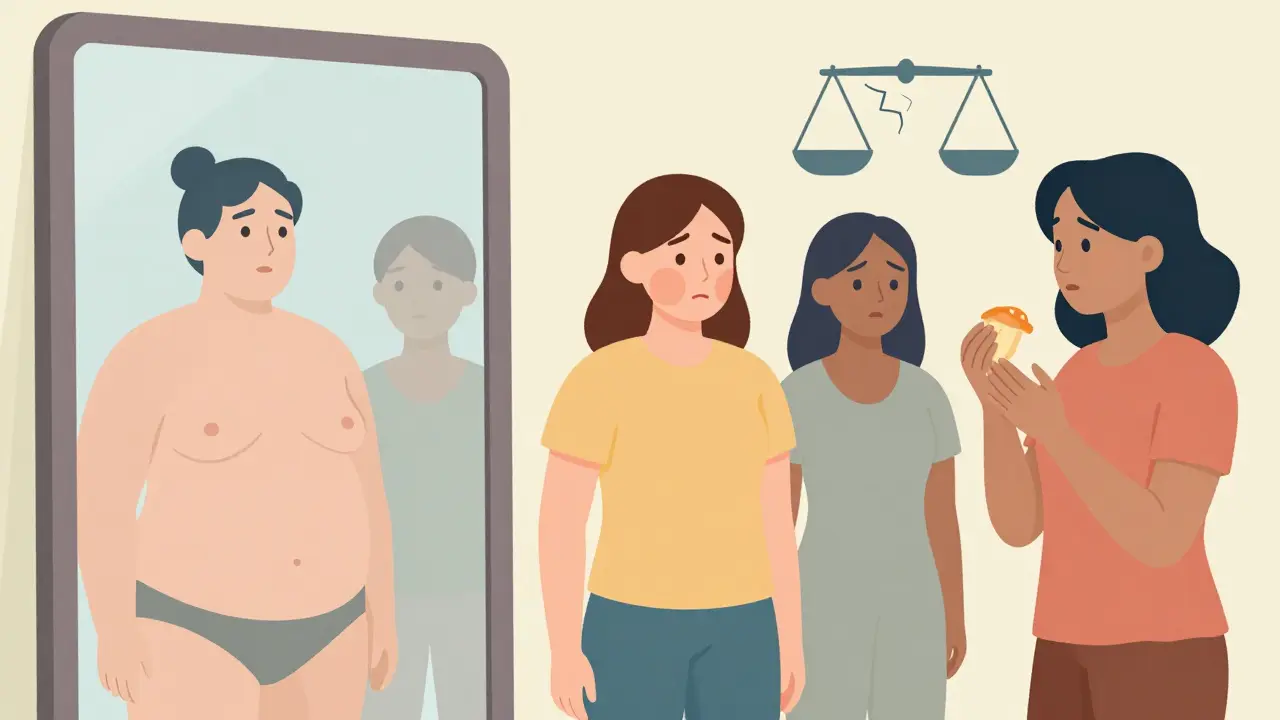
Anorexia nervosa is the deadliest mental illness after opioid overdose. It kills about 10,200 people each year in the U.S.-one every 52 minutes. The mortality rate is 5.1 deaths per 1,000 person-years, nearly six times higher than for people without it. People with anorexia don’t just restrict food; they live in constant fear of gaining weight, even when they’re dangerously underweight. Their body image is shattered. They see themselves as fat in the mirror, even when their ribs stick out.
It’s not just about willpower. Genetics play a role-up to 60% of the risk comes from inherited factors. Brain imaging shows differences in areas linked to reward, fear, and self-control. The illness rewires how the brain processes hunger and fullness. Many people with anorexia have high levels of anxiety and perfectionism long before the eating disorder starts. And while it’s often thought of as a teen girl’s issue, diagnosis in males is rising. The female-to-male ratio was once 10:1. Now it’s closer to 3:1.
Physical complications are severe and often overlooked. Heart rhythm problems, low bone density, organ failure, and electrolyte imbalances are common. One in five people with anorexia will attempt suicide. The risk is 18 times higher than for people without an eating disorder. And here’s something most people don’t realize: you can’t treat anorexia with therapy alone if the body is starving. The brain can’t heal when it’s malnourished.
Bulimia Nervosa: The Hidden Cycle
Bulimia nervosa is quieter than anorexia, but no less dangerous. People with bulimia binge-eating large amounts of food in a short time-then try to undo it. They vomit. They misuse laxatives. They exercise to exhaustion. One in ten people with bulimia ends up with swollen cheeks from repeated vomiting, a condition called “chipmunk cheeks.”
The lifetime prevalence is 1.5% in women and 0.5% in men. But because people with bulimia often maintain a normal weight, it’s easier to hide. Many go years without telling anyone. The shame is overwhelming. They feel out of control, then guilty, then desperate to fix it. The cycle repeats, often daily.
Compared to anorexia, bulimia has a lower mortality rate-but it’s still nearly double that of the general population. Depression hits 76% of people with bulimia. Substance abuse is common too-1 in 10 use alcohol to cope. And like anorexia, suicide attempts are frequent. About 1 in 4 people with bulimia have tried to end their life.
The physical toll is brutal. Tooth enamel erodes from stomach acid. Esophagus tears can happen. Electrolyte imbalances cause heart arrhythmias. Some people die suddenly from cardiac arrest during a binge or purge. And yet, fewer than half of those with bulimia ever seek treatment. Insurance denies care. Clinicians don’t recognize it. Families don’t know what to look for.
Evidence-Based Care: What Actually Works
There’s no magic pill. But there are treatments backed by decades of research. And they work-if you get them early.
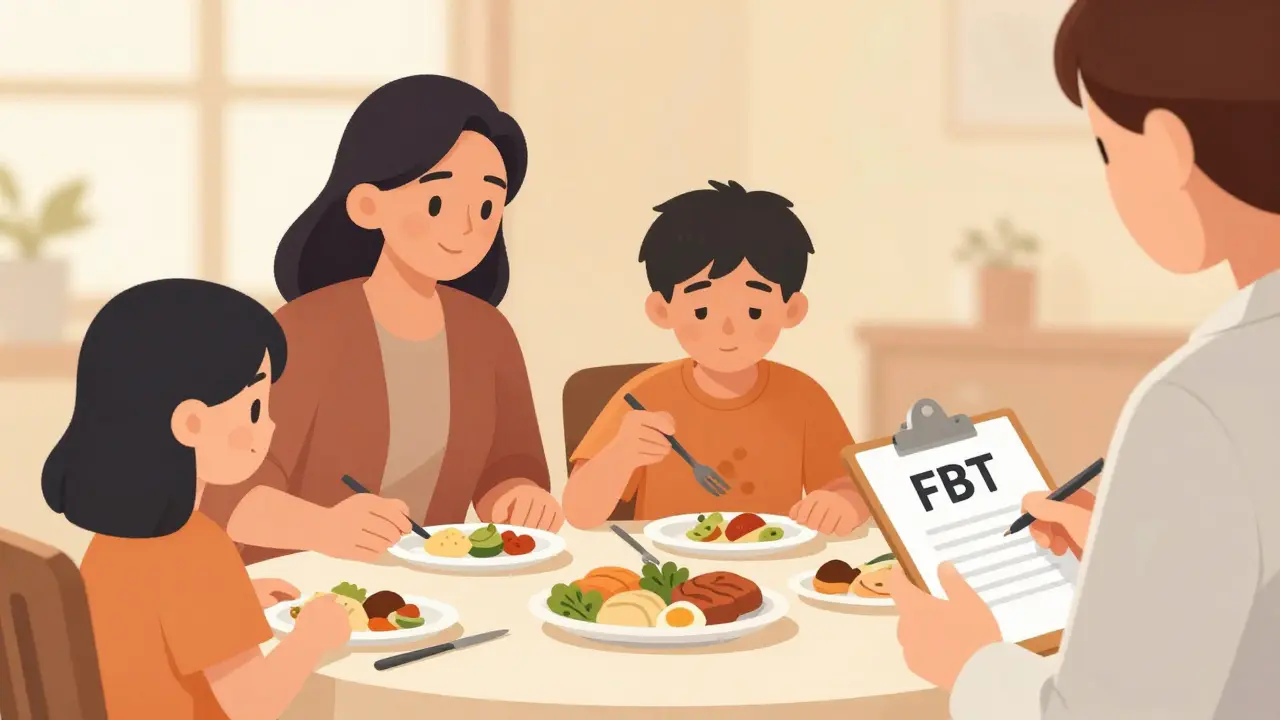
For adolescents with anorexia, Family-Based Treatment (FBT) is the gold standard. Parents take charge of meals. They supervise eating, stop exercise, and help their child regain weight. After 12 months, 40-50% of teens recover fully. That’s double the success rate of individual therapy. It’s not about blaming parents. It’s about giving them the tools to help their child survive.
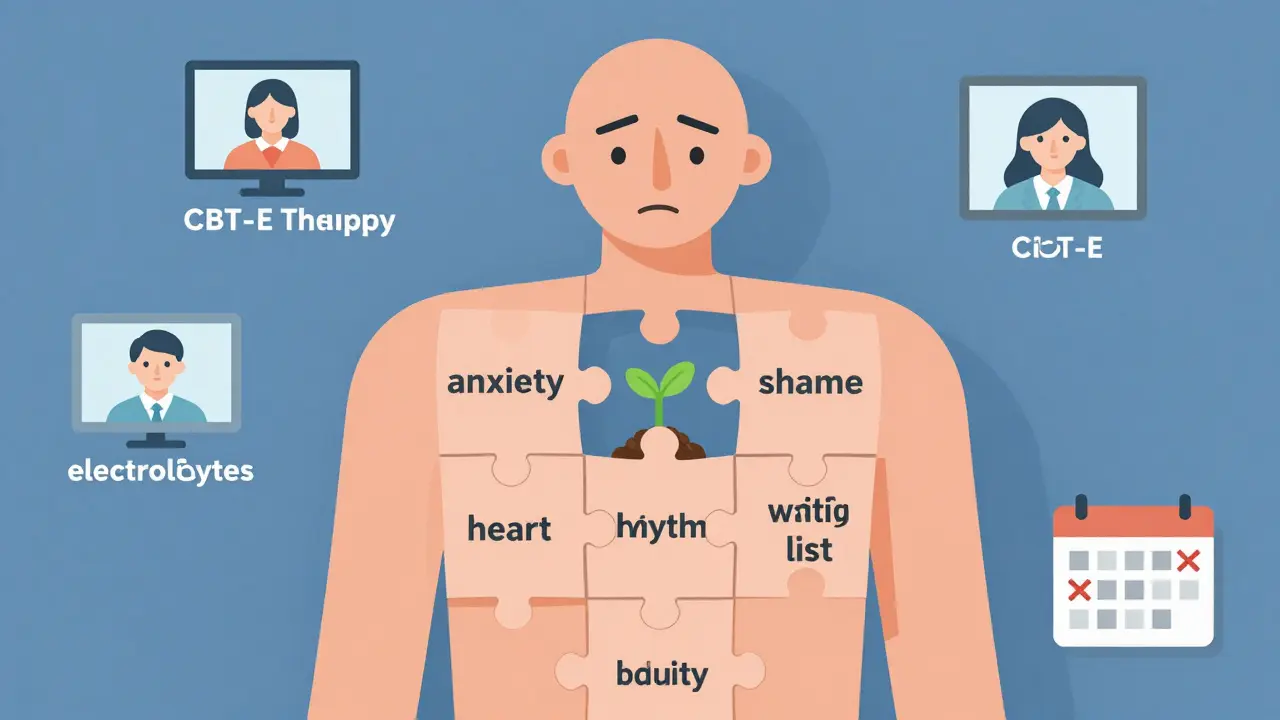
For adults with bulimia, binge eating disorder, or even anorexia, Enhanced Cognitive Behavioral Therapy (CBT-E) is the most effective option. It’s not just about changing thoughts. It’s about breaking the cycle of restriction, bingeing, and purging. Over 20 weekly sessions, patients learn to regulate their eating, manage emotions without food, and rebuild their relationship with their body. Studies show 60-70% of people stop binge-purge behaviors completely.
CBT-E works across diagnoses. A person with anorexia and another with bulimia can follow the same core protocol. That’s because the underlying mechanisms-fear of weight gain, emotional avoidance, rigid thinking-are similar. Dr. Kamryn Eddy’s research shows that starting treatment within three years of symptoms increases the chance of full remission to 65%.
And now, for the first time, there’s a medication approved specifically for an eating disorder. In 2023, the FDA approved lisdexamfetamine (Vyvanse) for binge eating disorder. In clinical trials, it cut binge episodes by half. Remission rates were over 50%-more than double placebo. It’s not a cure, but it’s a powerful tool when combined with therapy.
The System Is Failing People
Here’s the harsh reality: even when people know they need help, the system often says no.
A 2022 survey by the National Eating Disorders Association found that 68% of patients had at least one insurance denial for treatment. One person on Reddit waited 27 months for care-9 months just to get an outpatient appointment. Another used GoFundMe to raise $78,000 for 90 days of residential treatment. Her insurance denied it 11 times.
There are only 35 specialized residential facilities in the entire U.S. With 30 million people affected, that’s less than 0.004% of the population getting care each year. Rural areas are especially desperate-only 22% of rural counties have even one specialist. And while telehealth is expanding, most providers still require in-person visits for higher levels of care.
Even when treatment is approved, quality varies. Only 38% of treatment centers meet basic standards for clinical documentation. Only 12% use standardized tools like the Eating Disorder Examination Questionnaire (EDE-Q) to track progress. Clinicians need 120-180 hours of specialized training to deliver FBT or CBT-E properly. Most don’t have it.
And the wait times? The National Institute for Health and Care Excellence says outpatient care should start within two weeks. Reality Coalition’s 2023 audit found the average wait is 68 days for outpatient and 132 days for intensive programs. People are dying while they wait.
What You Can Do
If you or someone you love is struggling:
- Don’t wait for someone to be “thin enough.” Anorexia doesn’t look like a stereotype.
- Don’t assume bulimia means someone is underweight. Many are normal weight or even overweight.
- Ask for FBT if it’s a teenager. Ask for CBT-E if it’s an adult.
- Document every insurance denial. Appeal. Get help from advocacy groups like NEDA or ANAD.
- Use digital tools like Recovery Record. Studies show they improve outcomes by 32%.
- Know that recovery is possible. With the right treatment, most people get better.
The path isn’t easy. But it’s not impossible. The science is clear. The tools exist. What’s missing is access, funding, and awareness. Every day without treatment is another day closer to crisis. And every day with care is another day closer to life.
What’s Next?
Big changes are coming. The NIH is tracking 7,500 children from birth to identify early warning signs of eating disorders-results expected by late 2025. The military is now required to screen all service members. Telehealth is growing fast. And with the 2023 Mental Health Parity Act enforcement, insurers are being fined for denying care.
But until every person who needs help can get it-without waiting, without begging, without going broke-this crisis won’t be over. Eating disorders aren’t a phase. They’re life-threatening illnesses. And they deserve the same urgency as cancer or heart disease.
Can you recover from anorexia or bulimia?
Yes, recovery is possible. With evidence-based treatment like Family-Based Treatment for teens or CBT-E for adults, many people fully recover. Studies show 40-70% of patients achieve remission depending on the disorder and how early treatment starts. Recovery isn’t linear, and relapse can happen, but long-term recovery rates are strong when care is consistent and specialized.
Is medication used to treat eating disorders?
Medication isn’t the first-line treatment for anorexia, but it plays a role in others. Lisdexamfetamine (Vyvanse) is FDA-approved for binge eating disorder and reduces binge episodes by half in clinical trials. Antidepressants like SSRIs are sometimes used for bulimia to help with mood and impulse control. But medication works best when paired with therapy-not as a standalone solution.
Why don’t more people get treatment?
Barriers are systemic. Insurance denies care-68% of patients face at least one denial. There aren’t enough specialists-only 35 residential facilities in the U.S. for 30 million affected people. Many don’t recognize the signs, especially in people who aren’t underweight. Shame, stigma, and lack of education keep people silent. Even when they seek help, wait times can be over four months.
Is CBT-E only for bulimia?
No. CBT-E is a transdiagnostic treatment, meaning it works across eating disorders. It’s effective for bulimia, binge eating disorder, and even anorexia in adults. The core principles-breaking the binge-purge cycle, normalizing eating, managing emotions-are adaptable. Studies show 65% of patients achieve full remission when treatment begins early, regardless of diagnosis.
Can someone have an eating disorder and not be underweight?
Absolutely. Less than 6% of people with eating disorders are classified as underweight by medical standards. Bulimia and binge eating disorder often occur in people of average or higher weight. Anorexia can also be present without extreme thinness, especially in males or those who exercise excessively. Weight is not a reliable indicator of illness severity.
What’s the most dangerous complication of anorexia?
The most dangerous complication is refeeding syndrome, which can occur when someone starts eating again after prolonged starvation. It causes dangerous shifts in electrolytes like phosphate, potassium, and magnesium, leading to heart failure or seizures. It happens in 10-20% of severe cases and requires careful medical monitoring during weight restoration. Other life-threatening risks include cardiac arrhythmias, organ failure, and suicide.
Elen Pihlap
January 6, 2026 AT 20:16I used to think if someone looked fine they were fine. Then my cousin almost died and no one noticed because she wasn't 'skinny enough'. Now I see it everywhere. People are suffering in silence and we just scroll past.
It's not about looks. It's about pain.
Sai Ganesh
January 6, 2026 AT 22:44In India, eating disorders are rarely spoken about. Families think it's a phase or Western nonsense. But I've seen young women starve themselves to fit into bridal photos. No one talks about the shame. No one talks about the fear. The silence kills faster than the disorder.
Education needs to start in schools, not after someone is in ICU.
Jonathan Larson
January 7, 2026 AT 23:18The systemic failure outlined here is not merely a healthcare issue-it is a moral failure of societal prioritization. We allocate billions to cosmetic procedures while denying life-saving interventions for psychiatric conditions rooted in neurobiology. The fact that a teenager must wait 27 months for care while pharmaceutical companies profit from off-label SSRI prescriptions reveals a profound dissonance in our values.
When we treat mental illness as a luxury rather than a biological imperative, we are not just neglecting patients-we are endorsing a culture of disposability.
Alex Danner
January 8, 2026 AT 10:16Let me tell you something no one says out loud: recovery isn’t about willpower. It’s about rewiring your brain while your body is falling apart.
I was in a residential program for 90 days. They didn’t just feed me-they held me while I screamed because my brain told me I was disgusting for eating toast.
CBT-E saved my life. Not because it was magic, but because it gave me a map when I was lost in a maze with no exit.
And yes, the insurance denied it 3 times before they finally paid. Don’t give up. Fight. Document. Appeal. You’re worth more than their bureaucracy.
Adam Gainski
January 8, 2026 AT 15:05One thing that really stood out to me is how FBT flips the script. Parents aren’t the problem-they’re the solution. I’ve seen families blame themselves, but the research is clear: when you give parents the tools, they become the most powerful force in recovery.
It’s not about control. It’s about connection.
And if you’re an adult reading this and thinking ‘that’s for kids’-CBT-E works for you too. It’s not one-size-fits-all, but it’s one-size-fits-everyone-who’s-suffering.
Katrina Morris
January 8, 2026 AT 19:10my sister did that for years and we thought she was just ‘healthy’
turns out she was terrified of gaining 2 pounds
she’s in therapy now and it’s slow but she’s alive and that’s what matters
Andrew N
January 9, 2026 AT 05:34Let’s be real-most of these ‘success stories’ are cherry-picked. The real stats? 30% relapse rate even after treatment. And Vyvanse? It’s just another stimulant. You’re trading one addiction for another.
And don’t get me started on ‘recovery is possible’-that’s what they say before they close the doors on your insurance.
Hope is nice. But data doesn’t lie: most people never get proper care. The rest just learn to live with the pain.
Poppy Newman
January 10, 2026 AT 09:02Just read this and cried 😭
My best friend had bulimia and I didn’t know until she collapsed at a party. She was ‘normal weight’-everyone thought she was just ‘quirky’ about food.
She’s in recovery now and uses Recovery Record every day. It’s helped so much.
If you’re reading this and you’re struggling-you’re not alone. I promise.
❤️
Jessie Ann Lambrecht
January 11, 2026 AT 13:28You know what’s wild? We’d never tell someone with cancer to ‘just eat more’ or ‘snap out of it.’ But we do that every day to people with eating disorders.
And the fact that we have treatments that work-FBT, CBT-E, Vyvanse-and still people wait months or get denied? That’s not just broken. That’s cruel.
I’m a therapist. I’ve seen people come back from the edge. I’ve held their hands through refeeding syndrome. I’ve celebrated their first birthday party in years.
Recovery isn’t pretty. It’s messy. It’s terrifying. But it’s possible.
And if you’re out there reading this while starving yourself-you are not a burden. You are not weak. You are a warrior.
Reach out. Fight. Don’t wait for permission to live.