DSCSA Track-and-Trace: How the US is Stopping Counterfeit Drugs
 Apr, 25 2026
| Component | What it is | Purpose |
|---|---|---|
| Transaction Information (TI) | Product details | Identifies exactly what the drug is. |
| Transaction History (TH) | Distribution log | Shows every hand the drug passed through. |
| Transaction Statement (TS) | Legitimacy certification | Legal proof that the sender is authorized. |
The Core of the System: Serialization
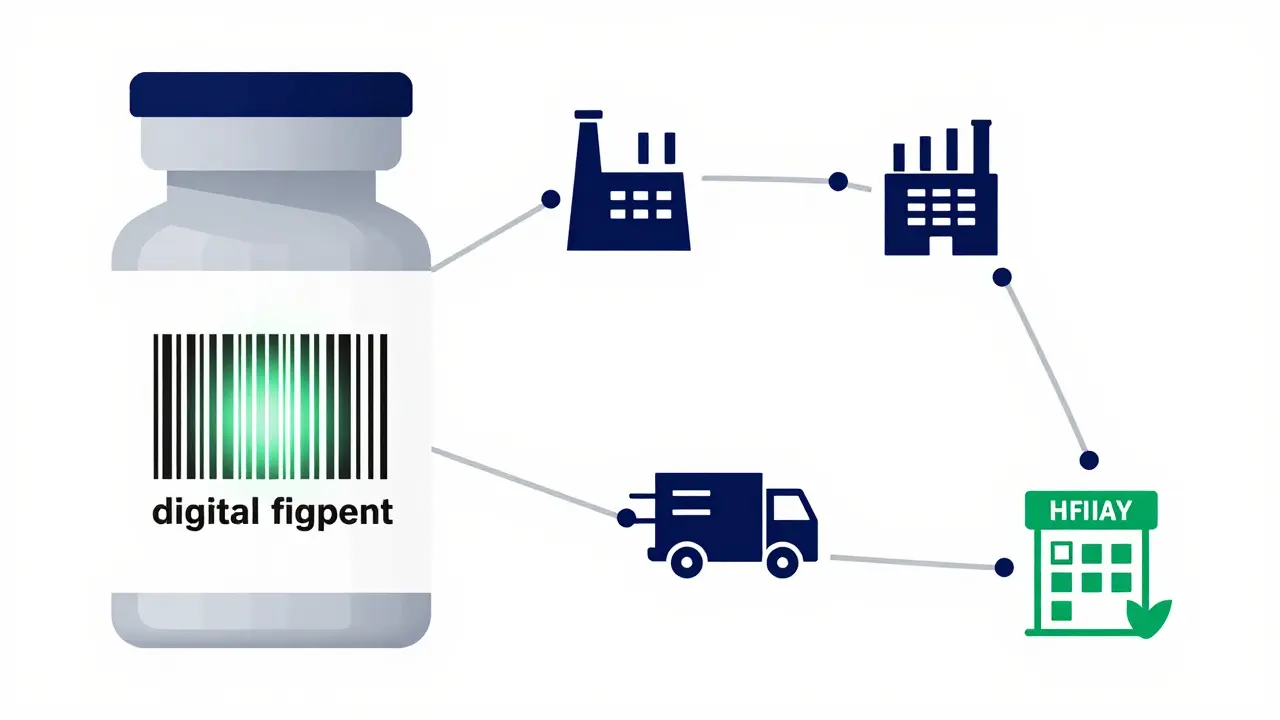
At the heart of this whole operation is Serialization is the process of assigning a unique, traceable identifier to each individual package of a pharmaceutical product. In the old days, a lot number was enough. If one bottle in a batch of 10,000 was bad, you had to recall all 10,000. Now, every single box gets its own "digital fingerprint." This identifier usually includes the National Drug Code (NDC), a lot number, an expiration date, and a unique serial number. Because these are machine-readable, a wholesaler or pharmacist can scan a package and instantly see if that specific unit is legitimate. According to FDA estimates, this level of tracking can reduce the risk of counterfeits by a staggering 95%.Who is Responsible for What?
This isn't just a job for the FDA is the U.S. Food and Drug Administration, the federal agency responsible for regulating pharmaceutical safety and enforcing DSCSA laws; it's a team effort involving every "trading partner" in the chain.- Manufacturers: They start the process by applying the unique serial numbers to each package. They are the source of truth for the product's identity.
- Wholesalers: These are the middle-men who move massive amounts of stock. They must verify the data they receive and pass it along accurately.
- Repackagers: If a drug is repackaged for a different market or size, the repackager must maintain the trace history so the link to the original manufacturer isn't lost.
- Dispensers (Pharmacies): The final stop. Pharmacists must be able to verify the legitimacy of a product if it looks "suspect" and keep records of the transaction.
The Technical Headache: Interoperability
If it sounds simple, the actual implementation has been a bit of a nightmare. The goal was to move from paper-based "pedigrees" (basically a paper trail of ownership) to a fully electronic system. To make this work, the industry adopted EPCIS is Electronic Product Code Information Services, a global standard for sharing visibility data about the movement of physical goods. Think of EPCIS as a common language. If the manufacturer speaks "French" and the pharmacy speaks "Japanese," the data doesn't move. EPCIS forces everyone to speak the same language. However, not everyone adopted the standard the same way. This led to "data mismatches"-where a serial number in one system didn't perfectly match the record in another. In some cases, this has caused delays of two to three days just to verify a shipment of medicine. ## The Cost of Safety Protecting patients isn't free. For large chains like Walgreens, the cost of upgrading technology has reached hundreds of millions of dollars. But for small, independent pharmacies, the burden is even heavier. Some reports show independent pharmacies spending an average of $185,000 just to get their systems up to code. Is that price tag justified? When you consider that these systems can reduce drug diversion-where legitimate meds are stolen and sold on the black market-by 40%, the answer for most is yes. More importantly, it makes recalls surgical. Instead of pulling every bottle of a drug off the shelves nationwide, a company can identify exactly which 50 bottles from which specific lot are affected and where they are located.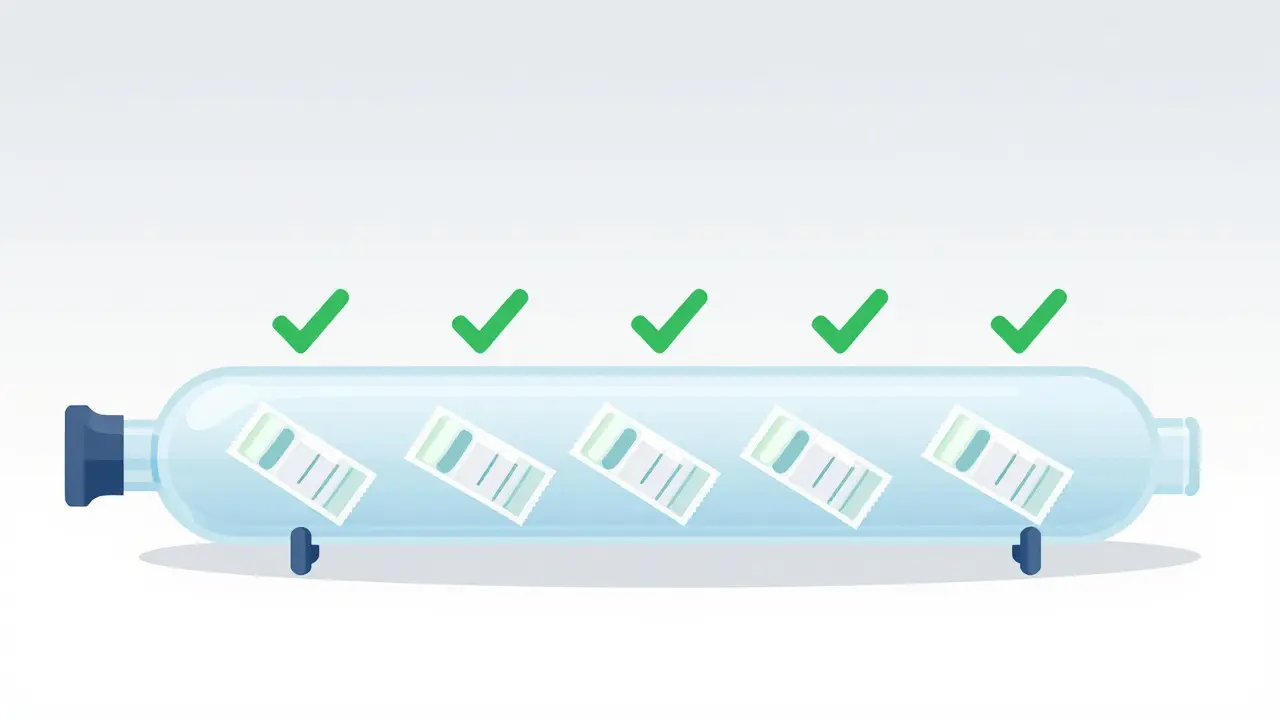
Dealing with "Suspect" Products
What happens when the system flags a drug as "suspect"? It doesn't necessarily mean the drug is fake, but it means something is wrong with the data. Maybe the serial number is duplicated, or the transaction history has a gap. When this happens, the law requires an in-depth investigation. This isn't just a quick glance at a screen. It involves:- Quarantining the product so it can't be sold accidentally.
- Checking the serial number directly against the manufacturer's database.
- In extreme cases, performing forensic testing on the chemical composition of the drug.
- Reporting the incident to the FDA if the product is confirmed as "illegitimate."
The Road Ahead and Future Outlook
We've officially moved past the stabilization periods, and the goal is now full, package-level traceability. While the focus has been on high-risk prescription drugs, the FDA is already looking at whether to expand these rules to high-risk over-the-counter (OTC) medications. Looking toward 2027, experts believe these systems will slash counterfeit incidents by 90%. We're moving toward a world where the pharmaceutical supply chain is essentially a transparent glass pipe. You can see exactly where a drug came from, who touched it, and that it's exactly what the label says it is. While the initial cost and technical glitches were frustrating, the trade-off is a healthcare system where patients don't have to guess if their medicine is safe.What exactly is a counterfeit drug?
A counterfeit drug is any medication that is deliberately and fraudulently mislabeled with respect to identity or source. This could mean it contains the wrong active ingredient, no active ingredient at all, or even harmful contaminants, all while looking like a legitimate brand-name product.
Does the DSCSA apply to all medicines?
It primarily targets "certain prescription drugs" as defined by the law. While it doesn't cover every single medical product, it covers the vast majority of prescription medications distributed in the US. The FDA is currently evaluating expanding this to certain high-risk over-the-counter products.
How does serialization actually work?
Each individual unit of sale (like a bottle or a blister pack) is given a unique 2D barcode. This barcode contains a serial number that is different from every other bottle of the same drug. This allows the system to track a specific unit rather than just a batch of products.
Why is EPCIS so important for this process?
EPCIS (Electronic Product Code Information Services) provides the standardized format for the data. Without it, different software systems from different companies wouldn't be able to communicate, making it impossible to trace a drug's journey across multiple different wholesalers and pharmacies.
What happens if a pharmacy fails a DSCSA audit?
The FDA can issue warning letters and impose significant penalties. If a distributor or pharmacy fails to properly investigate and report suspect products, they are in violation of federal law, which can lead to fines or restrictions on their ability to distribute medications.