Digital Therapeutics and Medication Interactions: What You Need to Know in 2026
 Feb, 23 2026
Medication Adherence Impact Calculator
How Digital Therapeutics Boost Adherence
Based on clinical data from the article, digital therapeutics can significantly improve medication adherence for chronic conditions. This calculator shows potential improvements based on FDA-cleared programs like Medisafe and DaylightRx.
Your Potential Outcome
Real-World Impact:
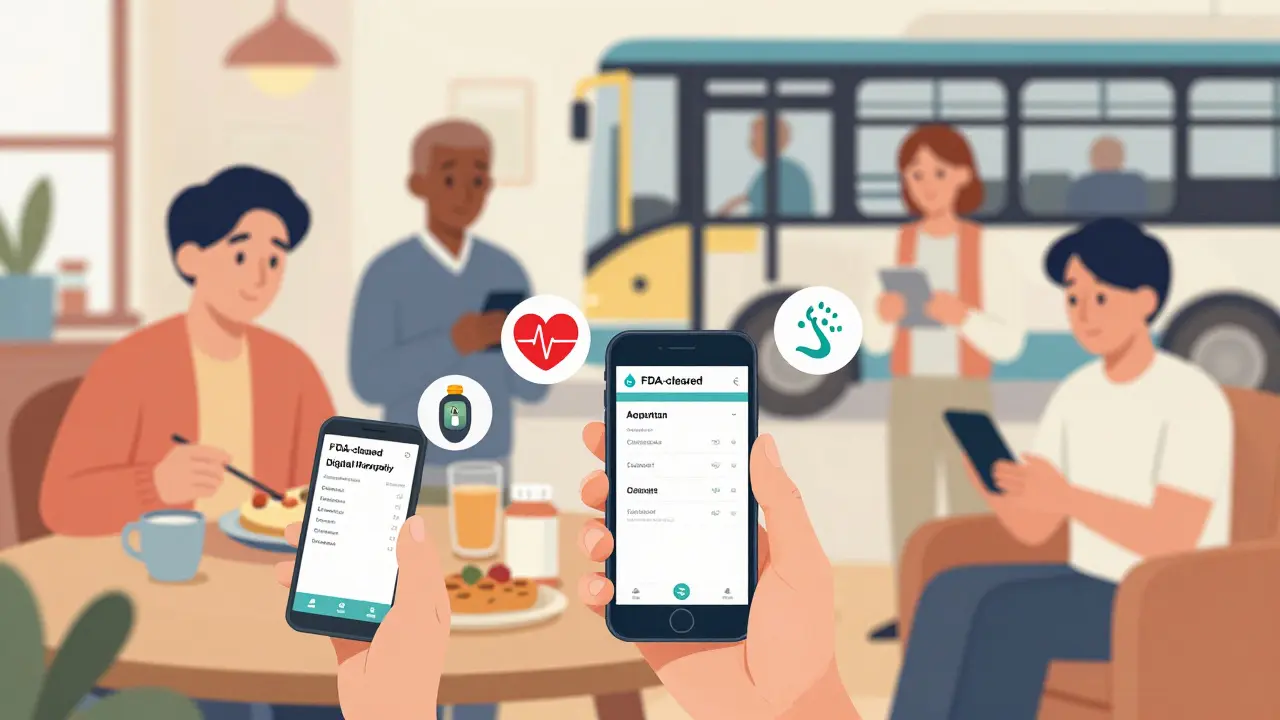
When you take a pill every day, you’re not just managing a disease-you’re fighting a silent battle against forgetfulness, fear, cost, and confusion. For millions with diabetes, anxiety, or high blood pressure, the real problem isn’t the medicine. It’s taking it. That’s where digital therapeutics (DTx) come in. These aren’t fitness apps or meditation tools. They’re FDA-cleared software programs designed to help you stick to your meds, adjust your behavior, and even improve outcomes when used alongside your prescription drugs. But here’s the catch: they don’t work in isolation. And that’s where things get complicated.
What Exactly Are Digital Therapeutics?
Digital therapeutics are software-based treatments. Not supplements. Not reminders. Not wellness trackers. They’re medical devices approved by the FDA to treat conditions like substance use disorder, ADHD, anxiety, and diabetes. The first one, reSET, got cleared in 2018 to help people recovering from addiction. Since then, more than 100 have been approved. The latest? DaylightRx, cleared on September 4, 2024, for generalized anxiety disorder in adults over 22. It’s a 90-day cognitive behavioral therapy (CBT) program delivered through an app, backed by clinical trials showing real reduction in anxiety symptoms.
These aren’t just fancy apps. They use algorithms to personalize treatment. For example, a diabetes DTx like DarioEngage doesn’t just log your blood sugar. It analyzes patterns, asks about meals and stress, and gives real-time insulin advice based on your history. That’s not a recommendation-it’s a clinical intervention. And it’s designed to work with your medication, not replace it.
How DTx Boosts Medication Adherence
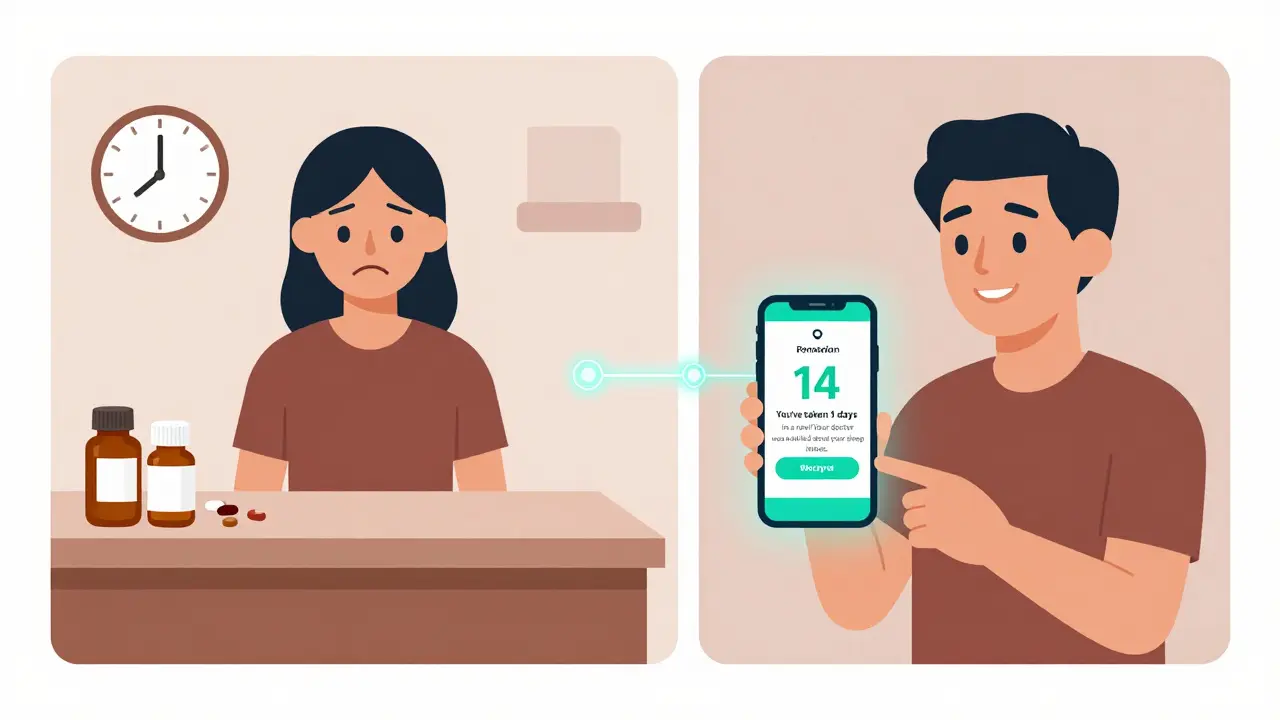
Let’s be honest: about 30% of prescriptions are never picked up. Half of people with asthma or COPD skip doses. One missed insulin shot can send someone to the ER. Traditional methods-phone calls, pill bottles, flyers-don’t cut it. DTx does.
- Medisafe, a leading DTx platform, reports a 25% increase in adherence for chronic conditions like diabetes and mental health disorders.
- For asthma patients with 50% adherence rates, DTx lifts that to 78%.
- It tracks not just if you took the pill, but why you might have skipped it. Did you run out? Can’t afford it? Afraid of side effects? The app responds with tailored support-like connecting you to financial aid or answering your question with a video from your doctor.
That’s the power. Real-time, personalized, context-aware nudges. Not just a beep at 8 a.m.
When DTx and Medications Work Together
DTx doesn’t just help you take your pills. It helps them work better.
Take warfarin, a blood thinner. Miss a dose? Risk of clot. Take too much? Risk of bleeding. DTx platforms like Medisafe integrate with wearable sensors and lab results to warn users of potential imbalances. In one trial, patients using DTx alongside warfarin had 40% fewer emergency visits than those on medication alone.
Same with antiretrovirals for HIV. A study published by SAMHSA found that when DTx was added to buprenorphine treatment for opioid use disorder, illicit drug use dropped 16.3% more than with medication alone. Why? Because the app didn’t just remind users to take their dose-it helped them cope with cravings, connected them to counseling, and tracked mood changes that signaled relapse risk.
Even in mental health, DTx isn’t replacing drugs-it’s enhancing them. DaylightRx, for example, is prescribed alongside SSRIs. The app doesn’t say, “Stop your medication.” It says, “You’ve been anxious for three days. Here’s a breathing exercise. Also, your doctor should know you’ve been having trouble sleeping.”
The Hidden Risks: What No One Talks About
DTx sounds perfect. But it’s not without downsides.
First, side effects. EndeavorRx, a DTx for ADHD, caused dizziness, headaches, and even nausea in 7% of users-compared to just 2% in the control group. These aren’t just “tech frustration.” They’re real physiological reactions. And we don’t yet have long-term data on how these interact with stimulants like Adderall or ADHD medications over years.
Second, integration chaos. DTx platforms connect to EHRs, pharmacies, and wearables-but most systems don’t talk to each other. A patient might use DarioEngage for diabetes, Medisafe for blood pressure, and a separate app for depression. Their doctor sees three separate data streams. No unified view. That’s dangerous. One 2023 study found that 62% of negative reviews cited poor pharmacy integration. One user said, “The app told me to refill my metformin. My pharmacy said I already had 30 days left. I didn’t know who to trust.”
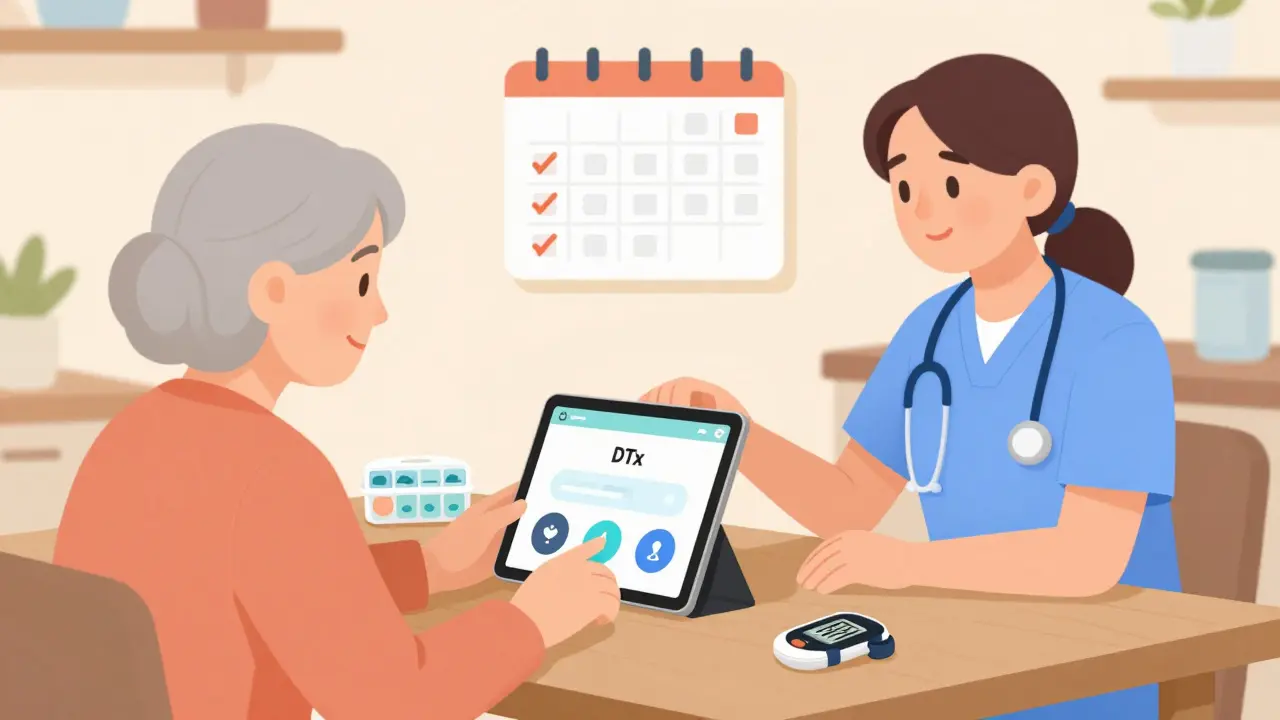
Third, the elderly. JMCP research in 2024 showed that 45% of patients over 65 stopped using DTx within a month if they didn’t get in-person help. That’s not a tech issue-it’s a care gap. If you’re 72, don’t use smartphones, and your only support is a 5-minute video tutorial, you’ll quit. Fast.
Who Benefits Most-and Who Gets Left Behind
DTx shines for chronic conditions where behavior matters as much as biology. That’s diabetes. Mental health. COPD. Asthma. Heart failure. The data is clear: when DTx is paired with medication, outcomes improve.
But it fails for acute care. If you’re having a heart attack, you don’t need an app. You need an ambulance. And if you’re poor, elderly, or live in a rural area with spotty internet? You’re at risk of being excluded.
Here’s the hard truth: the biggest barrier isn’t technology. It’s access. A 2023 McKinsey report found that 67% of healthcare providers struggle with reimbursement. Insurance won’t pay for the app. So doctors don’t prescribe it. And patients? They never even hear about it.
Meanwhile, the market is exploding. The global DTx industry was worth $3.8 billion in 2023. By 2028, it’s projected to hit $14.2 billion. Major drug companies like Pfizer and Novo Nordisk are now building DTx as “digital drug companions” for their high-cost medications. Why? Because they know: if you don’t take the pill, they don’t get paid.
The Future: Real-Time Adjustments and Precision Dosing
The next leap isn’t just reminders. It’s dynamic dosing.
Imagine this: your insulin pump, your glucose monitor, and your DTx app all talk to each other. You eat a big meal. Your glucose spikes. The app notices your stress levels are high. It checks your sleep data from your watch. It doesn’t just say, “Take insulin.” It says, “Based on your pattern, take 1.2 units now. Avoid carbs tomorrow. Your doctor has been alerted.”
This isn’t sci-fi. ASCPT predicts that by 2027, 65% of specialty pharmacy prescriptions will require DTx enrollment just to get covered. And by 2026, 40% of chronic disease management will include DTx as a standard part of treatment.
The FDA is already preparing new guidelines for 2025-focusing on how DTx interacts with medications. That means we’ll soon have better rules on safety, data sharing, and clinical proof.
What Should You Do?
If you’re on long-term medication:
- Ask your doctor: “Is there an FDA-cleared DTx that works with my treatment?”
- Don’t assume all health apps are the same. Only look for ones with “FDA-cleared” or “prescription digital therapeutic” on the label.
- If you’re over 65, ask for in-person onboarding. A 45-minute setup with a nurse can make the difference between sticking with it and quitting.
- Track your experience. If the app makes you anxious, dizzy, or frustrated-tell your provider. These aren’t just bugs. They’re safety signals.
For providers: don’t just hand out an app link. Train your team. Assign a DTx navigator. Make sure the app talks to your EHR. And never assume patients know how to use it.
The future of medicine isn’t just pills. It’s pills + software + data + human support. The question isn’t whether DTx will change how we treat disease. It’s whether we’ll get it right-for everyone.
Are digital therapeutics the same as health apps?
No. Most health apps are wellness tools-like meditation or step counters. Digital therapeutics (DTx) are FDA-cleared medical devices. They’re prescribed by doctors, backed by clinical trials, and designed to treat specific conditions. If it doesn’t say “FDA-cleared” or “prescription,” it’s not a DTx.
Can DTx replace my medication?
Rarely. Most DTx are designed to work alongside medication-not replace it. DaylightRx for anxiety, for example, is prescribed with SSRIs. It helps with coping skills and behavioral changes, but doesn’t eliminate the need for medication. There are a few exceptions, like EndeavorRx for ADHD, which can be used as a standalone treatment for children, but even then, it’s not a drug substitute.
Do DTx interact with my medications like drugs do?
Not chemically, but yes-functionally. DTx can change how your body responds to medication. For example, if a DTx helps you sleep better, it might make your blood pressure meds work more effectively. Or if it causes anxiety or headaches, it might make you less likely to take your pills. These are indirect interactions, but they’re real and can affect outcomes. Always tell your doctor what DTx you’re using.
Why aren’t more doctors prescribing DTx?
Three main reasons: reimbursement issues (insurance often won’t pay), lack of integration with EHRs (data doesn’t flow into patient charts), and uncertainty about evidence. Many providers haven’t seen enough long-term data to feel confident. Also, 28% of providers report patient resistance to adding another app to their routine.
Is DTx safe for older adults?
It can be-but only with support. Studies show 38% of patients over 70 quit DTx within 30 days without hands-on help. For older users, success depends on in-person onboarding, simplified interfaces, and ongoing tech support. Don’t just send a link. Offer a 45-minute setup session with a nurse or health coach.
Final Thought
Digital therapeutics aren’t magic. But they’re not just tech hype either. They’re a new tool in the medicine cabinet-powerful, precise, and potentially life-changing-if we use them wisely. The goal isn’t to replace your doctor or your pills. It’s to help you take them. And that’s something worth getting right.
Spenser Bickett
February 24, 2026 AT 00:21Lillian Knezek
February 25, 2026 AT 19:43Christina VanOsdol
February 25, 2026 AT 21:28Brooke Exley
February 27, 2026 AT 13:08Matthew Brooker
February 28, 2026 AT 07:02Emily Wolff
February 28, 2026 AT 17:08Lou Suito
March 1, 2026 AT 03:18Joseph Cantu
March 1, 2026 AT 18:05Jacob Carthy
March 3, 2026 AT 01:55