Diabetes and Weight Loss: Proven Strategies to Manage Weight and Improve Blood Sugar
 Mar, 21 2026
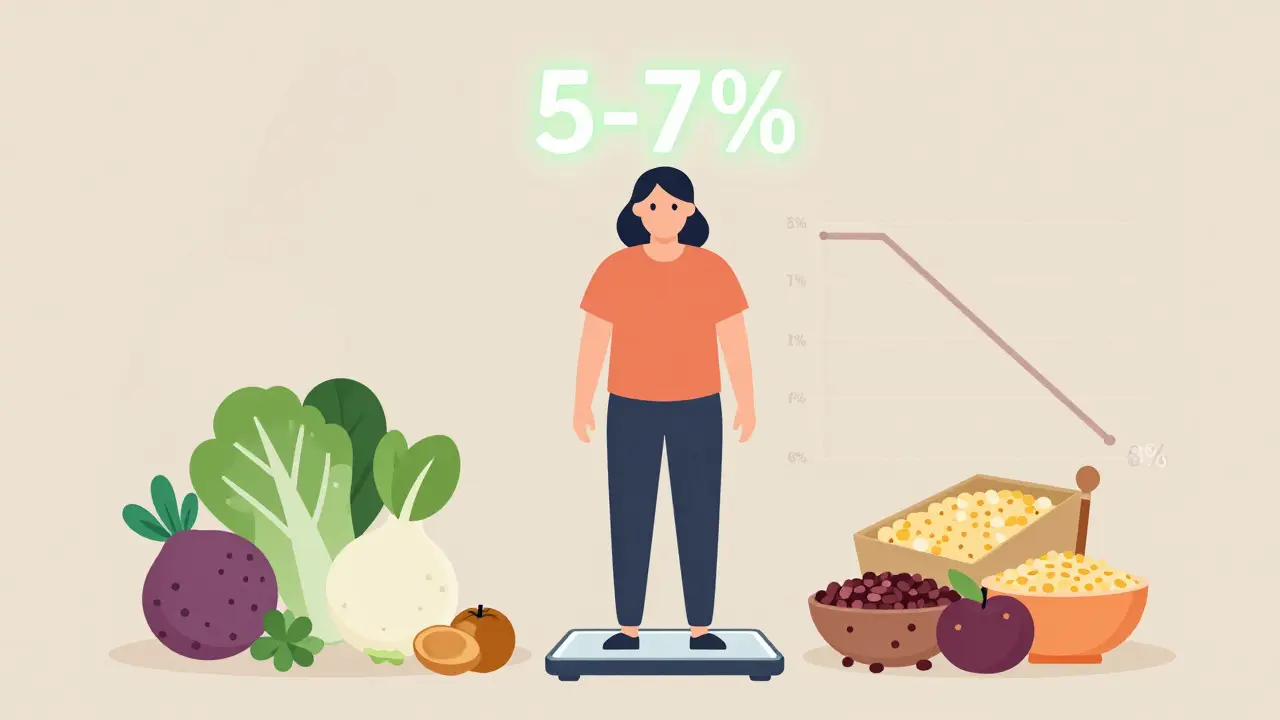
When you have type 2 diabetes, carrying extra weight isn’t just a cosmetic issue-it’s a major driver of your blood sugar problems. The good news? Losing even a small amount of weight can make a huge difference in how your body uses insulin and controls glucose. You don’t need to drop 50 pounds. In fact, studies show that losing just 5-7% of your body weight can cut your risk of complications, lower your A1C, and sometimes even put diabetes into remission.
Why Weight Loss Matters for Diabetes
Extra fat, especially around your belly, makes your cells less responsive to insulin. That means your pancreas has to work harder to produce more insulin just to keep your blood sugar in check. Over time, this wears out the insulin-producing cells, and your blood sugar climbs. Losing weight reverses this. A 2023 study from the American Diabetes Association found that people who lost 5% of their body weight saw a 20-30% improvement in insulin sensitivity. That’s not a guess-it’s measurable. For someone weighing 200 pounds, that’s just 10-14 pounds. And the effects don’t stop there. Weight loss also lowers blood pressure, reduces triglycerides, and eases strain on your heart.
The Diabetes Prevention Program (DPP), a landmark study that followed over 3,000 people with prediabetes, showed that those who lost 5-7% of their weight through diet and exercise cut their risk of developing full-blown diabetes by 58%. That’s more effective than taking metformin. And it’s not just for prediabetes. The DiRECT trial proved that people with type 2 diabetes for up to six years could achieve remission by losing 10-15 kg (22-33 lbs). Remission doesn’t mean a cure-it means normal blood sugar without medication. And it’s possible.
How Much Weight Should You Aim to Lose?
Forget the scale obsession. Focus on percentage. If you weigh 180 pounds, aim for 9-13 pounds lost. That’s enough to see real changes in your A1C, energy levels, and medication needs. Research from the Look AHEAD trial shows that people who lost 5% of their weight had better blood sugar control, while those who lost 10% or more saw major improvements in liver and pancreas fat-key factors in reversing insulin resistance.
Here’s what the numbers look like in real terms:
- 5% weight loss → A1C drops by 0.5-1.0%
- 7% weight loss → Insulin sensitivity improves by 25-40%
- 10%+ weight loss → Potential diabetes remission (no meds needed)
Don’t wait to lose 20 pounds before you feel better. Even 5% can mean fewer pills, fewer spikes, and more energy.
What Works: The Science-Backed Strategies
Not all diets or exercise plans work the same for people with diabetes. Here’s what the data says actually moves the needle.
1. Eat for Blood Sugar Control
Forget extreme low-carb or keto unless your doctor approves. The best approach is balanced, high-fiber, and moderate in protein. The ADA recommends at least 14 grams of fiber for every 1,000 calories you eat. That’s about 40 grams for a 2,800-calorie day. How? Load up on vegetables, legumes, whole grains, nuts, and seeds. A 2024 review in Diabetes Care showed that people who ate more fiber had 18% lower post-meal glucose spikes.
Portion control matters more than you think. Use smaller plates. Measure your rice, pasta, and bread. A 2023 survey by the Diabetes Food Hub found that 85% of users who used measuring cups or food scales lost more weight than those who just “eyeballed it.”
Protein helps you stay full longer and protects muscle during weight loss. Aim for 1.2-1.6 grams of protein per kilogram of body weight. That’s about 80-100 grams a day for a 70kg person. Eggs, Greek yogurt, tofu, lean chicken, and lentils are great.
2. Move More-But Not Just Walking
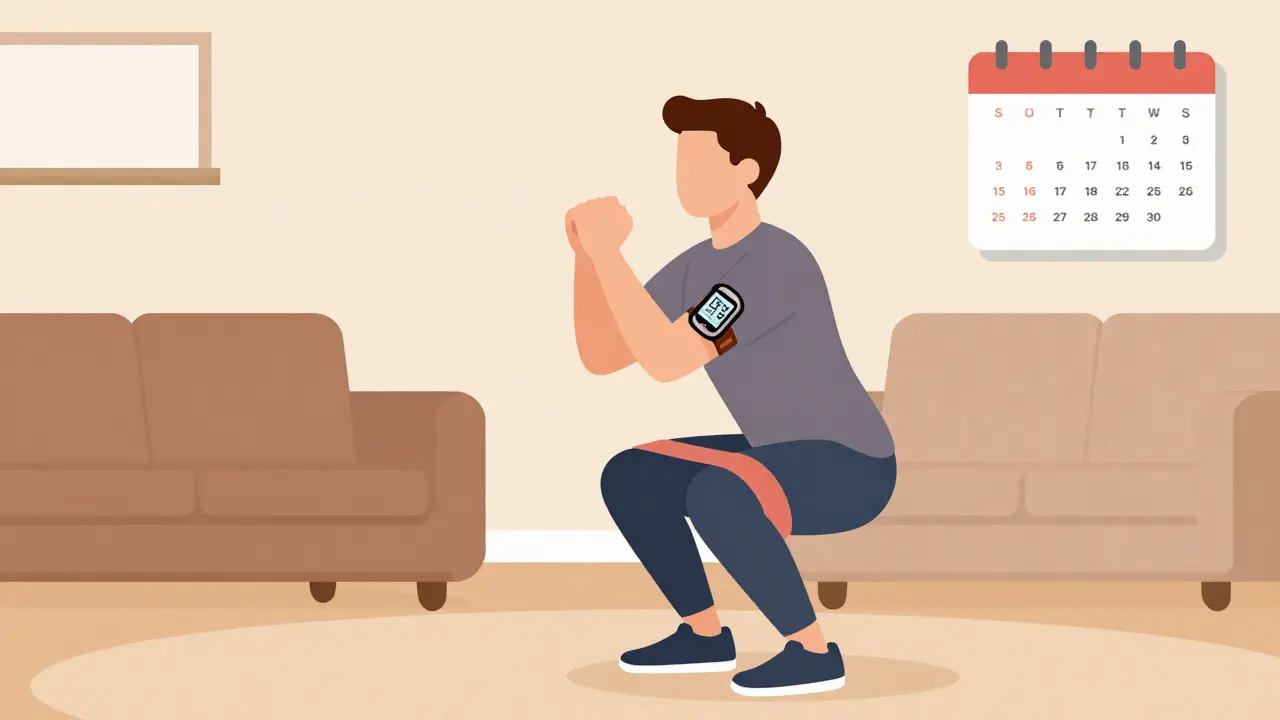
The CDC recommends 150 minutes of moderate activity per week. That’s 30 minutes, five days a week. Brisk walking counts. But here’s the twist: adding strength training twice a week makes a bigger difference.
Muscle burns more calories at rest than fat. It also pulls glucose out of your blood without needing insulin. A 2022 study in Diabetes Care showed that people who did resistance training twice a week lost 2.5 times more belly fat than those who only walked. Try bodyweight squats, push-ups, dumbbells, or resistance bands. Even 10 minutes a day helps.
If you’re new to exercise, start slow. A 2024 study found that people who began with 10-minute walks after meals saw better post-meal glucose drops than those who did one long session.
3. Use Technology-It Actually Helps
Apps aren’t gimmicks. A 2023 meta-analysis found that people using apps to track food, activity, and weight lost 3.5-5.5% more than those using paper logs. MyFitnessPal, Noom, and the CDC’s DPP app all show strong results. Why? They create awareness. When you log your meals, you notice patterns. That chocolate bar? It spikes your sugar. That late-night snack? It makes your morning glucose higher.
Continuous glucose monitors (CGMs) are no longer just for insulin users. Even people on oral meds can benefit. Seeing how your blood sugar reacts to food helps you make smarter choices without guesswork.
Medications and Weight Loss: What to Know
Your meds can help-or hurt-your weight loss goals.
- GLP-1 agonists (like semaglutide/Wegovy, tirzepatide/Mounjaro): These are game-changers. They reduce appetite, slow digestion, and lower blood sugar. In trials, people lost 15-20% of their body weight. Side effects? Nausea, especially at first. But most people adjust.
- SGLT2 inhibitors (like empagliflozin, dapagliflozin): These make your kidneys flush out sugar. You lose 2-5 kg on average. Bonus: they lower heart and kidney risk.
- Sulfonylureas and insulin: These can cause weight gain and low blood sugar. If you’re trying to lose weight, talk to your doctor about switching. Many people can reduce or eliminate insulin by losing weight.
One user on Reddit said, “I switched from glimepiride to semaglutide. Lost 18 lbs in 4 months. My A1C went from 8.1 to 6.2.” That’s not rare. But don’t start these meds without medical supervision. They’re powerful-and expensive.
What Doesn’t Work (And Why)
Not every trend is right for diabetes.
- Very low-calorie diets (under 1,000 calories): These can cause muscle loss, gallstones, and rebound weight gain. They’re unsustainable and risky.
- Intermittent fasting without medical guidance: Fasting can trigger hypoglycemia in people on insulin or sulfonylureas. If you want to try it, do it with your doctor’s approval.
- Detox teas, weight-loss pills, or miracle supplements: The FDA has warned against dozens of these products. They don’t work, and some contain hidden drugs.
There’s no shortcut. Real change comes from habits you can live with.
Overcoming Common Roadblocks
Most people hit walls. Here’s how to get past them.
Plateaus
After 3-4 months, weight loss slows. That’s normal. Your body adapts. To break through:
- Add strength training if you haven’t already
- Reassess portion sizes-your needs may have changed
- Track sleep and stress. Poor sleep raises cortisol, which increases belly fat
Hypoglycemia During Weight Loss
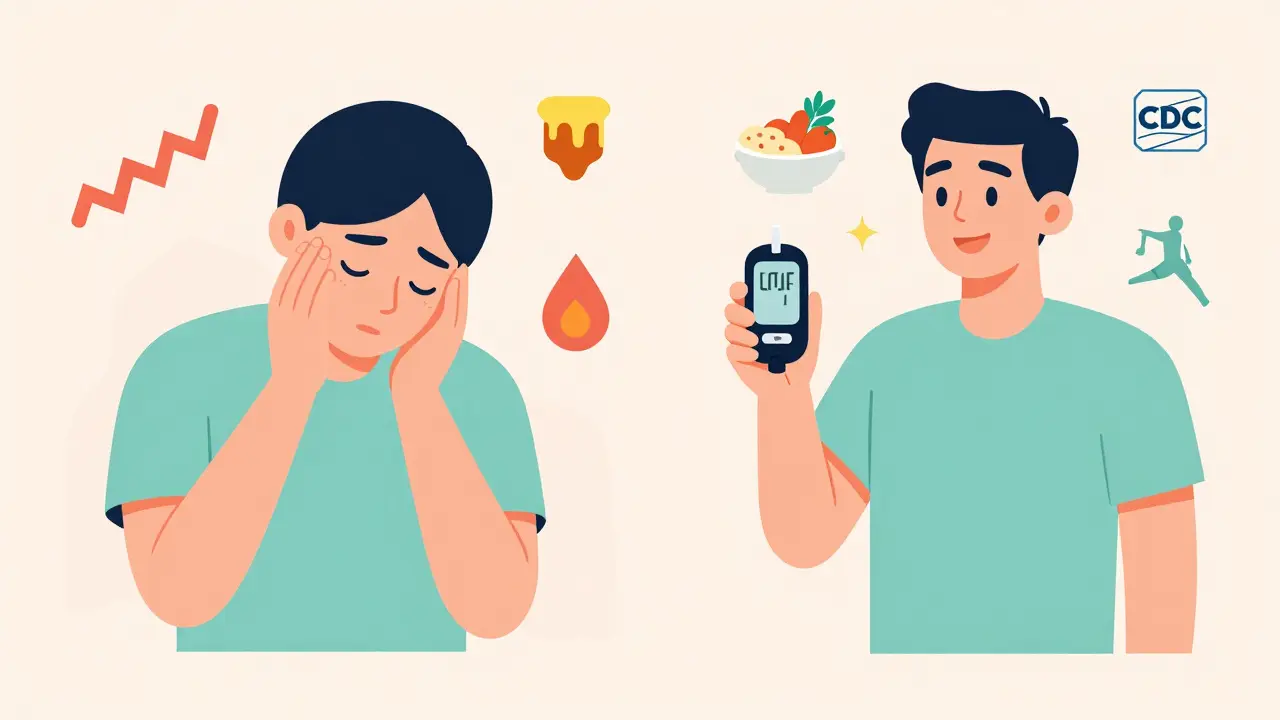
If you take insulin or sulfonylureas, losing weight can make your blood sugar drop too low. Signs: shakiness, sweating, dizziness. Solution? Talk to your provider before you start losing weight. You may need to lower your dose. Many people reduce insulin by 20-30% as they lose 5-10% of their weight.
Emotional Eating
A 2023 survey found 42% of people with diabetes struggle with stress eating. Try these:
- Keep a food-mood journal: Write down what you ate and how you felt
- Find non-food rewards: A bath, a podcast, a walk
- Join a support group: The ADA’s online community has 200,000+ members
What Success Looks Like
Real people, real results:
- “I lost 22 lbs in 6 months. Walked 150 minutes a week. A1C dropped from 7.2% to 5.9%.” - DiabetesWarrior42, ADA Community
- “I added strength training twice a week. Hit a plateau, then lost another 10 lbs. My doctor cut my metformin dose.” - SugarFreeLife, Reddit
- “I used a CGM. Saw that my blood sugar spiked after rice. Switched to quinoa. Lost 15 lbs in 5 months.” - 2024 Diabetes Food Hub Survey
The common thread? Consistency. Not perfection. Small changes, repeated daily, add up.
Where to Get Help
You don’t have to do this alone. The CDC’s National Diabetes Prevention Program (NDPP) offers structured, evidence-based coaching. It’s free or low-cost for many people with Medicare or private insurance. The program includes:
- 16 core sessions over 6 months
- 6 follow-up sessions
- A certified lifestyle coach
- Group support
Most sessions are now virtual. You can join from home. The CDC reports 65% of participants complete the program-and most lose 5-7% of their weight.
If you’re eligible, ask your doctor for a referral. You can also find a program at www.cdc.gov/diabetes/prevention.
Long-Term Success: It’s About Maintenance
Losing weight is hard. Keeping it off is harder. The Look AHEAD trial found that only 27% of people kept off 10% of their weight after 4 years. Why? Most programs stop after 6-12 months. But your body doesn’t.
Think of weight management like brushing your teeth. It’s not a sprint. It’s daily maintenance. Keep tracking. Keep moving. Keep checking in with your doctor. Use apps. Stay connected to your support group. Celebrate non-scale wins: better sleep, more energy, clothes fitting looser.
The goal isn’t to be thin. It’s to be healthy, stable, and free from the constant battle of high blood sugar.
Kevin Siewe
March 21, 2026 AT 13:41Jacob Hessler
March 22, 2026 AT 14:56Amber Gray
March 23, 2026 AT 11:31Danielle Arnold
March 25, 2026 AT 05:31James Moreau
March 27, 2026 AT 00:03J. Murphy
March 27, 2026 AT 07:07Jesse Hall
March 28, 2026 AT 08:43Alex Arcilla
March 30, 2026 AT 09:35Brandon Shatley
March 30, 2026 AT 23:53Caroline Dennis
April 1, 2026 AT 04:21Korn Deno
April 2, 2026 AT 19:45Rama Rish
April 3, 2026 AT 02:53Chris Farley
April 4, 2026 AT 00:16