Counterfeit generics: protecting yourself from fake medications
 Mar, 29 2026
In March 2025, Interpol coordinated a massive global sting known as Operation Pangea XVI. The result was startling: over 50 million doses of unapproved and counterfeit medicines were seized worldwide. Authorities shut down 13,000 illegal websites and social media channels used to sell these dangerous products. This isn't just a law enforcement statistic; it represents real danger lurking in your medicine cabinet. As we move through 2026, the sophistication of criminal networks producing Counterfeit GenericsFalsified versions of off-patent drugs that mimic authentic products but contain incorrect ingredients or no active substance at all. has reached an alarming level. Dr. Scott Gottlieb, former FDA Commissioner, warned in early 2025 that criminal groups are now using pharmaceutical-grade manufacturing equipment. If you rely on affordable medications, understanding how to distinguish a life-saving pill from a placebo-or worse-is critical.
The problem goes beyond simple fraud. A legitimate generic medicine passes rigorous testing to prove bioequivalence, meaning it performs exactly like the brand-name version. Counterfeits bypass this entirely. They enter the supply chain through illegal channels with zero quality control. According to the Pharmaceutical Security Institute, there were 6,424 confirmed incidents of pharmaceutical counterfeiting globally in 2024 alone, a 38% jump from pre-pandemic levels. When criminals inject fake pills into legitimate supply chains, they undermine the core value of generics: affordability without compromising safety. The World Health Organization estimates that in low- and middle-income countries, at least one in ten medicines is substandard or falsified. Even in regulated markets, the risk exists.
Understanding the Difference Between Real and Fake
To protect yourself, you first need to grasp the technical gap between a certified generic and a fake one. Legitimate generics must demonstrate they deliver the same therapeutic effect as the reference product. Regulatory bodies require bioequivalence within a strict range of 80% to 125% of the reference product's pharmacokinetic parameters. Counterfeit manufacturers ignore these rules completely.
A study published in The American Journal of Tropical Medicine and Hygiene revealed a grim statistic: nearly half (52.8%) of counterfeit medicines detected contain no active pharmaceutical ingredient (API) whatsoever. In some cases, they substitute the missing API with harmful substances like chalk, arsenic, or different drugs entirely. This is particularly dangerous with high-demand categories. In 2025, U.S. Customs intercepted fake versions of semaglutide (often known by the brand Ozempic), insulin, and erectile dysfunction drugs entering from Asia. An Iowa pharmacy even faced a $25,000 fine in August 2025 for selling these fakes, proving that counterfeits sometimes penetrate legal retail environments.
Here is how you can compare the two based on verified characteristics:
| Feature | Authentic Generic | Counterfeit Generic |
|---|---|---|
| Active Ingredient | Precise dosage (verified) | Often 0-30% required dose or toxic substitutes |
| Regulatory Approval | FDA, EMA, or TGA approved | No approval; operates in regulatory blind spots |
| Packaging Quality | Holograms, batch codes, spelling correct | Fuzzy logos, misspellings, missing safety seals |
| Price Point | Standard market price | Often 30-50% below legitimate generic prices |
| Supply Chain | Distributed via licensed wholesalers | Sold via dark web, social media, unregistered sites |
High-Risk Categories and Emerging Threats
Not all medicines attract counterfeiters equally. Criminals look for high demand and high margins. In 2024 and 2025, the 'lifestyle' and weight-loss sectors became prime targets. Semaglutide and tirzepatide saw massive growth in illicit shipments. Data analyzed by the Partnership for Safe Medicines showed 2,465 bulk foreign shipments of these drugs entered the U.S. market for inspection between late 2023 and early 2025. Of those, almost 200 were improperly allowed in despite legal prohibitions.
Other frequently counterfeited categories include antibiotics, painkillers, hormones, and psychotropic medications. The consequences of failing treatment with fake antibiotics are especially dire. Ineffective antibiotics contribute to antimicrobial resistance, a crisis estimated to cause 10 million deaths annually by 2050. Furthermore, in May 2025, Colombia's surveillance agency flagged fraudulent batches of major oncology biologics, highlighting that cancer treatments are also vulnerable. While African regions accounted for 42% of all substandard medicines found globally, the threat has expanded. In South Africa, police seized R2.2 million worth of counterfeits in Gqeberha in August 2025, disrupting a sophisticated supply chain that had infiltrated local markets.
Verification Techniques You Can Use at Home
You do not need a laboratory to spot many red flags. Simple visual inspections can save lives. Start by examining the packaging. Counterfeit operations often cut costs on printing. Look for spelling errors on the label, inconsistent fonts, or blurry logos. Legitimate manufacturers have strict quality assurance protocols for their branding.
- Check the National Drug Code (NDC): In the U.S., every prescription drug bottle should have a unique NDC number. You can cross-reference this with the official database.
- Inspect the Tablet: Break the seal. Look at the pill itself. Is the color uneven? Are the edges chipped differently than before? If the texture feels gritty or crumbles easily, be suspicious.
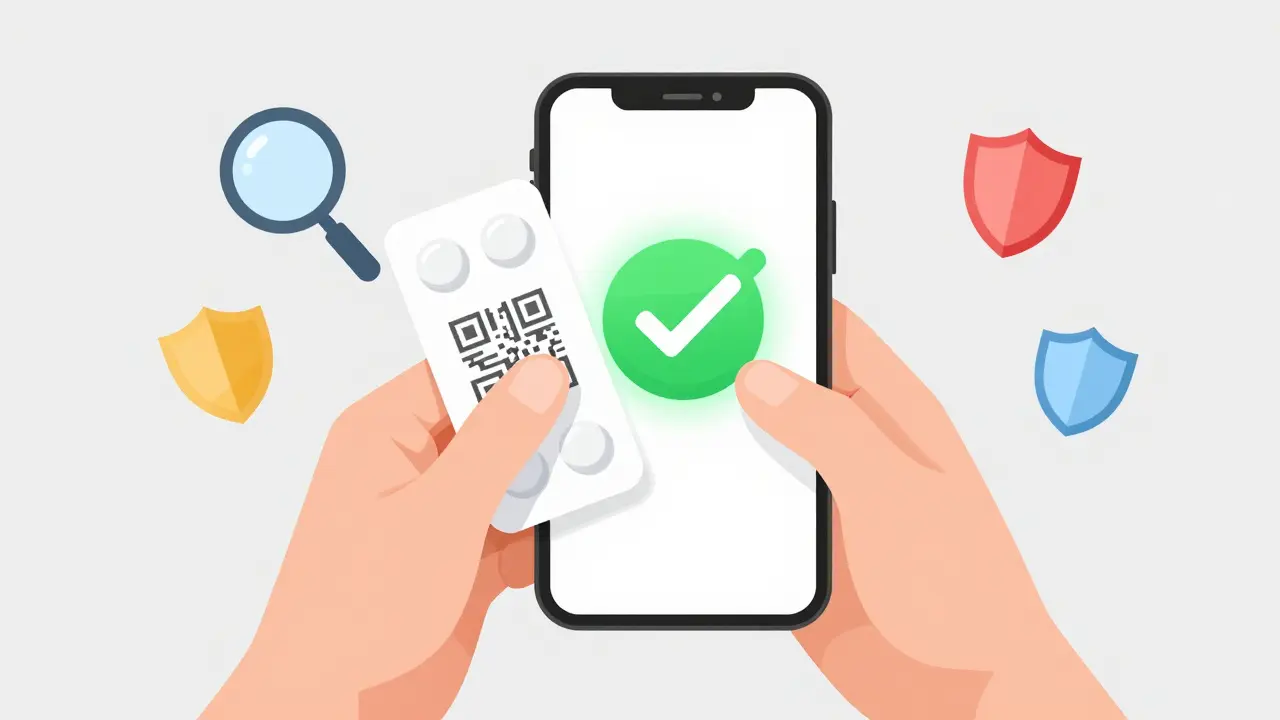
- Use Authentication Tools: Major companies like Novo Nordisk have launched systems like "Verify Your Pen." In Q3 2025, this system processed 2.1 million authentications. Scanning the code on your package confirms its journey through the supply chain.
- Scan QR Codes: Many regions, including India and parts of the EU, now mandate QR codes on packaging. India mandated this for active ingredient containers in January 2023. A legitimate scan should link directly to the manufacturer's database, not a generic landing page.
If you suspect a medication is fake, do not stop taking your prescribed treatment immediately. Consult your doctor. Then, utilize resources like Pfizer's Anti-Counterfeiting Hotline or the International Medical Products Anti-Counterfeiting Taskforce (IMPACT). Reporting helps dismantle these networks before they harm others.
Buying Safely in a Complex Digital Market
The rise of e-commerce made buying medicine easier but also more dangerous. 89% of illegal online pharmacies don't even ask for prescriptions because they are selling fake stock. Before buying online, verify the pharmacy's credentials. Look for the VIPPS (Verified Internet Pharmacy Practice Sites) seal. In Australia and other Commonwealth countries, ensure the site displays accreditation from the relevant board of pharmacy.
Avoid sites that hide their physical street address. Former FDA Commissioner Margaret Hamburg noted that 50% of medicines sold by online pharmacies hiding their location are fake. If a deal looks too good to be true-prices 50% lower than the average-it likely is. Be wary of emails or pop-ups advertising "miracle cures." Legitimate health services rarely spam users.
Long-Term Safety Strategies
Regulatory responses are adapting, but they face an uphill battle. The EU implemented the Falsified Medicines Directive in 2019, requiring safety features on packaging. However, adoption varies wildly. Only 32% of pharmacies in low-income countries have access to verification tools. Until global infrastructure catches up, individual vigilance remains the strongest shield. Keep an eye on updates from the FDA or your country's therapeutic goods administration regarding new guidance. In November 2025, the FDA announced enhanced verification requirements for high-risk generics, signaling stricter controls on importation.
Technology is also turning the tide. Blockchain verification systems reduced counterfeit incidence by 22% in pilot programs across 15 countries since 2023. These systems create an immutable ledger of every pill's movement from factory to patient. As these tools become cheaper and more widespread, the ability to verify a drug's history will improve significantly. For now, trust your instincts. If something feels wrong about the pill, the package, or the seller, pause and verify.
Calvin H
March 30, 2026 AT 18:15Great info but most people don't actually check their pills these days.
dPhanen DhrubRaaj
March 31, 2026 AT 14:05here in India the QR code rules work well but enforcement is spotty in smaller towns so improvement is still needed
Cameron Redic
April 1, 2026 AT 06:46You people always panic about fake meds until they realize they bought them online anyway and trust issues are rampant now
Adryan Brown
April 1, 2026 AT 21:10The supply chain complexity involved in distributing generics is truly staggering when you consider every step. From the initial manufacturing facility to the final local pharmacy distribution center, dozens of hands touch each pill. Most consumers do not realize how vulnerable the intermediate logistics providers are to infiltration by bad actors. History has shown us that pharmaceutical fraud is nothing new compared to the current digital threat landscape. However the sophistication of equipment available to criminals today creates a much higher risk profile overall. I remember reading reports from early in the year regarding bioavailability testing failures in imported batches specifically. These failures suggest that visual inspection alone is insufficient for detecting subtle chemical inconsistencies. We must rely more heavily on the serialization data embedded in packaging materials moving forward. Blockchain technology offers a promising solution for creating immutable records of movement through the network. Yet adoption rates remain low among smaller vendors who lack the necessary infrastructure resources. Regulatory bodies are pushing hard for compliance but gaps exist in international jurisdiction enforcement protocols. Individual responsibility cannot be dismissed as a primary defense strategy against these sophisticated operations. Scanning the batch code provides immediate validation against manufacturer databases in real time scenarios. Education campaigns need to focus on identifying physical anomalies like inconsistent fonts on the labels. Ignoring these warning signs could lead to severe health outcomes for vulnerable patient populations globally.
William Rhodes
April 2, 2026 AT 21:17We must see this situation as a chance for growth in security measures rather than just fearmongering about criminal networks.
Kendell Callaway Mooney
April 4, 2026 AT 01:20Always check the NDC number before purchasing anything online it is the most reliable metric available to consumers right now.
Christopher Curcio
April 4, 2026 AT 19:47Bioequivalence ranges of eighty percent to one twenty five percent are critical for pharmacokinetic parameters in therapeutic equivalence evaluation.
RONALD FOWLER
April 5, 2026 AT 21:21It really is scary to think how many people might be harmed without even knowing they took a substandard product during treatment cycles.
Biraju Shah
April 5, 2026 AT 23:38People need to stop buying from social media ads regardless of how cheap the prices look because safety cannot be compromised by budget concerns.
Marwood Construction
April 6, 2026 AT 04:10The statistical probability of encountering a falsified medication remains low in regulated environments yet vigilance is required regardless of location.
Vikash Ranjan
April 7, 2026 AT 03:18Honestly this article ignores that brand name drugs also have recall issues so why focus solely on generic counterfeiting statistics.
Angel Ahumada
April 7, 2026 AT 23:38To discuss medication safety without understanding the broader philosophical implications of trust in modern industrial systems is reductive at best
Dan Stoof
April 8, 2026 AT 16:50YES!!! Everyone should verify their packages and scan codes constantly because health matters so much!!!!