Control and Choice: How Autonomy in Medication Selection Empowers Patients
 Dec, 15 2025
It’s your body. So why shouldn’t you get to choose what goes into it?
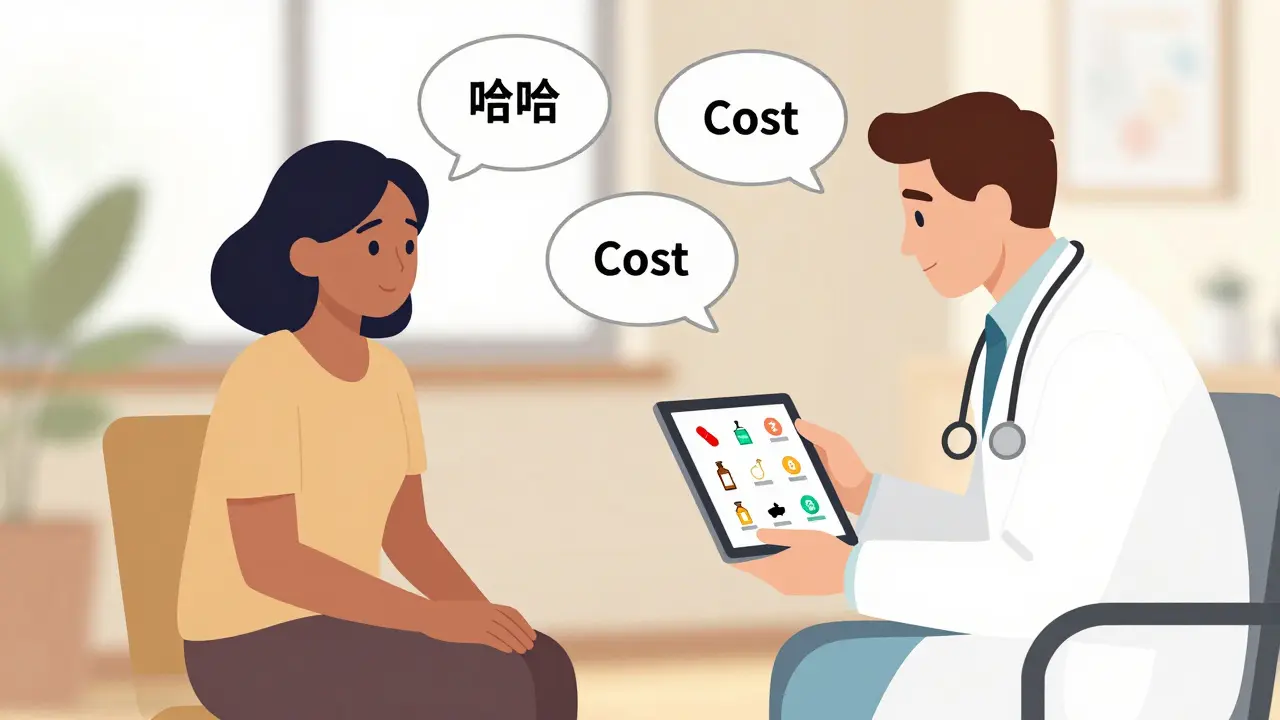
Imagine this: your doctor hands you a prescription for a new medication. They explain it’ll help with your symptoms, list a few side effects, and say, "This is what most people take." You nod, pay the co-pay, and leave. But deep down, you’re unsure. Maybe you’re worried about weight gain. Or you hate swallowing pills. Or you heard a story online about someone who had a bad reaction. You don’t say anything. You take it anyway. And then, two weeks later, you stop. Not because it didn’t work-because you felt like you had no real say in the first place.
This isn’t rare. In fact, it’s the norm in too many doctor’s offices. But a quiet revolution is happening in healthcare-one that puts medication autonomy at the center. It’s not just about signing a form. It’s about having real control over the drugs you take, based on your values, lifestyle, fears, and goals. And it’s changing how people feel about their treatment.
What does real medication autonomy actually mean?
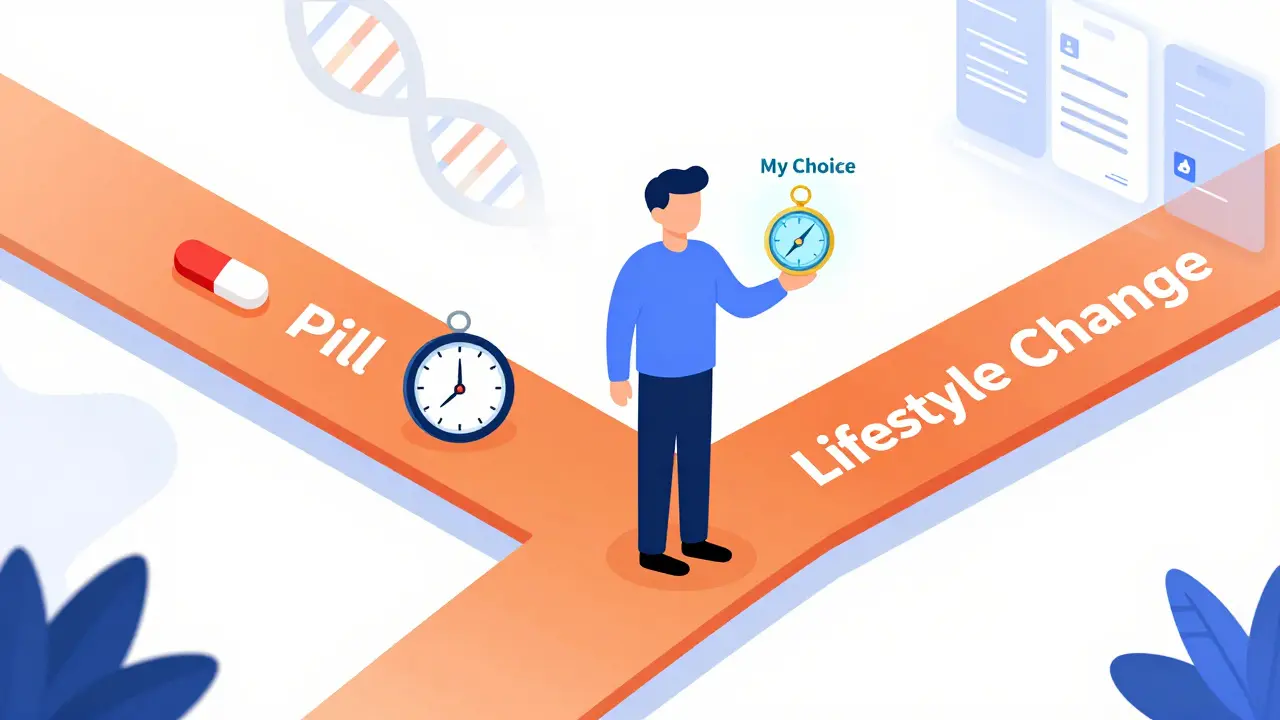
Medication autonomy isn’t just "giving patients options." It’s about ensuring you understand those options well enough to make a decision that’s truly yours. That means knowing the benefits, the risks, the costs, and even the alternatives-like therapy, lifestyle changes, or different formulations.
For example, if you’re prescribed an SSRI for depression, you should know that about half of people see improvement, but 25-30% experience sexual side effects. You should know there are other antidepressants with different side effect profiles. You should know there’s a generic version that costs $15 a month instead of $200. And you should feel safe saying, "I’d rather try therapy first," or "I can’t afford this," without the doctor judging you.
This isn’t theoretical. Studies show patients who are actively involved in choosing their meds are 82% more likely to stick with them. That’s not because they’re more disciplined-it’s because they didn’t feel forced into it.
The legal and ethical foundation: It’s your right
Legally, you have the right to refuse any medication-even if your doctor thinks it’s the best option. That’s not a gray area. It’s been settled since the 1972 Canterbury v. Spence court case, which ruled doctors must disclose all "material" risks. In 2025, that means more than just reading a pamphlet. It means a conversation.
Medical ethics frameworks like the ones from Beauchamp and Childress define autonomy as two things: liberty (freedom from pressure) and agency (ability to act on your own values). So if your doctor says, "This is the only option," they’re not just being unhelpful-they’re violating basic ethical standards.
And it’s not just about refusing drugs. It’s about choosing between them. Want a liquid instead of a pill because you have trouble swallowing? Ask. Prefer a once-daily dose over three times a day? Say so. Your preferences matter-and they’re part of the medical decision.
Why do so many patients still feel powerless?
Even though autonomy is a legal and ethical standard, it’s not practiced consistently. In 2023, only 45% of primary care doctors regularly used shared decision-making for medications, compared to 68% for surgeries. Why the gap?
- Time: Most appointments are 15 minutes. Talking through five medication options? Impossible.
- Assumptions: Doctors sometimes assume low-income patients won’t afford brand drugs-or that older patients won’t understand complex info-and skip the discussion.
- System limits: Most electronic health records don’t have a field to document patient preferences. If it’s not in the system, it’s not treated as real.
- Cultural barriers: In some communities, questioning a doctor is seen as disrespectful. Patients stay silent.
And then there’s the influence of direct-to-consumer ads. A 2023 FDA report found 28% of patients ask for medications they saw advertised-even when those aren’t the best fit. That’s not autonomy. That’s marketing shaping choices.
Real stories: When autonomy works-and when it doesn’t
One patient on Reddit shared how her cancer doctor respected her religious belief that suffering was part of healing. She refused opioids. Instead, they built a non-opioid pain plan with acupuncture, heat therapy, and frequent non-narcotic doses. She stayed in control. She felt heard.
Another, on PatientsLikeMe, said her doctor prescribed Ozempic for diabetes but refused to discuss alternatives when she mentioned nausea. She switched providers. That’s autonomy in action-finding someone who would listen.
But disparities remain. A 2023 survey found 74% of White patients felt involved in medication decisions. Only 49% of Black patients and 53% of Hispanic patients did. That’s not just a communication issue-it’s systemic.
What’s changing-and how you can use it
Change is happening. In 2024, the American Society of Health-System Pharmacists launched the Medication Autonomy Framework, a set of 12 evidence-based standards for supporting patient choice. Medicare Advantage plans must now document patient medication preferences by 2025. Pharmacies are offering Medication Therapy Management (MTM) services-free consultations with pharmacists to review your meds and help you weigh options.
Here’s how you can take control:
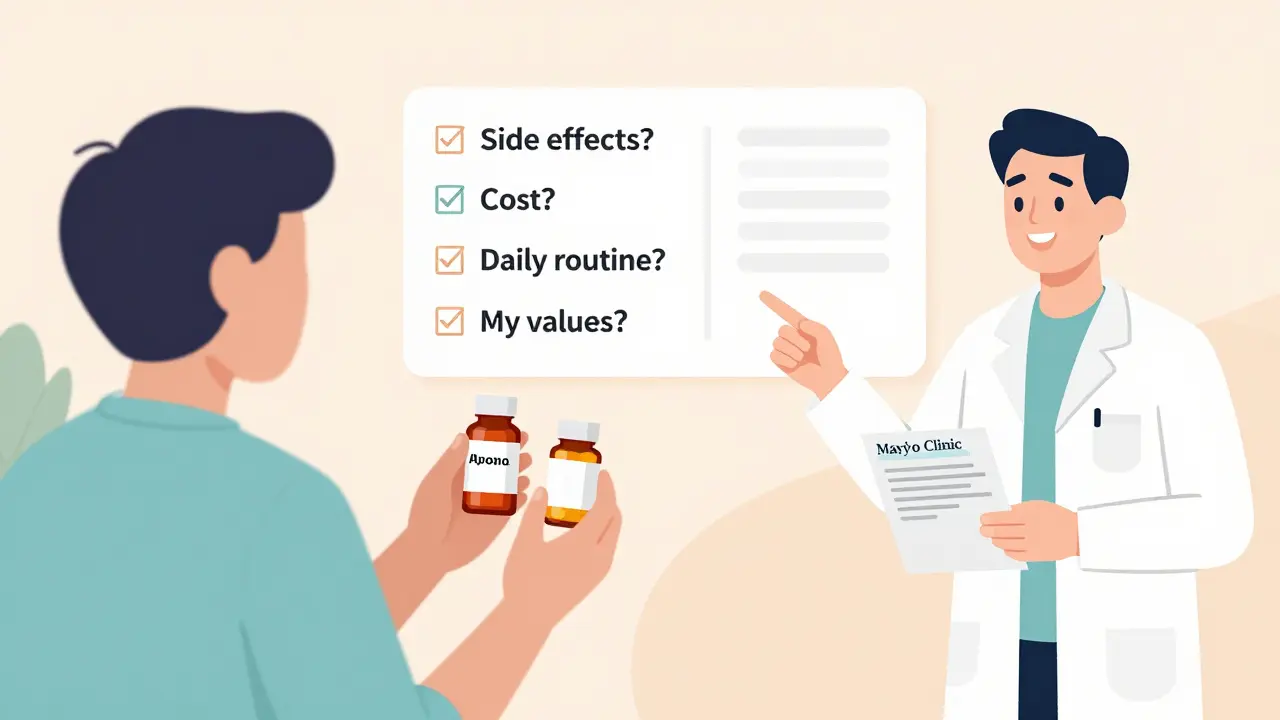
- Ask for alternatives: "What are the other options?" Not just other drugs-what about non-drug treatments?
- Ask about cost: "Is there a generic? Is there a cheaper alternative?" Cost is part of your decision.
- Ask about daily life: "How will this affect my sleep, sex life, energy, or ability to work?" Side effects aren’t just clinical-they’re personal.
- Ask for time: "Can we schedule a follow-up to talk more about this?" You’re allowed to need more time.
- Use decision aids: Mayo Clinic and the CDC offer free, evidence-based tools to compare medications side by side.
The future: Personalized meds and digital tools
The next big shift? Personalization. Pharmacogenomic testing-checking your genes to see how you’ll react to certain drugs-is now under $250. That means your doctor could soon say, "Based on your DNA, this drug will likely cause nausea in you. Let’s avoid it."
Digital tools are rising too. Apps that help you track side effects, compare costs, or even simulate what it’s like to take a drug daily are becoming more common. But here’s the catch: 37% of adults over 65 say they struggle to use these apps. If we’re going to make autonomy universal, we need tools that work for everyone-not just the tech-savvy.
It’s not about being difficult. It’s about being engaged.
Some doctors still see patient autonomy as a hurdle. But the best clinicians see it as a partnership. Your values aren’t "inconvenient." They’re essential. Your fear of weight gain? Your dislike of injections? Your need to work night shifts? Those aren’t distractions-they’re data points that help build a better treatment plan.
Medication autonomy isn’t about rejecting medical advice. It’s about making sure the advice fits you. And that’s not just ethical-it’s effective. When you choose your meds, you’re more likely to take them. You’re more likely to feel in control. And you’re more likely to live well.
The system isn’t perfect. But you don’t have to wait for it to fix itself. You can start today-with one question: "What are my options?"
Can I refuse a medication even if my doctor recommends it?
Yes. You have the legal and ethical right to refuse any medication, even if your doctor believes it’s the best option. This right is protected under the principle of informed consent, established in U.S. law since the 1972 Canterbury v. Spence case. Doctors must provide clear information about risks and benefits, but they cannot force treatment. Refusing a medication doesn’t mean you’re being difficult-it means you’re exercising your autonomy.
What if my doctor says there’s only one option?
That’s often not true. For most conditions-depression, high blood pressure, diabetes, chronic pain-there are multiple drug classes, formulations, and non-drug alternatives. If your doctor says there’s only one option, ask: "What are the other classes of drugs I could try?" or "Are there non-medication approaches I should consider?" If they dismiss the question, it may be time to seek a second opinion or find a provider trained in shared decision-making.
Does cost factor into medication autonomy?
Absolutely. Autonomy means making a decision based on your full situation-including finances. A 2023 KFF analysis found 32% of Medicare beneficiaries changed or skipped doses because of cost. If a medication is unaffordable, that’s not a personal failure-it’s a system issue. You have the right to ask about generics, patient assistance programs, or lower-cost alternatives. Pharmacists and patient advocacy groups can help you find savings options.
How do I know if I have decision-making capacity?
Decision-making capacity means you can understand the information, appreciate how it applies to you, weigh the pros and cons, and communicate your choice. You don’t need to be a medical expert-you just need to be able to think through the options clearly. If you’re confused, anxious, or overwhelmed, it’s okay to ask for more time, bring someone with you, or request written materials. Capacity isn’t fixed; it can change with stress, sleep, or illness.
Are there situations where autonomy doesn’t apply?
Autonomy applies when you have decision-making capacity. In emergencies, when someone is unconscious or severely impaired, doctors may act in their best interest under "implied consent." But once a patient regains capacity, autonomy returns. Also, autonomy doesn’t mean choosing something dangerous or ineffective-it means choosing from a full range of reasonable, evidence-based options. Doctors can refuse to prescribe something unsafe, but they must explain why and offer alternatives.
What if I change my mind after starting a medication?
You can change your mind at any time. Medication autonomy isn’t a one-time decision-it’s an ongoing process. If you start a drug and experience side effects, realize it doesn’t fit your lifestyle, or simply feel it’s not right, talk to your provider. Stopping a medication doesn’t mean you failed. It means you’re responding to your body and your needs. Many people switch meds multiple times before finding the right fit.
Jocelyn Lachapelle
December 15, 2025 AT 13:29Christina Bischof
December 16, 2025 AT 14:07Lisa Davies
December 16, 2025 AT 17:33Michelle M
December 17, 2025 AT 16:51Melissa Taylor
December 18, 2025 AT 12:15Raj Kumar
December 19, 2025 AT 05:01Mike Nordby
December 20, 2025 AT 16:24John Samuel
December 21, 2025 AT 23:55Cassie Henriques
December 23, 2025 AT 14:37Benjamin Glover
December 24, 2025 AT 07:28RONALD Randolph
December 24, 2025 AT 20:26Nupur Vimal
December 26, 2025 AT 12:26Jake Sinatra
December 28, 2025 AT 04:26Sai Nguyen
December 30, 2025 AT 00:35