Clinical Trial Data vs Real-World Side Effects: What You Need to Know
 Dec, 1 2025
Side Effect Detection Calculator
The article explains that clinical trials often miss rare side effects because they're small and short-term. This calculator shows how likely a trial is to detect a side effect based on trial size and occurrence rate.
Key facts from the article:
- Phase 3 trials average 381 patients
- Rare side effects may occur in 1 in 500 people
- Only 2-5% of actual side effects get reported
This tool calculates the probability of detecting a side effect based on clinical trial design.
When you pick up a new prescription, the safety info on the label comes from clinical trials. But what you experience at home might be totally different. That’s not a mistake. It’s a gap-and it’s bigger than most people realize.
What Clinical Trials Actually Show
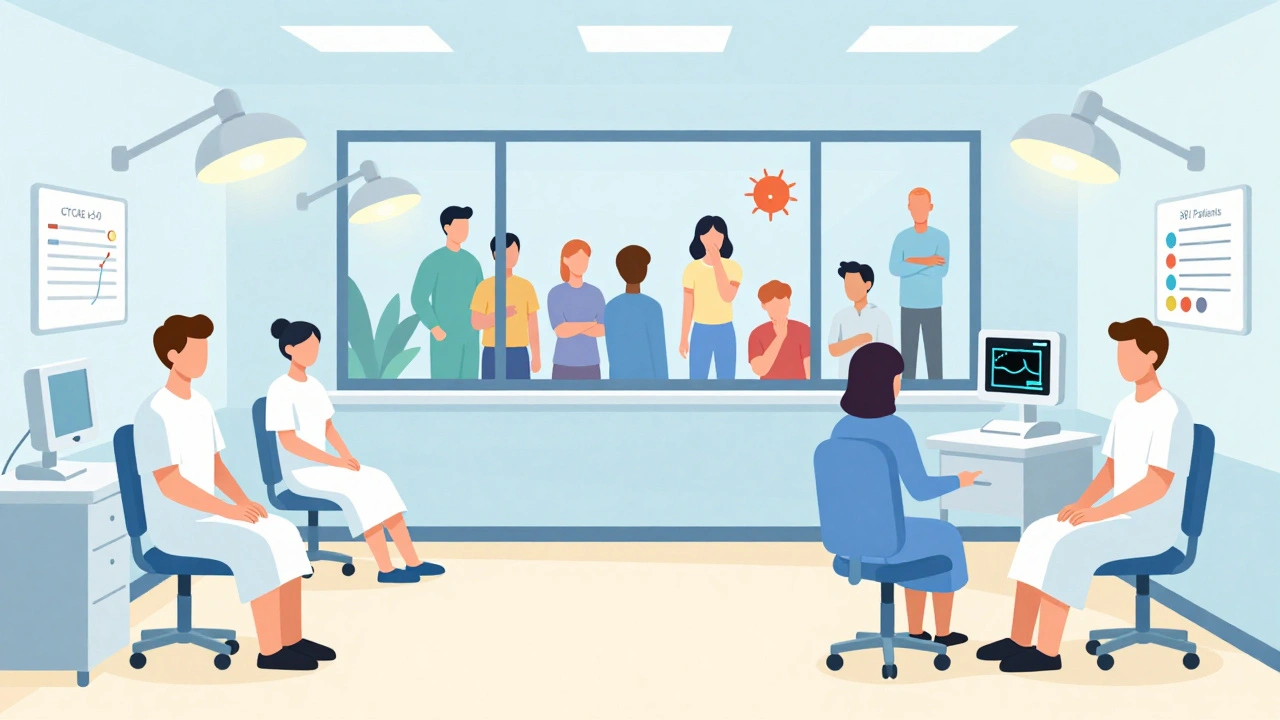
Clinical trials are designed to answer one question: Does this drug work under perfect conditions? To do that, they control everything. Participants are carefully selected. They’re monitored weekly. Side effects are recorded using strict rules-the Common Terminology Criteria for Adverse Events (CTCAE), version 5.0, which lists 790 specific side effects and grades them from mild (Level 1) to fatal (Level 5).
But here’s the catch: these trials rarely include older adults, pregnant women, or people with multiple health conditions. The average Phase 3 trial enrolls just 381 patients. That’s not enough to catch side effects that happen in 1 out of 500 people. And if a side effect only shows up after six months? The trial’s probably over by then.
Take rosiglitazone, a diabetes drug approved in 1999. The trials showed it was safe. But real-world data later proved it raised heart attack risk by 43%. That’s not because the trial was flawed-it was designed to find common, immediate side effects. Rare, long-term ones? Those slip through.
What Real-World Data Reveals
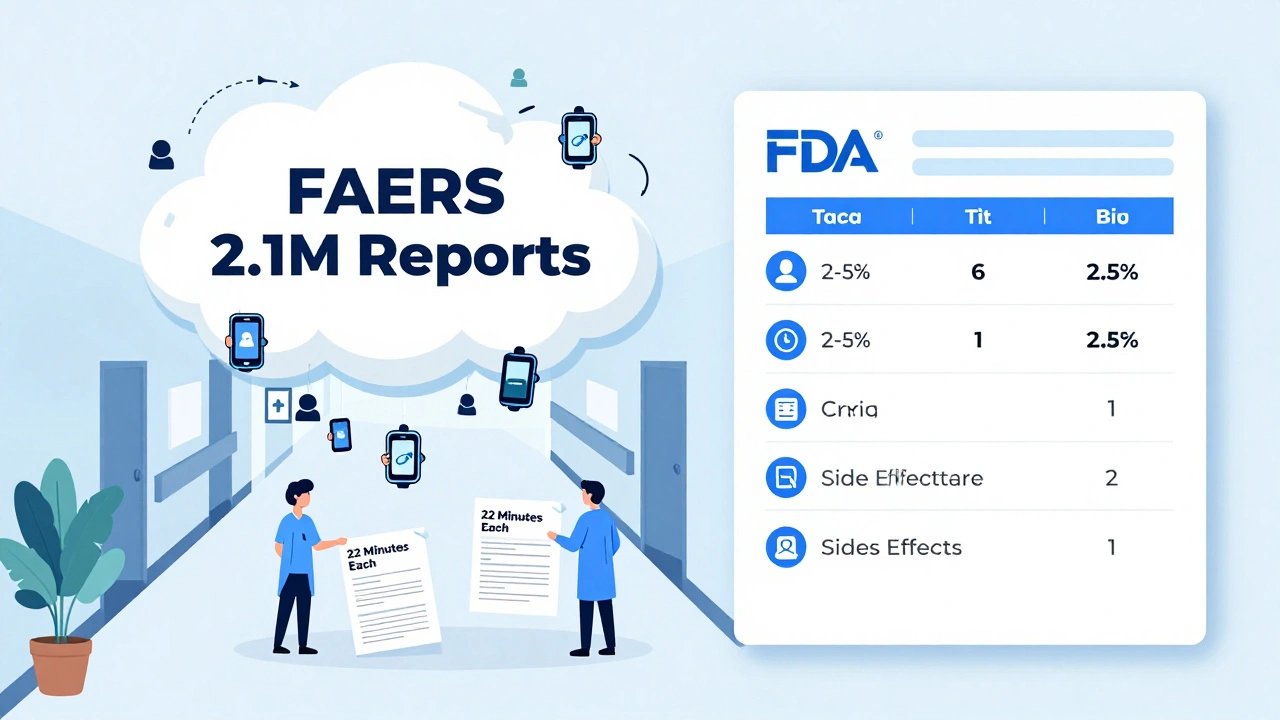
Real-world side effect data comes from everywhere: hospitals, pharmacies, insurance claims, even patient apps. The FDA’s Adverse Event Reporting System (FAERS) got over 2.1 million reports in 2022. That’s up from 1.4 million in 2018. These aren’t controlled studies. They’re messy, incomplete, and sometimes misleading. But they’re real.
Real-world data caught the heart failure risk with pioglitazone after 10 years of use-something no trial could have tracked that long. It flagged disabling side effects from fluoroquinolone antibiotics in 1.2 million patient records, leading to EU restrictions in 2019. And it’s not just big databases. Apps like MyTherapy, used by 1.2 million people, found fatigue from immunotherapy drugs was reported 27% more often than in trials. Why? Because patients felt it at home, not just during clinic visits.
But here’s the problem: only 2-5% of actual side effects ever get reported to FAERS. And 34% of the ones that do get recorded in electronic health records lack enough detail for regulators to act. A 2021 AMA survey found only 12% of doctors consistently report side effects-because it takes 22 minutes per report.
The Big Difference: Causality vs. Scale
Clinical trials are built to prove cause and effect. Random assignment. Placebo controls. Blinded assessments. If a side effect shows up more often in the drug group than the placebo group, you can say the drug likely caused it.
Real-world data can’t do that. It sees patterns, not proof. In 2018, real-world studies claimed anticholinergic drugs caused dementia. But deeper analysis showed patients already had early dementia symptoms when they started the meds-it wasn’t the drugs causing it, it was the disease. That’s confounding. And it’s everywhere in real-world data.
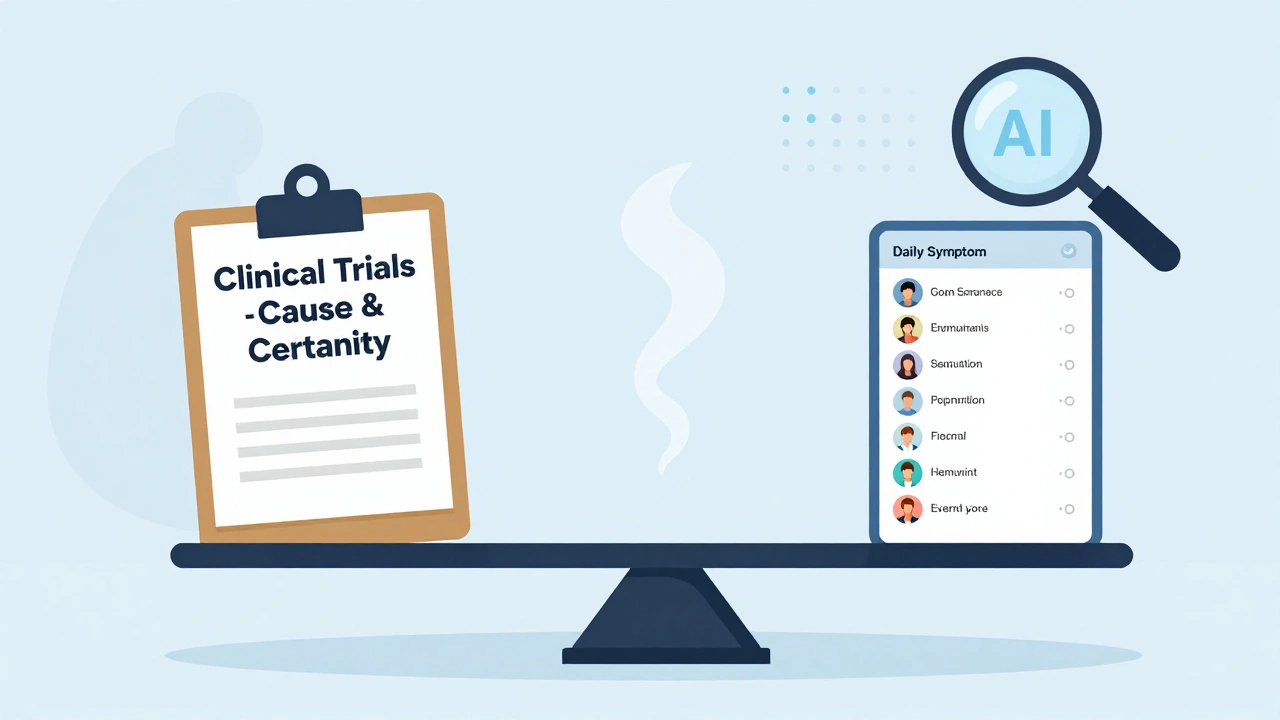
So clinical trials give you certainty. Real-world data gives you scope. One tells you what can happen. The other tells you what does happen, to who, and how often.
Why Patients See Different Side Effects
Patients notice things trials miss. A 2022 survey by the National Patient Advocate Foundation found 63% of users experienced side effects not listed on their FDA-approved label. Over 40% of those were moderate to severe-enough to disrupt sleep, work, or daily life.
On Reddit’s r/Pharmacy, pharmacists say 78% of the time, real-world GI side effects from GLP-1 agonists like semaglutide don’t match what’s in the trial data. Patients report nausea lasting weeks, not days. Loss of appetite so severe they lose 15 pounds. These aren’t rare. They’re common in real life, but too messy for trial protocols.
And timing matters. In trials, side effects are checked on scheduled visits. At home, they happen at 2 a.m. after dinner, or during a work meeting. That’s why digital tools are changing the game. When patients track symptoms daily in apps, they catch patterns no doctor’s office visit ever would.
How Regulators Use Both
The FDA doesn’t rely on one or the other anymore. Since the 21st Century Cures Act in 2016, real-world evidence has become part of the approval process. Between 2019 and 2021, 87% of new drug approvals included real-world data in post-market safety plans. In 2022, 67% of approvals did-up from 29% in 2017.
The FDA’s Sentinel Initiative now watches 300 million patient records in near real-time. It uses 17 different analysis methods to spot signals-like a spike in liver damage after a new drug launch. It found safety issues 6-12 months faster than old methods.
But regulators still need clinical trials for the first red flag. Real-world data can’t prove a drug causes a side effect-it can only raise the alarm. That’s why the FDA still requires trials for new drugs. Real-world data is the early warning system. Trials are the foundation.
What’s Changing Now
Companies aren’t waiting for approval to collect real-world data anymore. Seventy-three percent of top pharma firms now build real-world monitoring into late-stage trials. Pfizer, Merck, and Novo Nordisk are using wearables and apps to track side effects during trials-not just in clinics, but in patients’ homes.
AI is speeding things up. Google Health’s 2023 study analyzed 216 million clinical notes and found 23% more drug-side effect links than traditional methods. Apple’s Heart Study, with nearly 420,000 participants, proved mobile tech can capture data at trial scale.
But experts warn: real-world data won’t replace trials. Dr. Nancy Dreyer from IQVIA says it’s a tiered system: trials set the baseline. Real-world data watches what happens after.
What This Means for You
If you’re on a new medication, don’t assume the label tells you everything. Side effects listed are the common ones from controlled trials. What you feel might be different-and it might be normal.
Track your own symptoms. Use an app. Write them down. If something feels off, tell your doctor. And if they say, “It’s not in the trial data,” ask: “Has this been seen in real patients?”
Doctors need better training. Only 38% can correctly interpret real-world evidence without special education. And only 15% of U.S. medical schools teach it. That’s changing, but slowly.
The future isn’t choosing between trials and real-world data. It’s using both. Trials give you confidence. Real-world data gives you context. Together, they give you a fuller picture of what a drug really does.
parth pandya
December 1, 2025 AT 23:14Man i been on metformin for 5 years and the label says "mild stomach upset" but bro its like my gut is staging a coup every morning. Trials dont show the 3am bathroom marathons or the brain fog that lasts till lunch. Real world = real life.
Albert Essel
December 2, 2025 AT 23:13This is an exceptionally well-researched and nuanced breakdown of the clinical vs. real-world data dichotomy. The distinction between causality and correlation is critical, and the point about confounding variables in observational data is often overlooked. Thank you for highlighting the FDA’s evolving framework-it’s a necessary evolution in pharmacovigilance.
Jim Schultz
December 3, 2025 AT 13:53Wow. Just… wow. You actually wrote a 2,000-word essay on this? And you expect people to read it? Let me guess-you’re the guy who cites JAMA in a Reddit thread about gummy vitamins. The data’s messy? Yeah, because real people aren’t lab rats. Stop overcomplicating it. If your pill makes you feel like a zombie, stop taking it. End of story.
Kidar Saleh
December 3, 2025 AT 23:31In the UK, we’ve seen this with statins-doctors dismiss muscle pain as "psychosomatic" until the patient’s walking becomes a struggle. Real-world data doesn’t just supplement trials-it corrects the arrogance of controlled environments. We need to trust patients more, not less. The body doesn’t lie, even when the database does.
Chloe Madison
December 4, 2025 AT 09:54As a pharmacist, I can’t tell you how many patients come in saying, "My doctor said this side effect isn’t real." It’s heartbreaking. The label says "occasional dizziness," but they’re falling in the shower. I always tell them: Track it. Write it down. Send it to the FDA. Your voice matters. You’re not exaggerating-you’re documenting reality.
Vincent Soldja
December 5, 2025 AT 05:24Trials are the gold standard. Real-world data is noise. End of discussion.
Makenzie Keely
December 5, 2025 AT 13:41Just had a patient tell me she lost 18 pounds on Ozempic because she "couldn’t eat anything without feeling sick." The label says "nausea"-but that’s like saying "rain" when it’s a hurricane. We need better language. And apps. And more listening. Not just more data.
Francine Phillips
December 6, 2025 AT 11:18My mom’s on a new blood pressure med. She’s been dizzy for three weeks. Doctor said it’s "normal." I looked up the trial data. Dizziness was listed as "rare." She’s not rare. She’s my mom.
Katherine Gianelli
December 7, 2025 AT 23:49It’s not just about side effects-it’s about dignity. When your body betrays you in ways no clinical checklist anticipated, you feel invisible. That’s why I started a community journal for people on GLP-1s. We share our sleepless nights, our grocery lists gone empty, our quiet tears in the bathroom. That’s the data they don’t measure-but it’s the truth that matters.
Joykrishna Banerjee
December 8, 2025 AT 11:32Let’s be real: you’re all just emotional sheep clinging to anecdotal evidence because you don’t understand statistics. The FDA doesn’t approve drugs based on Reddit posts. Real-world data is riddled with selection bias, recall bias, and confirmation bias. If you want to be a medical scientist, learn R. Otherwise, stop posting and take your pills like a grown-up. 🤡