AMD Vitamins: What the AREDS2 Study Says and Who Really Needs Them
 Feb, 2 2026
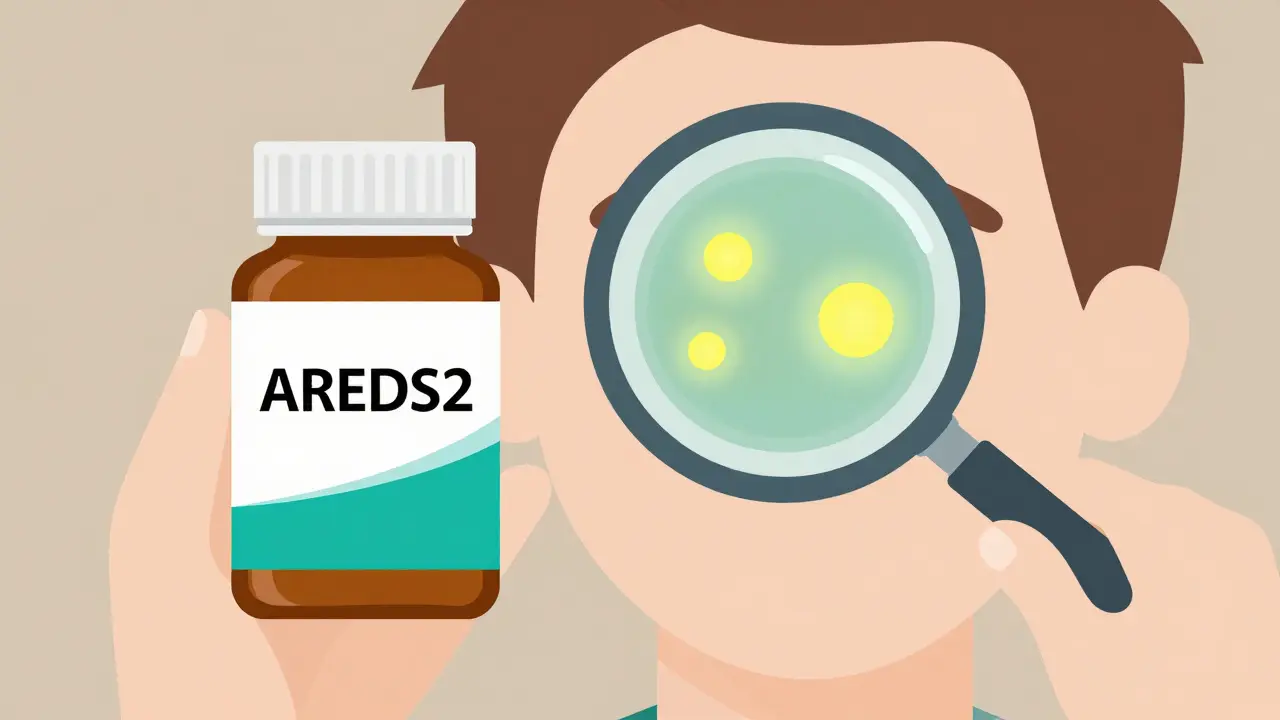
If you’ve been told you have intermediate age-related macular degeneration (AMD), you might have been handed a bottle of colorful pills labeled "AREDS2 vitamins." But do they actually work? And if you only have early signs or no AMD at all, should you be taking them too? The truth isn’t what most people think.
What Are AREDS2 Vitamins?
AREDS2 isn’t just another supplement brand. It’s the name of a major clinical trial - the Age-Related Eye Disease Study 2 - run by the National Eye Institute in the U.S. The goal? To find out if tweaking the original AMD vitamin formula could make it safer and more effective.
The original AREDS formula, from 2001, included high doses of vitamin C, vitamin E, beta carotene, zinc, and copper. It cut the risk of AMD worsening by about 25% over five years for people with intermediate disease. But there was a problem: beta carotene raised the risk of lung cancer in smokers and former smokers.
The AREDS2 study, which ran from 2001 to 2012, replaced beta carotene with two other nutrients: lutein (10 mg) and zeaxanthin (2 mg). These are antioxidants found in green leafy vegetables like spinach and kale. The final formula now includes:
- 500 mg vitamin C
- 400 IU vitamin E
- 10 mg lutein
- 2 mg zeaxanthin
- 80 mg zinc (as zinc oxide)
- 2 mg copper (as cupric oxide)
This isn’t a multivitamin. It’s a targeted, high-dose formulation designed for one specific group of people - and only them.
Who Should Take AREDS2 Vitamins?
The short answer: only people with intermediate AMD or advanced AMD in one eye.
Intermediate AMD means you have many medium-sized drusen (yellow deposits under the retina) or at least one large drusen. It doesn’t mean you’re going blind - but it does mean your risk of developing late-stage AMD is much higher.
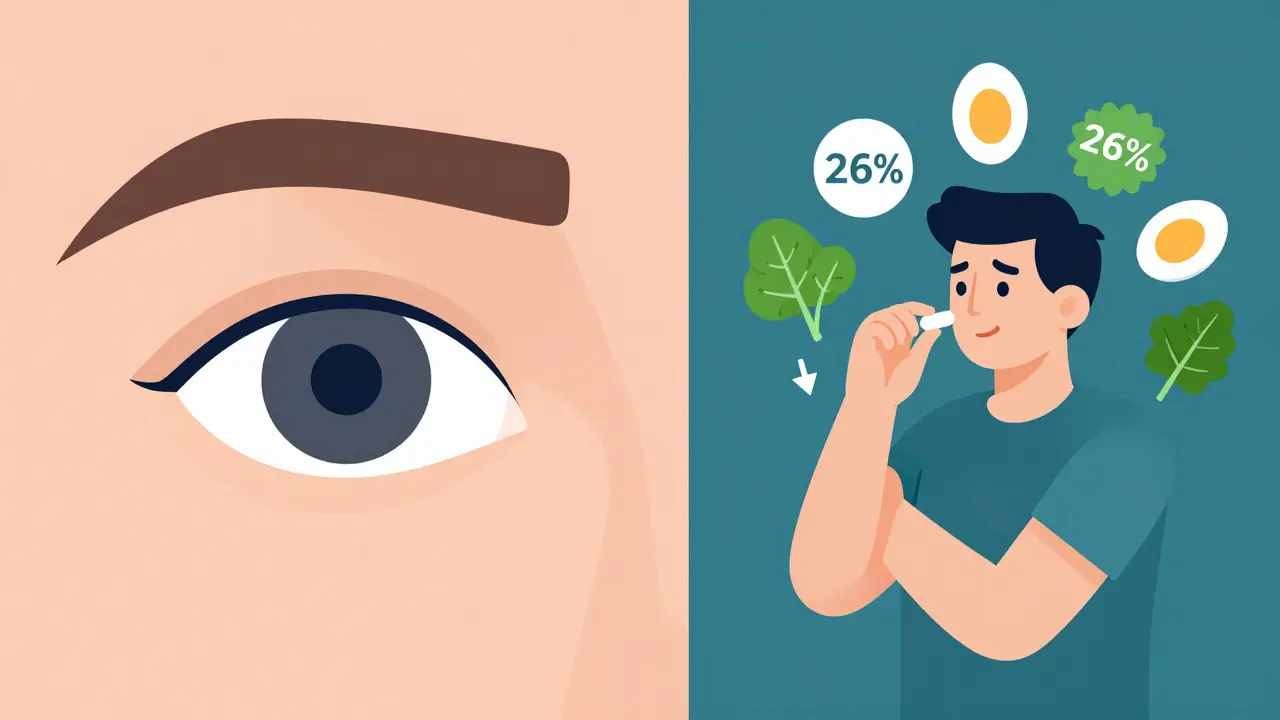
If you have intermediate AMD in one or both eyes, or if you have advanced AMD (geographic atrophy) in one eye and intermediate AMD in the other, AREDS2 vitamins can reduce your risk of progression to late-stage disease by about 26% over 10 years. That’s not a cure. It’s not a way to regain lost vision. But it can help you keep your sight longer.
Here’s what the 10-year follow-up published in JAMA Ophthalmology in 2022 found: people who took lutein and zeaxanthin instead of beta carotene had a statistically significant lower risk of progression to late AMD. The hazard ratio was 0.88 - meaning a 12% reduction in risk compared to the old formula. And crucially, there was no increased lung cancer risk.
For people with low dietary intake of lutein and zeaxanthin, the benefit was even stronger. If you don’t eat spinach, kale, broccoli, or eggs regularly, your body might not be getting enough of these nutrients naturally - making the supplement even more valuable.
Who Should NOT Take AREDS2 Vitamins?
This is where most people get it wrong.
If you have early AMD - small drusen with no vision loss - AREDS2 vitamins won’t help. Multiple studies, including the 2022 JAMA analysis and a 2023 review from Vision-and-Eye-Health.com, confirm this. Taking them won’t prevent AMD from starting. It won’t slow early changes. It’s a waste of money and could even cause side effects.
If you don’t have AMD at all - don’t take them. There’s zero evidence these supplements prevent AMD in healthy eyes. They’re not a general "eye health" pill. They’re a targeted medical intervention for a specific stage of disease.
And if you already have advanced AMD with severe central vision loss? The old thinking was that it was too late. But new data from July 2024 changes that.
New Evidence: AREDS2 Might Help Even in Late-Stage Dry AMD
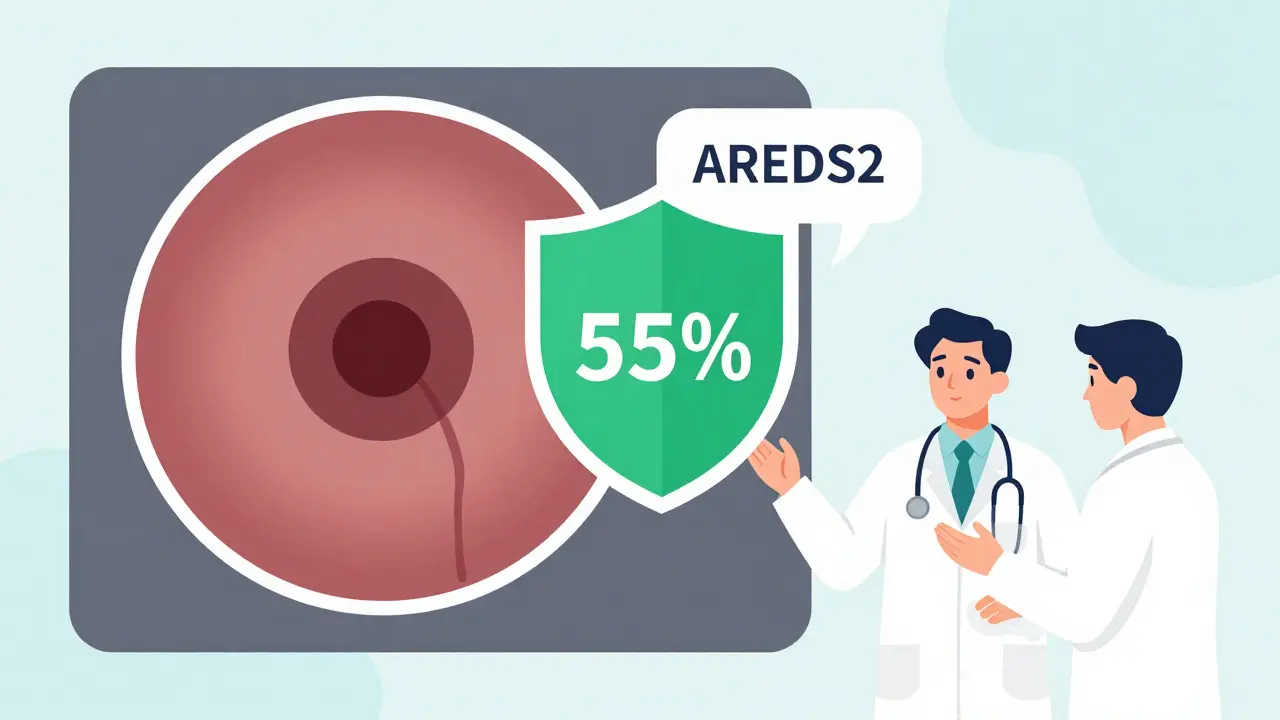
In July 2024, researchers analyzed retinal scans from over 1,200 participants in the original AREDS2 study. They found something surprising: for people with late-stage geographic atrophy (the advanced form of dry AMD), those who had taken AREDS2 supplements for years showed a 55% slower rate of lesion growth over three years - but only if the damaged area was outside the very center of the macula.
This is a big deal. Until now, doctors told people with advanced AMD that supplements wouldn’t help. But this study suggests that if the damage hasn’t reached the fovea - the spot responsible for sharp central vision - the formula might still slow things down.
"Until now AREDS2 supplements weren’t thought to be effective for those with late-stage dry AMD," said Geraldine Hoad of the Macular Society. "By slowing vision loss, they could help people stay independent longer and improve their quality of life."
That doesn’t mean everyone with late AMD should start taking them. But if you’re in this group and haven’t been on the formula, it’s worth discussing with your eye doctor. This isn’t a cure, but it might buy you time.
What About Omega-3s, B Vitamins, or Other Supplements?
The AREDS2 trial also tested adding omega-3 fatty acids (DHA and EPA) and other nutrients. The results? No benefit. Omega-3s didn’t help slow AMD progression. Neither did adding other antioxidants.
Some early studies suggested B vitamins might help prevent early AMD, but the AREDS2 formula didn’t include them - and it didn’t show preventive effects. So don’t waste your money on fish oil pills or B-complex vitamins thinking they’ll protect your eyes. Stick to the proven formula if you’re in the right group.
Can AREDS2 Vitamins Restore Lost Vision?
No. Not even close.
Dr. Emily Chew, who led the 10-year follow-up, says clearly: "AREDS supplements cannot reverse vision damage that has already occurred."
These pills don’t heal the retina. They don’t regenerate cells. They don’t fix blurry vision or blind spots. They only slow down the process of damage getting worse. If you’ve already lost central vision, the supplements won’t bring it back.
Think of it like a seatbelt. It won’t fix a car crash - but it can stop you from getting hurt worse if you’re in one.
Are AREDS2 Supplements Safe Long-Term?
Yes - for the right people.
The 10-year follow-up found no major safety issues with the formula. Zinc can cause stomach upset in some people, and high doses may interfere with copper absorption - which is why copper is included. But overall, the risks are low when taken as directed.
One important note: if you’re a current smoker, do not take any supplement with beta carotene. Even if you’ve quit smoking, avoid it unless your doctor says it’s safe. Lutein and zeaxanthin are the safe alternatives.
Some people report mild side effects like nausea or an upset stomach. Taking the pills with food helps. If you’re on blood thinners or have kidney disease, talk to your doctor before starting. High-dose zinc can interact with certain medications.
How to Take Them Correctly
Take one pill daily. Don’t double up. Don’t take multiple brands. The formula is precise. Too much zinc can be toxic over time. Too little lutein might not help.
Stick to brands that list the exact AREDS2 dosages on the label. Many "eye health" supplements on the market are misleading - they contain low doses of lutein, no zeaxanthin, or no copper. Check the label. If it doesn’t match the six ingredients and dosages above, it’s not the real AREDS2 formula.
And always get your AMD stage confirmed by an eye specialist. Don’t guess. Don’t rely on online quizzes or self-diagnosis. A dilated eye exam is the only way to know if you’re in the group that benefits.
What’s Next?
The science keeps evolving. Researchers are now testing new formulations - including lower-dose zinc, omega-3s combined with other nutrients, and even gene therapies. But for now, the AREDS2 formula remains the gold standard for those who qualify.
If you’ve been told you have intermediate AMD, take the vitamins. If you’re unsure, get a second opinion. If you have early AMD or no AMD, save your money. Eat your greens. Wear sunglasses. Get regular eye checks. Those are the real foundations of eye health.
There’s no magic pill. But for the right person, this one can make a real difference.
Can I take AREDS2 vitamins if I have early AMD?
No. Multiple studies, including the 10-year follow-up published in JAMA Ophthalmology in 2022, show that AREDS2 supplements provide no benefit for people with early AMD (small drusen). Taking them won’t prevent the condition from worsening or stop it from developing. They’re only effective for intermediate or advanced stages.
Do AREDS2 vitamins work for wet AMD?
The AREDS2 formula was not designed for wet AMD, which is caused by abnormal blood vessel growth. Treatments for wet AMD include injections and laser therapy. While some people with wet AMD may also have dry AMD in the other eye, the supplement doesn’t treat the wet form itself. Always follow your retina specialist’s advice for wet AMD.
Is lutein and zeaxanthin better than beta carotene?
Yes. The AREDS2 study found that replacing beta carotene with lutein and zeaxanthin reduced the risk of progression to late AMD by 18% more than the original formula - while eliminating the lung cancer risk in smokers. Lutein and zeaxanthin are also naturally found in the macula, making them more targeted for eye health.
Can I get enough lutein and zeaxanthin from food instead of pills?
You can get lutein and zeaxanthin from foods like spinach, kale, broccoli, eggs, and corn - but not in the doses used in AREDS2. The supplement provides 10 mg of lutein and 2 mg of zeaxanthin daily. To get that from food, you’d need to eat over 2 cups of cooked spinach every day - which isn’t practical for most people. Supplements are the only reliable way to reach the therapeutic dose.
Are all "eye health" supplements the same as AREDS2?
No. Many supplements claim to support eye health but don’t contain the exact AREDS2 formula. Some have too little zinc, no copper, or use beta carotene instead of lutein and zeaxanthin. Always check the label. The only supplement that matches the clinical trial is the one with 500 mg vitamin C, 400 IU vitamin E, 10 mg lutein, 2 mg zeaxanthin, 80 mg zinc, and 2 mg copper.
Should I take AREDS2 if I’m a smoker?
Yes - but only if the supplement uses lutein and zeaxanthin, not beta carotene. Beta carotene increases lung cancer risk in current and former smokers. The AREDS2 formula replaces it with safer alternatives. Make sure your supplement label clearly states "lutein and zeaxanthin" - never "beta carotene."
Alex LaVey
February 4, 2026 AT 03:35Just got diagnosed with intermediate AMD last month. Was about to buy some random "eye health" gummy vitamins off Amazon until I found this post. Thank you for laying it out so clearly. Ordered the real AREDS2 formula today - no more guessing games.
rahulkumar maurya
February 5, 2026 AT 19:43How can anyone still believe in supplements? Modern medicine has moved beyond placebo pills. The real solution is genetic screening and anti-VEGF therapies - not swallowing zinc like it's a multivitamin. This post is charmingly archaic.
Demetria Morris
February 6, 2026 AT 11:09People taking these without a diagnosis are the reason healthcare costs are insane. You’re not helping yourself - you’re just feeding the supplement industry. Stop self-prescribing based on Reddit posts.
Susheel Sharma
February 7, 2026 AT 11:16Wow. Just... wow. 🤦♂️ So let me get this straight - you’re telling me I’ve been wasting $40/month on "VisionMax Pro" with 2mg lutein and NO copper? And now I find out the real formula is just... six ingredients? I feel like I’ve been scammed by a cereal box.
Roshan Gudhe
February 9, 2026 AT 08:05It's fascinating how we reduce complex biology to pill formulas. The retina isn't a battery that needs recharging - it's a living tissue shaped by decades of light, diet, and silence. Maybe the real AREDS2 isn't the pill... but the habit of eating kale, walking in the sun, and turning off screens before bed.
Still - if the pill helps someone delay blindness while they build those habits? I won't judge. Sometimes the bridge is a pill. The destination is a life lived well.
Rachel Kipps
February 10, 2026 AT 04:01i just wanted to say thank you for this post. i’ve been diagonsed with early amd last year and i’ve been so confused about what to do. i thought maybe taking something would help. now i know not to waste money. i’ll just eat more spinach and get my yearly checkups. :)
Prajwal Manjunath Shanthappa
February 10, 2026 AT 05:03Wait - you’re telling me that people are actually taking this? And not just for intermediate AMD? I mean - really? Are we really this gullible? The fact that this post even needs to exist is a national tragedy. Someone’s making a fortune off fear and misinformation. And you’re all just swallowing it - literally.
Wendy Lamb
February 12, 2026 AT 03:02My mom’s on AREDS2. She’s 78. Has intermediate AMD in both eyes. Her vision hasn’t gotten worse in 3 years. She doesn’t take it for a miracle - she takes it because her doctor said it’s the best shot we’ve got. Simple.
Katherine Urbahn
February 14, 2026 AT 02:59Anyone who takes AREDS2 without a confirmed diagnosis via OCT and dilated fundus exam is not just misinformed - they’re endangering their health. Zinc toxicity is real. Copper deficiency is silent. And lutein? It’s not a vitamin - it’s a pharmacological agent. This isn’t a wellness trend. It’s a medical protocol. Stop treating it like a supplement.
Jhoantan Moreira
February 15, 2026 AT 17:02Thanks for this. I’m a former smoker with early AMD. I used to take the old AREDS with beta carotene - didn’t know it was risky. Switched to lutein/zeaxanthin after reading this. My eye doc was impressed I even knew the difference. 😊